
14 October 2026
Roofers In Pannal, Spofforth, Follifoot And Kirkby Overblow: Costs, Stone Roofs And Planning
Ask a roofer for a price on “a house near Harrogate” and the first thing they will ask is which village. That’s because Pannal, Spofforth, Follifoot and Kirkby Overblow are all within about five miles of each other on the south side of town, and their older roofs are still very different from one another. All four have a conservation area. All four are now handled by North Yorkshire Council, not the borough council most people still think of. Their roofs range from heavy sandstone flags to clay pantile to Victorian Welsh slate, so a guide price for one village can be several thousand pounds wrong for the next. This guide starts with who signs off the work, then covers the villages one at a time, and finishes with prices and how to compare quotes.
Who signs off roof work in Pannal, Spofforth, Follifoot and Kirkby Overblow
Since 1 April 2023 the answer for all four villages has been North Yorkshire Council. Harrogate Borough Council no longer exists, so planning, listed building consent and building control all go to the new unitary authority. Parish councils can still comment on applications, but they don’t make the decision.
The council’s list of conservation areas in the Harrogate district includes Pannal, Spofforth, Follifoot and Kirkby Overblow, and each has a character appraisal you can download. The same page lists Article 4 directions only for Great Ouseburn and parts of Harrogate. So a householder in these four villages still has the normal conservation-area version of permitted development rights, without the extra restrictions an Article 4 direction would add.
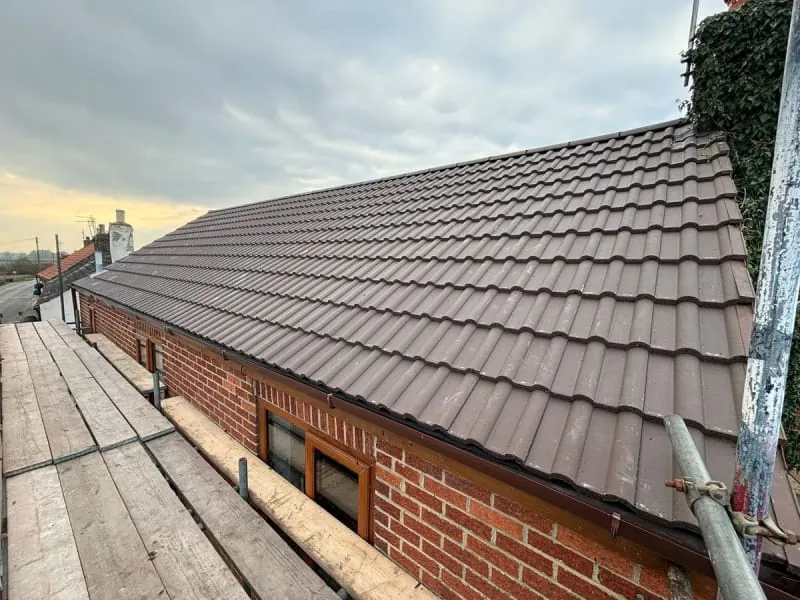
In practice that splits jobs into three groups. Repairs and like-for-like re-covering don’t need planning permission. Changing the material, adding dormers or doing anything that alters the shape of the roof needs a conversation with the council first. Any listed building needs listed building consent for almost all of it. Building regulations are a separate matter. Once you strip and re-cover more than a quarter of a roof, the insulation has to be brought up to current standards, and that applies whether or not the house is in a conservation area. Our roof replacement page explains how the certificate side is handled on a full re-roof. The government’s technical guidance on householder permitted development rights sets out the national rules that North Yorkshire Council applies.
Roofers in Pannal: a valley village with mixed roofs
Pannal sits low. The council’s appraisal puts the historic centre around St Robert’s Church and Pannal Bridge at about 85 metres above sea level, on the valley floor where Crimple Beck meets Clark Beck, roughly four kilometres south of central Harrogate. The appraisal’s best guess at the name’s origin is an Old English word for a hollow where water collects.
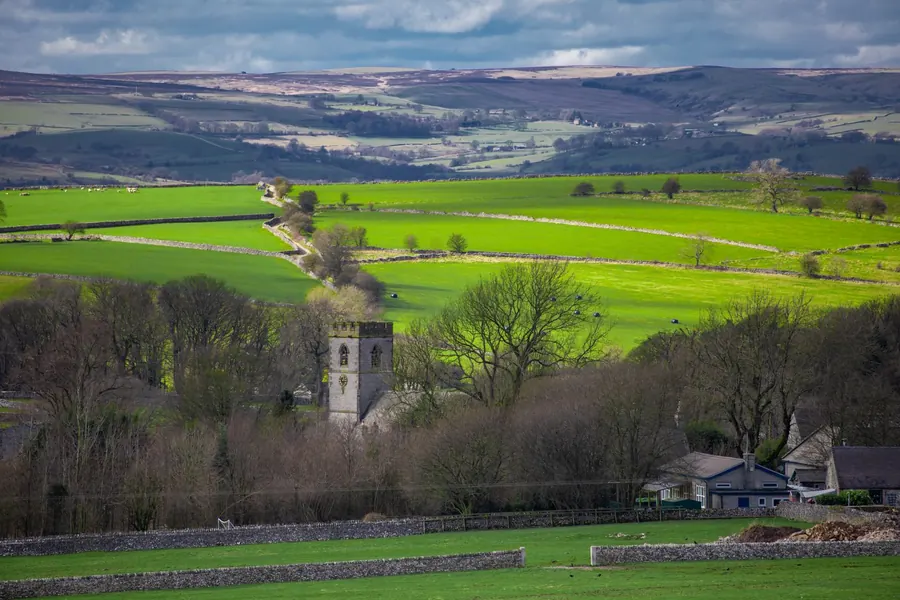
Living in a hollow next to two becks has practical consequences for a roof. Mist hangs around longer, north-facing slopes stay damp, and moss and lichen get a hold on stone slates more easily than they do on Leeds Road above. Gutters and valleys under the trees by the beck need clearing more than once a year.
The stock itself is mixed. According to the appraisal, many of the older stone buildings have stone slate roofs, the nineteenth-century houses have Welsh slate, and Quarry House is unusual in having plain clay tiles. Older cottages have plain verges, while the larger houses have kneelers and stone copings. On top of that is a lot of twentieth-century housing towards Burn Bridge and the station, which is nearly all concrete tile and usually the cheapest work in the village.
Follifoot: stone slate with pantile outbuildings
Follifoot shows the local pattern most clearly. Its 2009 appraisal says most of the houses have stone slate roofs. Pantiles, Welsh slate and Westmorland slate turn up on the Edwardian houses east of Main Street, and most of the outbuildings are pantiled.
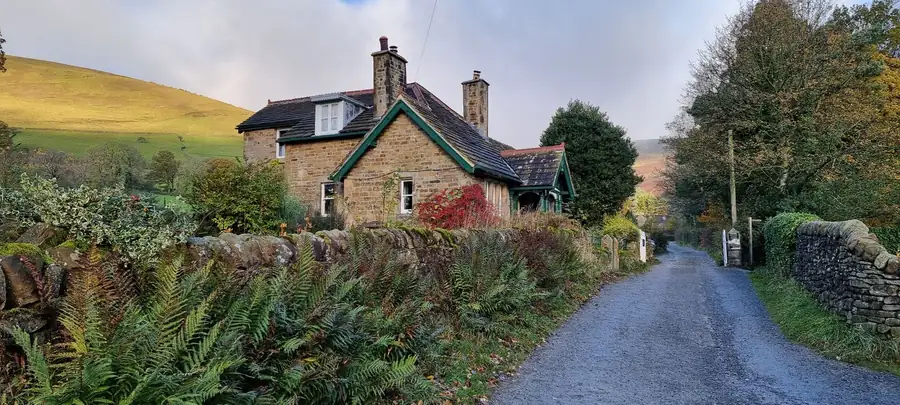
Two details catch people out. First, many of the pantile roofs have a few courses of stone slate along the eaves, a regional habit the appraisal says later alterations have partly lost. If a roofer quotes for a pantile roof here without mentioning the stone eaves course, ask them whether they plan to keep it. Second, Welsh slate only reached the village with the railway. It was used on new houses and to re-roof some older ones, which is why roof pitches in Follifoot vary more than you might expect. A roof built for thatch or stone and later covered in slate may have timbers sized for something very different, and that can only be judged from the loft.
Rudding Gates, the estate entrance on Main Street, marks the highest point of the village. Gables here commonly have stone tabling, kneelers and chimneys at the ridge ends. All of those need lead or mortar flashings in good condition, and that is where most leaks on these roofs actually start.
Spofforth: sandstone flags under the castle
Spofforth is built on a low ridge between Park Beck and the River Crimple, where, in the appraisal’s words, millstone grit gives way to magnesian limestone and new red sandstone. The rock changes under the village, and you can see it in the walls.
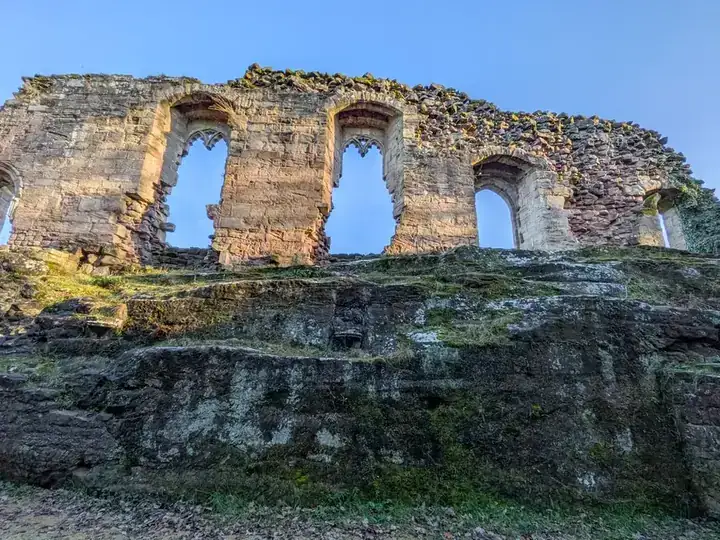
The ruins of Spofforth Castle, the Percy family’s fortified manor house, are the obvious landmark. The appraisal records that the Percys obtained a licence to crenellate in 1308. For roofing, the more useful line in the appraisal is in the materials section. It describes the local walling stone as warm pink sandstone, and the local roofing as sandstone flags or pantile, usually with a stone ridge. It also says Welsh slate and other materials don’t normally sit as well with the walls.
Sandstone flags are heavy. A roof carrying them was framed to take that weight, and a roof that lost them years ago and now has something lighter may have had its timbers cut down since. Know which of those you have before you decide to go back to stone, or away from it. Westmorland slate and twentieth-century pantile also appear along the main road, so it pays to look at your neighbours’ roofs before you decide what the street expects.
Kirkby Overblow: a ridge-top village that takes the weather
Kirkby Overblow is the exposed one. The appraisal puts it four miles south-east of Harrogate on a high, south-facing ridge above Wharfedale, with the church about 365 feet above sea level. All Saints Church stands at the highest point, and its tower can be seen from a long way off across the farmland.
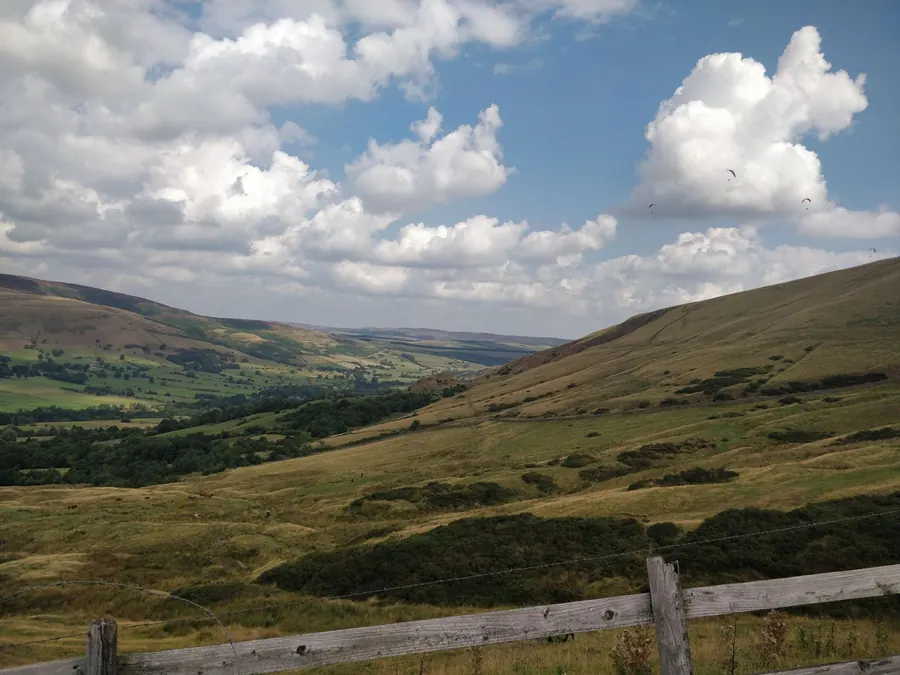
On a ridge, wind matters more than damp. South-westerly gales hit the gable ends and ridges with nothing to slow them down. Stone slates on worn-out pegs slip, mortar on ridges and verges cracks, and lead flashing that is too thin gets lifted. Up here the call-out is usually about something the wind has moved. Down in Pannal it’s usually about water.
The appraisal says the main roofing materials are stone slate or Welsh slate, with a few pantile roofs and almost no brick or render. Chimney stacks are usually built inside the thickness of the gable wall rather than standing proud of it. They typically have a stringcourse at the base, stone copings along the verges and a dentil course at the eaves. When a stack is built into the gable like this, rebuilding it is partly a masonry job, so check that whoever quotes can handle both the stonework and the lead.
What roofers in these villages charge in 2026
The figures below are based on the work we price across the four villages. They include scaffolding and assume a proper strip with new breathable underlay and battens where a re-roof is quoted.
| Job | Typical range |
|---|---|
| Refix slipped slates or tiles, one area | £200 - £500 |
| Rebed or repoint a ridge | £650 - £1,500 |
| New lead flashing to a gable-end stack | £450 - £1,000 |
| Re-cover a concrete-tiled semi or bungalow | £7,000 - £11,500 |
| Re-roof a Victorian house in Welsh slate | £10,000 - £17,000 |
| Re-lay a pantile outbuilding with stone eaves course | £3,500 - £8,000 |
| Full strip and re-lay of a stone slate cottage roof | £18,000 - £35,000 |
The range is widest on stone slate. The main factor is how many of the existing slates survive being stripped, sorted and re-hung. Where many are lost, reclaimed replacements have to be bought, and good stone is expensive and getting harder to find. Timber condition comes next, because a frame that has carried sandstone flags for two hundred years often needs a new purlin or a run of rafters. For a fuller explanation of stone roofs, see our guide to Yorkshire stone slate repair and salvage costs.
Spofforth is nearer Wetherby than Harrogate, and the A661 runs on to the town, so some owners also get quotes from firms based there. Our post on roofers in Wetherby and Boston Spa explains how roofs on the limestone side of the boundary differ, and why Wetherby work goes to a different council.
Getting quotes from roofers south of Harrogate
Most of the expensive problems in these villages can be spotted at the survey, provided the roofer actually goes up and looks. A price given from the pavement for a stone roof is a guess.
Ask each roofer the same questions so you can compare the answers:
- Is the property in the conservation area, and is it listed? A good local roofer will already know, or will check the appraisal map before quoting.
- How many of my slates do you expect to reuse? A figure with no answer to this question can’t be compared with another quote.
- What happens to the stone eaves course, kneelers and copings? On Follifoot pantile roofs and Kirkby Overblow gables these details matter both to the planners and to keeping water out.
- Who signs off the building regulations? Either North Yorkshire Council’s building control or a competent person scheme. You need a certificate either way when you come to sell.
- Where will the scaffold and skip go? The old cores of these villages have narrow lanes and very little parking. If anything needs to stand on the road or pavement, the scaffolder will need a licence from the council.
If the answers are vague, get another quote. If you’d like us to survey your roof in any of the four villages, get a free quote for roof work south of Harrogate and we’ll arrange a visit.
Frequently Asked Questions
Are Pannal, Spofforth, Follifoot and Kirkby Overblow conservation areas?
Yes, all four have one. North Yorkshire Council lists Pannal, Spofforth, Follifoot and Kirkby Overblow among the conservation areas it inherited from Harrogate Borough Council, and each has its own character appraisal. The boundaries cover the historic cores, not every house in the parish, so a 1990s house on the edge of Pannal or Spofforth may sit outside the line. Check the map in the appraisal before you assume either way.
Who approves roof work in these villages now?
North Yorkshire Council. It took over planning, listed building consent and building control for the old Harrogate district on 1 April 2023. The village parish councils can comment on applications, but the decision is made by North Yorkshire Council.
Do I need permission to re-roof a stone cottage in Follifoot or Kirkby Overblow?
Replacing a roof like for like, in the same material, is not usually something you need planning permission for, even in a conservation area. Building regulations still apply once more than a quarter of the roof is being re-covered. A listed building is different: almost any change to its roof needs listed building consent. If you want to swap stone slate or pantile for something else, ask North Yorkshire Council before you order materials.
How much does a new roof cost in the villages south of Harrogate?
As a rough guide, re-covering a concrete-tiled semi or bungalow usually costs between £7,000 and £11,500 with scaffolding. A Welsh slate roof on a nineteenth-century house tends to run from £10,000 to £17,000. A full strip and re-lay of a stone slate roof on a cottage is often £18,000 to £35,000, depending on how many slates can be reused and what state the timbers are in.
Can I put concrete tiles on a pantile outbuilding in Spofforth?
You can ask, but expect resistance inside the conservation area. Spofforth’s appraisal says the local roofing materials are sandstone flags and pantile, and that other materials do not normally blend with the stone walls. Concrete tiles are also much heavier than clay pantiles, so an old outbuilding roof may need strengthening to carry them. Reclaimed or new clay pantiles are usually the cheaper route once you count everything.