
2 October 2026
Roofers In Wetherby And Boston Spa: Roof Costs, Magnesian Limestone And Leeds City Council Planning
Wetherby is eight miles from Harrogate, close enough that plenty of its 11,700 residents shop, work or school there, but once the conversation turns to roofs it is a different place. The town and its neighbour Boston Spa sit inside the City of Leeds, not North Yorkshire, which changes who approves what. They stand on a narrow ridge of magnesian limestone that gave both places their creamy stone, and they grew hard in the decades after the A1 bypass opened in 1959, so the roofs on the edge of Wetherby are a generation younger than the ones in its middle. Leeds has 80 conservation areas and Boston Spa’s, designated in 1969, is the oldest of the lot, with close to 90 listed buildings packed along one High Street. Here is what all of that does to a roofing quote in 2026, and how we cover the area from Harrogate.

Why a Wetherby roof is not priced like a Harrogate roof
Harrogate’s roofing problems are mostly Victorian ones. Steep slate slopes, big chimneys, long terraces, lead valleys that have done 130 winters. Wetherby has a core like that too, but it is small, and the bulk of the housing outside it dates from 1945 onwards. When we quote for roof repairs in Wetherby, the job in front of us is more often a hipped concrete tile roof on a 1970s detached house with a drive than a slate terrace with a pavement.
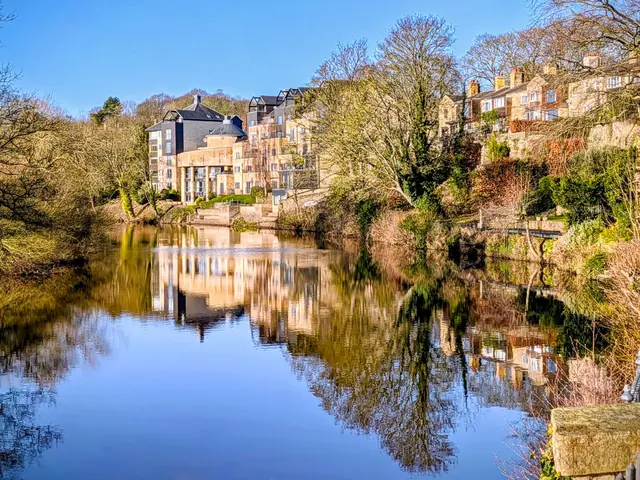
That shifts two things. The first is access. On an estate house there is somewhere to stand a scaffold and park a skip without a licence, which removes a line from the quote. The second is scale. A detached house with a hipped roof and a double garage carries far more tile than a two-up two-down, so the material and labour lines go the other way. So small repairs often come in slightly cheaper in Wetherby than in Harrogate, and full re-roofs often come in dearer, for the same spec of work.
The third difference is paperwork. Wetherby and Boston Spa answer to Leeds City Council, and that matters as soon as a conservation area or a listed building is involved. More on that below.
Creamy limestone, Welsh slate and pantiles: reading the older roofs
The Wetherby conservation area appraisal describes the town’s walling stone as locally quarried oolitic magnesian limestone, granular and creamy in colour, and warns that a paler grey limestone used on some newer buildings has not matched it well. The same ridge of stone runs south through Boston Spa and Clifford, which is why the Georgian villas along Boston Spa High Street look the way they do. It is soft, it weathers, and it was never a good roofing stone. The appraisal is clear that Welsh slate took over from local stone and thatch in the early 19th century, with pantiles from the Vale of York turning up on some of the older buildings as well.
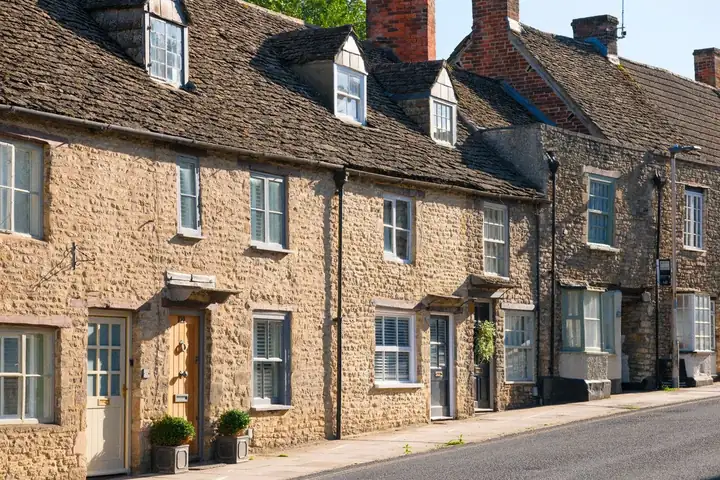
So on the older stock you are dealing with three coverings, each with its own failure pattern. Welsh slate in Wetherby is now 150 to 200 years old, and the slate itself is usually sound where the iron nails underneath it are not. Slates slip one at a time, which is a cheap fix on day one and an expensive one once the batten below has rotted. Pantiles were often laid on torching, a lime mortar bedding under the tile, and when the torching falls away in a dry loft the tiles start to rattle and let in driven rain. The handful of surviving stone slate roofs, mostly on farm buildings and the odd 17th-century survivor on North Street that outlived the fire of 1723, need a specialist who can grade and re-peg them, and we treat those as separate jobs with separate pricing.
The late Victorian expansion north of the centre, around Crossley Street, Caxton Street and Sandringham Road, is coursed limestone with Welsh slate roofs, chimneys and small front gardens. It behaves much like a Harrogate terrace, and we price it the same way.
The A1(M) estates: 1960s to 2000s roofs that are coming due together
The A1 bypassed Wetherby in 1959, was moved again in 1988, and the motorway section around Kirk Deighton opened at the end of 2004. Each change made the town an easier commute into Leeds and York and set off another wave of building. Norman Ashton’s company put up a large part of the 1960s housing, the Ainsty estate among it, and the estates kept coming through the 1970s, 1980s and 1990s. Boston Spa had the same thing on a smaller scale, enough that the 2009 appraisal redrew the conservation area boundary to leave most of the mid and late 20th-century estate housing outside it.
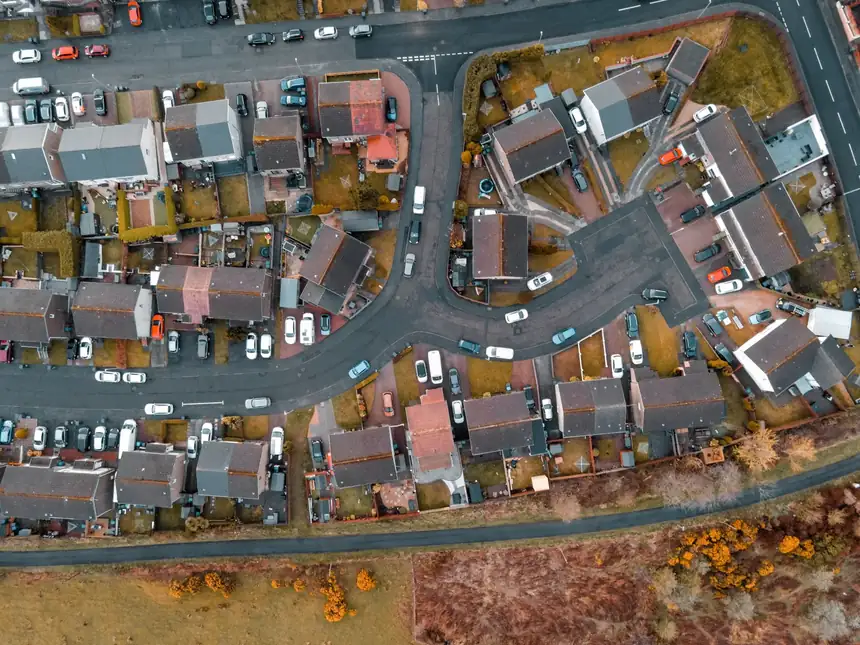
The roofs on those houses are almost all interlocking concrete tiles, usually on bitumen felt, with mortar-bedded ridges and verges. Concrete tile is tough and the tiles rarely fail. What fails is everything around them. Bitumen felt from the 1960s and 1970s goes brittle and tears at the eaves, so water that gets under a tile runs straight into the fascia instead of the gutter. Mortar on ridges and verges cracks and lets the wind lift the end tiles. Timber fascias and soffits of that era were often undersized softwood and are now rotten behind the paint.
What that means on the ground is that whole streets in Wetherby reach the same age at the same time. We get runs of enquiries from the same cul-de-sac in the same month. If you are one of them, ask next door whether they are planning anything, because two semis sharing one scaffold takes a real chunk off both bills.
What roof work costs in Wetherby and Boston Spa in 2026
Our labour rate does not change when we cross from North Yorkshire into Leeds. The figures below are what we see shifting, and why, using the same bands as our Harrogate roof repair price guide so you can compare directly.
- Slipped tiles, a cracked ridge or a short run of re-pointing come in at £150 to £500 on an estate house where we can work from a tower on the drive. The same job on a Harrogate terrace from a pavement scaffold sits at the top of that band or just above it.
- Replacing fascias, soffits and guttering on a 1970s detached house runs £1,800 to £3,500, more than the equivalent on a semi because there is simply more of it. This is the single most common job we do in Wetherby.
- A full re-roof in concrete tile on a semi is £4,500 to £8,000, the same as Harrogate. On a four-bed detached with a hipped roof and attached garage, expect £8,000 to £13,000, because the roof area is often double.
- Re-slating a Welsh slate roof in the Wetherby or Boston Spa conservation area is £8,000 to £15,000 for a typical two-storey house, with reclaimed slate matching adding time rather than huge cost. Where a listed building needs consent, allow for the application and for a few weeks of waiting.
- Scaffolding is £800 to £1,500 for a full re-roof on a house with a garden to stand it in. Add a highway licence and pedestrian protection on Market Place or Boston Spa High Street.
Treat all of that as a range rather than a price. Nobody here will put a figure in writing until they have been up the ladder.
Planning, conservation areas and building control under Leeds
This is the part most people get wrong, and it is not their fault. Wetherby feels like a North Yorkshire market town and half its residents seem to work or shop in Harrogate, but it has been part of the City of Leeds since 1 April 1974, when Wetherby Rural District was wound up and its parishes, Boston Spa, Thorp Arch, Clifford and Bramham included, were handed to the new metropolitan district. North Yorkshire Council, which took over Harrogate’s planning in 2023, has no say here.
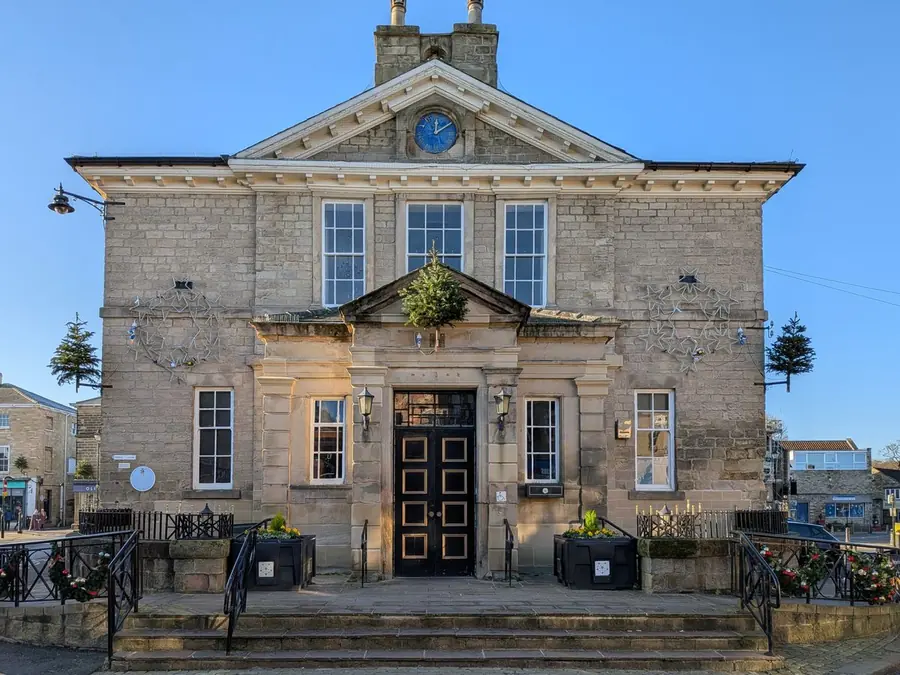
For most roof work that makes no practical difference. Like-for-like repairs and re-roofs in the same material are permitted development, and the Planning Portal’s guidance on roof alterations sets out the usual limits, including that a rooflight must not sit more than 150mm proud of the roof slope. Where Leeds comes in is the conservation areas. Wetherby’s was designated in 1971 and adjusted in 1981 and 2010; Boston Spa’s dates from 1969 and was reviewed in 2009. Inside either, a change of material that alters the appearance of the roof, a new dormer on a slope facing the street, or anything touching a listed building needs to go through Leeds City Council’s conservation area process before a tile is lifted.
Building control is the other half. A full re-roof, or re-covering more than half of a slope, is notifiable work under the Building Regulations. Either we notify Leeds City Council building control and they inspect, or we use a registered competent person scheme and the certificate is issued through that. Ask which route your roofer is taking, and ask for the paperwork at the end, because a buyer’s solicitor will.
Scaffold on Market Place and Boston Spa High Street
Wetherby has held a Thursday market since the Knights Templar were granted the charter in 1240, and the Market Place still fills with stalls, deliveries and parked cars around the Town Hall. Boston Spa’s High Street is a long straight run of Georgian frontages with the pavement hard up against the doors. Neither place has anywhere to put a scaffold except the public highway.
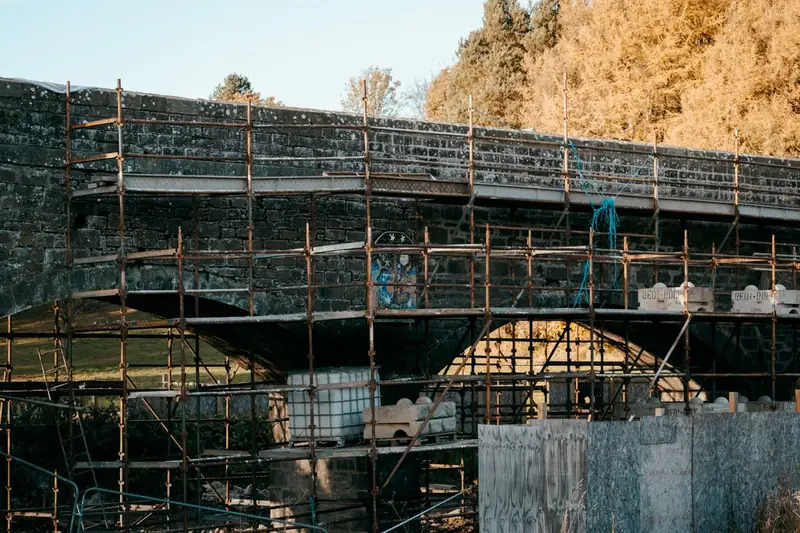
That means a licence from Leeds City Council as highway authority, a scaffold with a boarded first lift so people can walk underneath, lighting at night and debris netting if anything is being stripped above the pavement. The scaffolder deals with the application, but the cost lands on your quote and you should see it as a separate line. On Market Place we plan erection and strike days around the market and ask the neighbouring shops about delivery times. In Boston Spa the issue is more often the width of the footway and keeping the bus stops clear.
The yards behind the Wetherby frontages, a feature the appraisal singles out, are both a help and a nuisance. They sometimes give us a way to the rear slope without touching the street at all, and they sometimes mean the only way to get old slate off the back is to carry it through the house. Which of those applies to your house goes in the quote, so there is no argument about it on the morning we turn up.
How we cover Wetherby and Boston Spa from Harrogate
We are based at Whinney Lane in Harrogate. The run out to Wetherby is the A661 through Spofforth, about 20 minutes on a normal morning, and Boston Spa is ten minutes further on past Junction 45 of the A1(M). We have been working both places long enough to know which streets need a highway licence, which estates share the same 1970s felt, and that the planning officer we need to call sits in Leeds rather than Northallerton.

For a storm callout we come with sheeting, battens and a mixed stock of slates and tiles so the roof is made weathertight on the first visit. For planned work we survey, photograph the roof from above and inside the loft, and send a written quote that names the covering, the salvage percentage, the scaffold arrangement and who is notifying building control. If you are in Wetherby, Boston Spa, Thorp Arch, Clifford, Collingham or Bramham and want that done, ask for a free Wetherby roofing quote and we will book a visit. Our Wetherby page lists the full range of what we do in the town.
Frequently Asked Questions
Which council deals with roof work in Wetherby and Boston Spa?
Leeds City Council. Both places have sat inside the City of Leeds metropolitan district since Wetherby Rural District was abolished in 1974, so planning applications, conservation area matters, listed building consent and building control all go to Leeds, not to North Yorkshire Council. That catches people out because the postcode is LS and the nearest big town for many residents is Harrogate, which is a different authority altogether.
Do roofers charge more in Wetherby than in Harrogate?
The labour rate is the same, because the firms are the same. What shifts the final figure is the type of house. Wetherby and Boston Spa have a higher share of large 1960s to 2000s detached homes with big hipped concrete tile roofs than Harrogate does, and those need more material and more scaffold. Set against that, a repair on an estate semi with a drive is often a touch cheaper than the same job on a Harrogate terrace, because there is nowhere to park a scaffold in a Harrogate terrace except the pavement.
Can I put concrete tiles on a limestone cottage in the Boston Spa conservation area?
If the roof is Welsh slate or pantile now, assume you cannot swap to concrete without asking. Inside the Boston Spa conservation area a change of roofing material that alters the look of the building is likely to need planning permission from Leeds City Council, and on any of the village’s listed buildings it will need listed building consent as well. Repairing like for like is fine. Replacing like for like is normally fine. Changing the material is where you need a conversation first.
Does scaffolding on Boston Spa High Street or Wetherby Market Place need a licence?
Yes, if any part of it stands on the footway or the carriageway. Leeds City Council as highway authority issues the licence, the scaffolding firm applies for it, and the price should appear in your quote rather than as a surprise afterwards. On Market Place the Thursday market and the delivery traffic around it affect which days a scaffold can go up or come down, so expect the roofer to ask about timings before giving a start date.
How quickly can a Harrogate roofer get to Wetherby for an emergency?
Wetherby is about eight miles from Harrogate along the A661 through Spofforth, and Boston Spa is another three miles on past the A1(M) at Junction 45. In normal traffic that is 20 to 30 minutes. For a storm callout we carry tarpaulins, battens and a selection of common tiles and slates on the van, so a first visit usually ends with the roof watertight even if the full repair has to wait for matching materials.