
2 September 2026
Yorkshire Stone Slate Roofs Around Harrogate: Repair, Salvage and What Re-Laying Really Costs
Drive west out of Harrogate towards Birstwith, Hampsthwaite or Pateley Bridge and the roofs change. The blue-grey Welsh slate that covers so much of the town gives way to something heavier and browner - thick, uneven, lichen-blotched stone, laid in courses that shrink as they climb towards the ridge. Locally these are called grey slates or thackstones. They are not slate. They are sandstone, split along the grain the earth gave them, and there are roofs of this type in Nidderdale that have been keeping water out since before the railway reached Harrogate. When one of them starts to fail, the owner usually discovers two things in quick succession: that very few roofers will quote for it, and that the ones who will quote vary by a factor of three. This is what is actually going on up there, and what the work should cost.
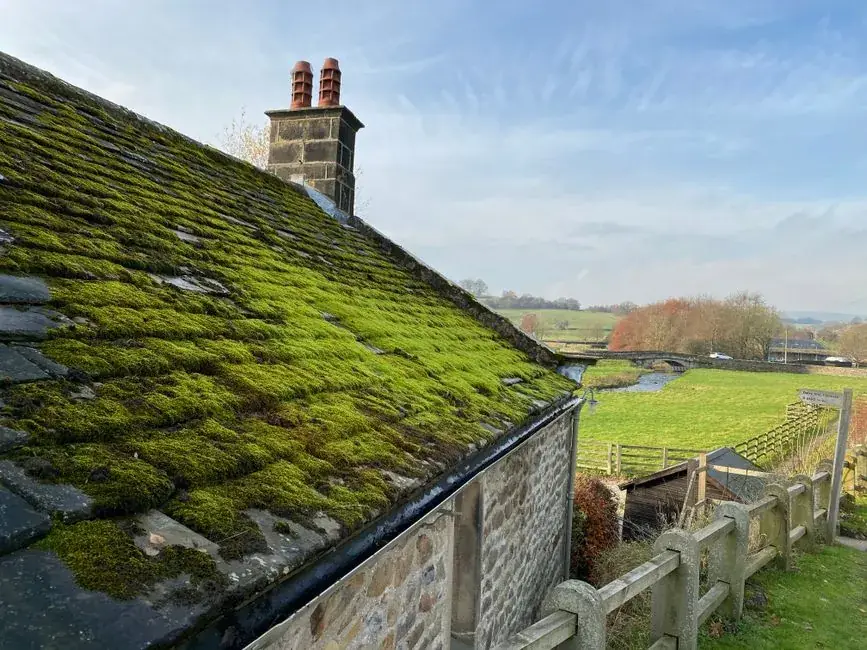
What a Yorkshire stone slate actually is
The word slate is doing a lot of misleading work here. Geological slate is metamorphic - squeezed and cooked until it cleaves into thin, light, almost uniform sheets. That is what comes out of Blaenau Ffestiniog, and it is what most people picture when a roofer says slate.
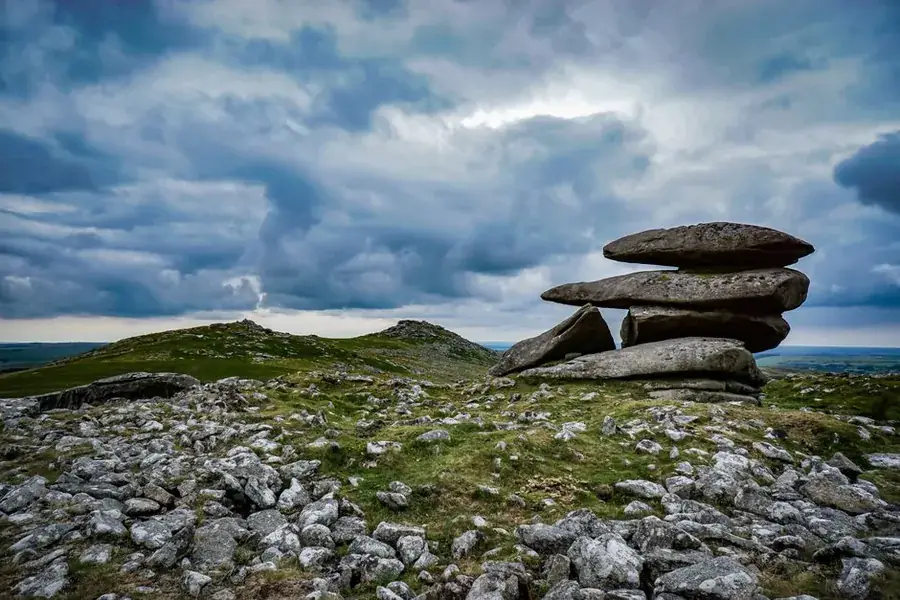
Yorkshire stone slates are sedimentary sandstone from the gritstone and Coal Measures beds that run under this part of the county. They split because they were laid down in flat layers on an ancient sea floor, not because anything metamorphosed them. That origin sets everything else about how the roof behaves. The stone comes off in slabs rather than sheets, so the slates are thick - frequently 15 to 25mm and sometimes considerably more - and irregular in outline. They are heavy. A stone slate covering commonly weighs somewhere in the region of 80 to 150kg per square metre depending on thickness, against roughly 30kg for natural slate and 45 to 50kg for interlocking concrete tiles. Every part of the job downstream, from the size of the rafters to the number of people needed on the scaffold, follows from that number.
Because the slates are big and thickly lapped, they also work at pitches that would be marginal for other coverings. Historic England’s guidance notes that in parts of Yorkshire, stone slates are laid at comparatively shallow pitches because their size and lap deal with the weather perfectly well without steepness. That is why so many Dales cottages look squatter than a Victorian villa in town, and it is also why swapping the stone for tiles is rarely as simple as it sounds. If you want the wider comparison of what suits which property, our note on slate roofs covers the other coverings in use around the district.
How these roofs finally fail
A stone slate roof does not usually fail the way a tiled roof fails. It gives up slowly, in specific places, for reasons you can normally read from the ground with binoculars.
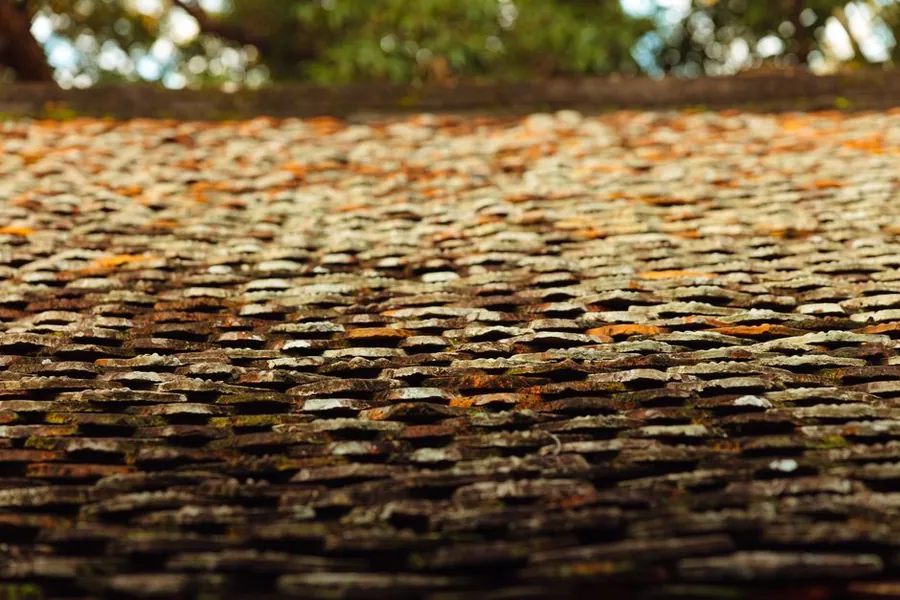
Delamination is the big one. Water sits in the bedding planes the stone split along, freezes, and levers the slate apart into flakes. Harrogate and the dale above it get a serious number of freeze-thaw cycles in a normal winter, and the slates on the coldest, wettest, most shaded slope - usually the north pitch - go first. A slate that has started to laminate sounds dead when tapped and shows fresh, unweathered stone at the edges of the flaking.
Then there is fixing failure. Traditionally these slates hung on oak pegs over riven laths, with each slate resting on the batten by its own weight. Pegs rot. Laths rot. Later generations re-fixed with iron nails that then rusted through, which the trade calls nail sickness. The result in every case is the same and it is the classic symptom: individual slates slipping down the roof or landing in the garden while everything around them looks sound. If you have had one or two go, the rest of that fixing generation is the same age.
The third failure is the mortar. Many of these roofs were torched underneath - lime mortar and animal hair pressed up between the laths to seal the gaps and steady the slates. When the torching crumbles away, wind drives rain and snow straight through the covering into the loft, and the slates lose their bedding at the same time. Owners often report this as a leak that only happens in a gale, which is exactly what it is.
The value is lying on top of your roof
This is the part that surprises most owners. On a stone slate roof, the covering is usually worth more than the labour of putting it back.
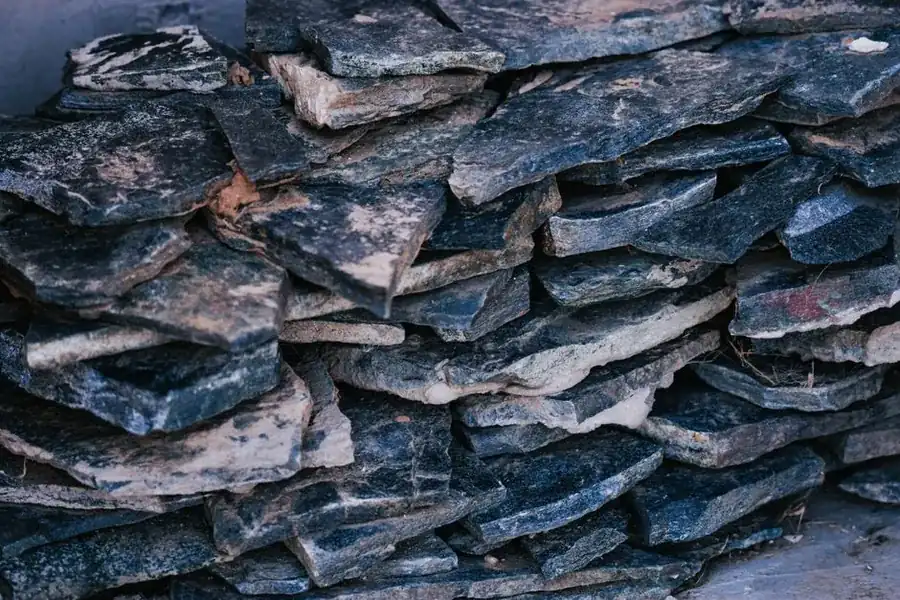
Reclaimed Yorkshire stone slates are a scarce, sought-after material. Most of the quarries that produced them closed generations ago, the few working sources cannot meet demand, and every conservation officer in the county wants existing stone kept on existing buildings. That makes the slates sitting on your rafters a genuine asset with a real market value, and it changes how you should read a quote.
A properly scoped stone roof job says, in writing, that the existing slates will be carefully stripped, stacked, sorted and reused, and it states roughly what proportion is expected to go back on. A quote that quietly proposes a new covering throughout, or that is suspiciously cheap for the size of the roof, deserves a direct question about where your old stone is going. Stripped stone slate leaving site in a grab lorry is not waste disposal. It is a second payment the contractor is collecting and you are not seeing. We have been called to look at Nidderdale cottages where exactly that had happened, and by then there is nothing to be done about it.
Sorting, grading and laying in diminishing courses
This is what makes the labour bill what it is. It is also the part nobody can see on the finished roof.
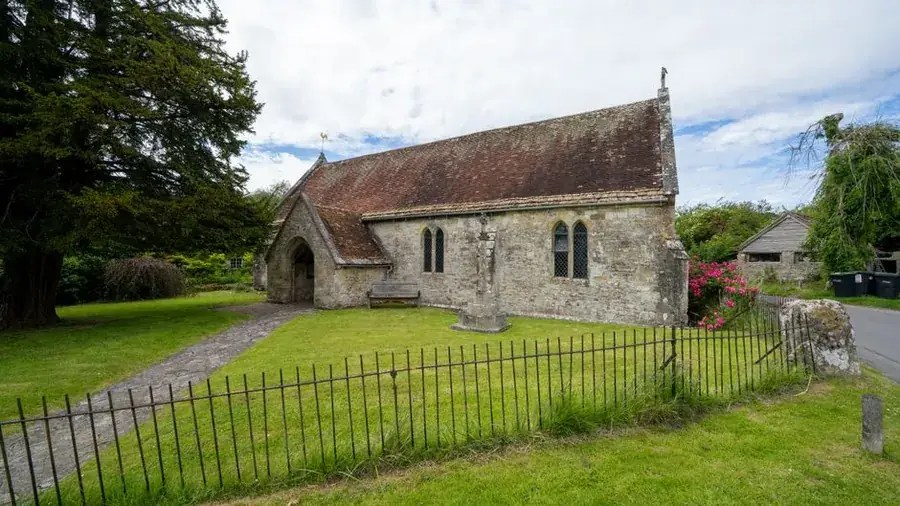
A stone slate roof is laid in diminishing or graduated courses: the biggest, heaviest slates at the eaves, getting progressively smaller and lighter towards the ridge. It looks like an aesthetic choice. It is actually structural and hydraulic - the largest slates carry the greatest volume of water and sit where the roof can best support the weight, and the taper keeps the load off the ridge.
That means every slate coming off the roof has to be measured, sorted into size bands and stacked in order before anything goes back. On a full strip this is a day or more of skilled work that produces no visible progress whatsoever. It is also the step that separates a genuine stone slater from a general roofer having a go. Get the grading wrong and the roof looks subtly, permanently incorrect - courses that jump in size, a ridge that reads as too heavy - and the water does not run the way the roof was designed for.
Historically each course size had its own name, and old roofs in the dale sometimes have twenty or more distinct course sizes running from eaves to ridge. Nobody is asking a modern contractor to reproduce the naming, but the discipline behind it still applies.
Where replacement slates come from - and the theft problem
However careful the stripping, you will not get every slate back. Delamination, cracking and thin heads take their toll, and the shortfall has to come from somewhere.
There are three routes. Reclamation yards deal in salvaged stone slate, though supply is unpredictable and matching the colour, thickness and weathering of your existing roof takes patience. A small number of quarries still produce new stone slate, which is the most reliable option and the most expensive, and new stone takes a good few years to weather in. And on estates and larger holdings, slates are sometimes moved from a redundant outbuilding to keep the main house authentic, which conservation officers generally look on favourably.
There is an ugly side to this scarcity that anyone with a stone roof in the dale should know about. Stone slate theft from isolated barns and empty farm buildings is a persistent problem across the Yorkshire uplands precisely because the material is valuable and portable, and an unoccupied field barn is an easy target. If you own an outbuilding you rarely visit, its roof is worth checking on. And if a supplier offers you a large quantity of perfectly matched local stone slate at a price that seems too good, ask where it came from and expect a straight answer. Buying stolen stone is how a heritage roof stops being a heritage roof.
The structure underneath is usually the surprise
Owners budget for the covering. What blows the budget is almost always what turns up once the covering is off.
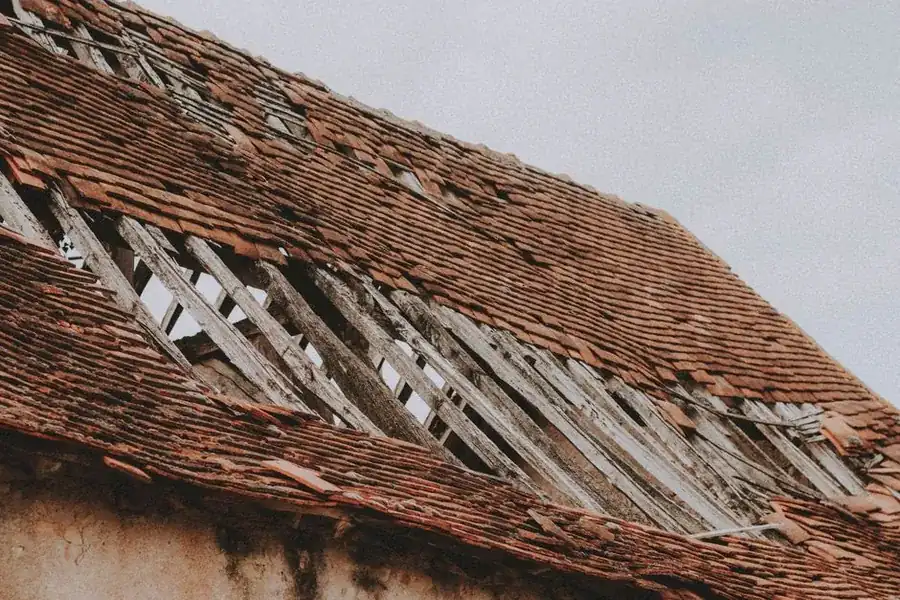
Consider what these timbers have been doing. A stone roof puts a substantial dead load on rafters that were cut by eye from local timber, in many cases well over a century ago, to no calculation at all. Add saturated moss and lichen, add snow, and the loading in a bad Nidderdale winter is considerably more than the number on paper. Over that timescale things move. Rafters sag between purlins. The roof spreads outwards at the eaves and pushes the wall plate, which is why so many old stone cottages have that characteristic swayback profile along the ridge.
Some of that deflection is historic, stable and entirely fine to leave alone - an old roof is allowed to look old. What is not fine is active movement, rot where the rafter feet meet a damp wall plate, or a purlin that has dropped and is still dropping. You cannot tell which you have got until the slates are off and someone competent is standing on the joists with a torch. This is the single strongest argument for a contractor who quotes a provisional sum for timber repairs rather than one who promises a fixed price and then discovers a problem halfway through. The honest quote looks more expensive on day one and costs less by the end.
While the roof is open is also the moment to sort ventilation and underlay. Most of these roofs never had felt at all - they breathed through the torching. Putting a modern impermeable membrane under stone slates on an old, damp-walled building is a good way to trap moisture in the timbers you have just paid to repair. A breathable underlay is the norm on this kind of work for good reason.
What stone slate work costs around Harrogate
Precise numbers depend on your building, but the shape of the pricing is consistent, and knowing it makes quote comparison much easier.

As a guide, based on the stone roof work we handle across Harrogate and the dale, a localised repair - putting slipped slates back, renewing failed pegs or nails, patching torching in one area - generally falls between about £400 and £1,200 including access. Stripping and re-laying a single elevation of a cottage, which is often the sensible move when one pitch has gone and the other has years left, tends to run from roughly £6,000 to £12,000. A full strip and re-lay on a modest stone roof - sorting, reusing the majority of the slates, new battens and breathable underlay, replacement timber where needed, scaffolding throughout - commonly lands between £18,000 and £35,000, and a large farmhouse or a building with difficult access can go well beyond that.
The variables that move those figures most are worth naming. How many slates come back is the biggest single one: a roof that returns four fifths of its covering costs meaningfully less than one that returns half and needs the balance bought in. Access is the second - a cottage on a narrow lane above Pateley Bridge with nowhere to stand a scaffold or park a skip is a different job from a detached house with a drive. Timber condition is third, and it is the one nobody can price accurately from the ground. Anyone giving you a firm all-in figure for a full strip without having been in the loft is guessing.
One more point on the money. Because these jobs run into five figures and take weeks, stage payments matter more here than on ordinary roofing work. Our guidance on protecting your money on a roofing job applies with extra force when the contractor is also handling a valuable salvaged material that belongs to you.
Choosing someone who has actually done this before
Stone slating is a distinct craft, not a variation on tiling, and the pool of people who genuinely do it around Harrogate is small.

Ask to see stone roofs the contractor has completed, in this area, and go and look at them from the road. Graduated courses either look right or they do not, and after seeing two or three good ones you will be able to tell. Ask directly how they intend to sort and store your slates and what proportion they expect to reuse. Ask what underlay they propose and why. Ask who does the timber work.
Two external checks are worth the ten minutes. The National Federation of Roofing Contractors’ National Heritage Roofing Contractors Register exists specifically to identify firms assessed as competent on historic roofs, which is a much narrower list than general roofing membership. The Stone Roofing Association publishes technical material on stone slate practice, including the Historic England advice note, and is a good sanity check on anything a contractor tells you about method.
If the building is listed, or you are unsure whether your part of the dale carries extra restrictions, check with North Yorkshire Council’s heritage and conservation team before work is specified rather than after. Listed building consent is normally needed for re-roofing a listed property, and a specification agreed in advance is far cheaper than one unpicked halfway through. The rules on protected buildings and areas are set out more fully in our piece on roofing in a Harrogate conservation area.
Get all of this settled before the scaffold goes up. Once a stone roof is open, the decisions get expensive quickly, and the one thing you cannot buy back afterwards is the stone that was already yours.
Frequently Asked Questions
Is a Yorkshire stone slate roof the same as a slate roof?
No, and the difference matters when you get quotes. True slate is a metamorphic rock that splits into thin, light, uniform sheets. Yorkshire stone slates are sandstone, split along their natural bedding planes, and they come out thick, heavy and irregular. A roofer who prices a stone slate roof as though it were Welsh slate will be badly wrong on weight, on labour, on the fixing method and on how long the job takes.
Can the existing stone slates be reused when a roof is stripped?
Usually a good proportion of them, and reusing them is the whole point. On the stone roofs we strip around Harrogate and Nidderdale, it is common to get most of the covering back on again after sorting, with the shortfall made up from reclaimed or newly quarried stone. The slates that do not go back are the ones that have delaminated, cracked through, or lost too much thickness at the head to take a new peg or nail. Anyone who suggests skipping the sorting and buying a full new covering is either not equipped for the work or is quietly selling your stone.
How much does it cost to re-lay a stone slate roof near Harrogate?
As a guide, a localised repair putting back slipped slates and renewing a few fixings usually falls between about £400 and £1,200. Stripping and re-laying one elevation of a cottage tends to run from roughly £6,000 to £12,000. A full strip and re-lay on a modest stone roof, with sorting, new battens and breathable underlay, replacement timber where it is needed and scaffolding, commonly lands somewhere between £18,000 and £35,000, and more on a large or awkward building. Access, the condition of the timbers and how many slates you get back are what move the figure.
Do I need permission to re-roof a stone house in Nidderdale?
If the building is listed, yes - listed building consent is normally required for re-roofing work, and the specification will be scrutinised. If it is unlisted but in a conservation area or within Nidderdale National Landscape, planning permission is often not needed for a like-for-like re-roof, but that depends on whether the appearance changes materially and whether an Article 4 direction applies locally. North Yorkshire Council is the planning authority for the whole district now, so that is where to check before anyone orders materials.
Why are stone slate roofs so much more expensive than tiles?
Three reasons stack up. The material is heavy and slow to handle, so the labour rate per square metre is far higher than tiling. The slates have to be sorted and graded by size before a single one goes back, which is a day or more of work that produces nothing visible. And the structure underneath frequently needs attention, because a roof carrying that much weight for two centuries has usually pushed something out of shape. None of those costs can be designed out without changing what the roof is.
Ask us to look at your stone slate roof in Harrogate or Nidderdale