
30 October 2026
Roofers In Northallerton: Roof Costs, Railway Slate, Article 4 Streets And Who Signs Off
North Yorkshire Council’s headquarters is County Hall, at the south end of Northallerton, so the council that rules on your roof is based in the same town as you. It has been in charge of planning and building control here since April 2023, when Hambleton District Council was wound up. The houses they deal with vary a good deal. The High Street keeps a brick house from the mid-1600s, the streets south of it were roofed in Welsh slate that only became affordable once the railway arrived in 1841, Romanby and Brompton fill out with 20th-century semis, and North Northallerton adds around 900 new homes. Five becks also run through the town, and the Environment Agency’s flood warnings there now cover nearly 650 properties. Anyone searching for roofers in Northallerton wants three answers: what the job costs, what their roof is made of, and whether they need permission. This guide takes each in turn.
What roofers in Northallerton charge in 2026, house by house
Northallerton is a little over 30 miles north of us, so we price it as a normal job rather than a long-distance one with travel loaded on top.
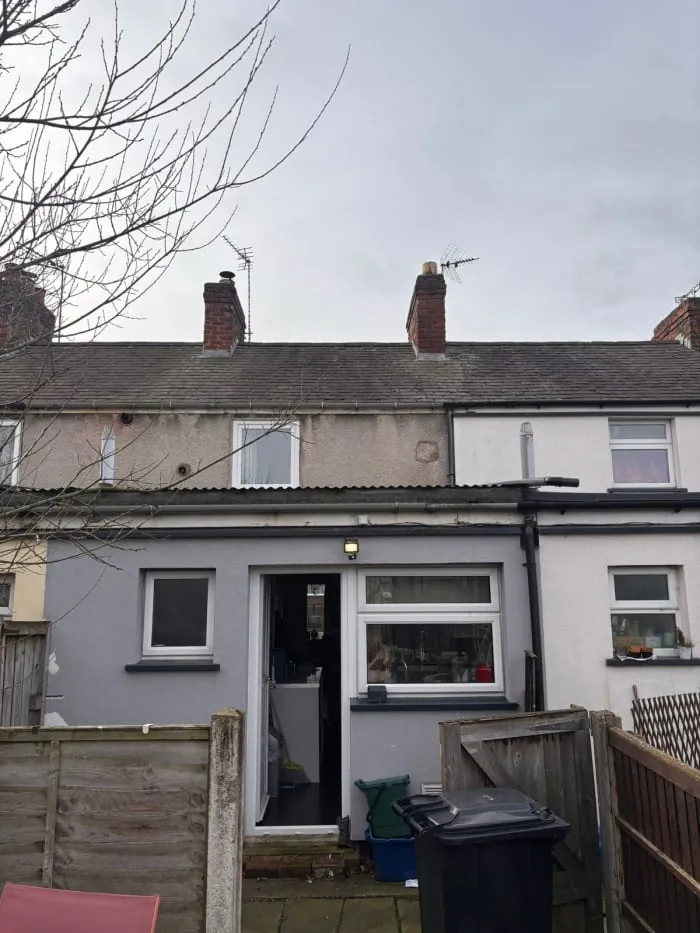
The figures below include VAT and assume the rafters are in reasonable shape. They are guides for typical houses, not quotes:
- Putting back a few slipped slates on a South Parade or Thirsk Road villa: £180 - £450
- Re-bedding a ridge in mortar, or swapping it for a dry ridge system: £500 - £1,150
- New cast iron guttering on a period frontage: about £90 - £150 a metre fitted, against £25 - £45 for uPVC
- Re-tiling a 1930s to 1970s semi in Romanby or Brompton with concrete interlocking tiles: £5,500 - £9,000
- Re-roofing a pantiled rear range behind the High Street: £6,500 - £12,000
- Stripping and re-slating a Victorian or Edwardian house in new Welsh slate: £11,000 - £18,000
- Refixing dry verge caps or ridge clips on a newer house: £250 - £700
- Scaffolding for an ordinary two-storey house: £800 - £1,800
Three things push a Northallerton price up. A High Street frontage needs a scaffold licence from the council as highway authority, and the job has to be planned round the Wednesday market, when stalls take over the street. Matching old slate or pantiles takes time and sometimes several trips to reclamation yards. And on the Article 4 streets, a change of material needs planning permission before a single slate comes off. For a full strip and re-cover, our roof replacement page explains how we survey and quote, and the slate roofs page covers repairs to older slate.
Railway slate on South Parade, Thirsk Road and Romanby Road
Until the railway, Northallerton roofed itself mostly in pantiles. The trains made Welsh blue-grey slate cheap enough for ordinary builders, and the council’s conservation area appraisal names it as the main alternative to pantiles from the middle of the 19th century onwards.
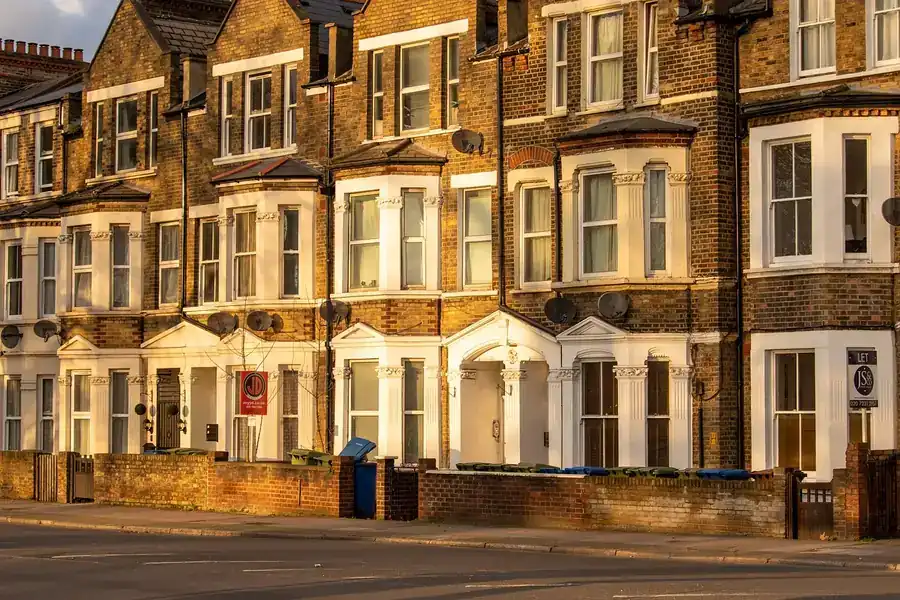
The appraisal picks out South Parade, Romanby Road and Thirsk Road as the places to see it at its best. South Parade has large late Victorian villas, Edwardian semis and a modest terrace in pale local brick, with some of the whiter bricks thought to come from the Pease family’s works near Darlington. Number 19 Thirsk Road has a band of fish-scale slates worked into a steep roof, a detail that is easy to lose if a re-roof is rushed.
Welsh slate rarely wears out. What fails is the iron nails holding it, which rust through after a century or so until slates start sliding down the roof one at a time. A few can be held with copper or lead clips, called tingles. Once they are going every winter, the roof needs stripping, new battens and membrane, and the slates hung again on copper nails. Good slates go back on, and the shortfall is made up with reclaimed or new Welsh slate of the same size and thickness. Decorative courses are photographed and measured before anything is lifted. The same appraisal also asks owners to swap plastic gutters back to cast iron where they can, so allow for that on a period house.
Behind the High Street: pantiles, yards and the town’s oldest roofs
The High Street is wide, and the plots behind it run back a long way. Behind most frontages are rear wings, outbuildings and service yards reached from Brompton Road, the Applegarth or narrow passages, laid out on the old medieval plot lines.
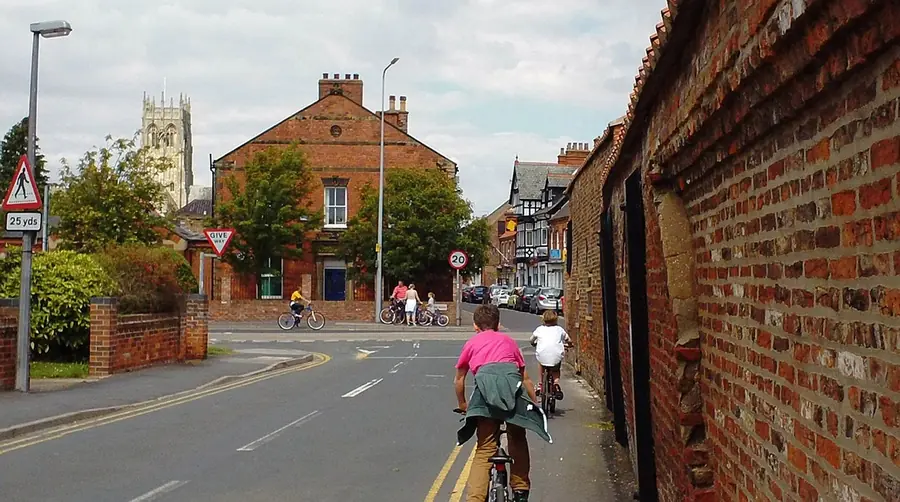
Pantiles were Northallerton’s main roof covering for a long time, and plenty of old ones survive on these back ranges even where the frontage has been re-roofed. Porch House, at 68 to 70 High Street, has the earliest brickwork in town, from the mid-17th century, and some timber framing is hidden behind later fronts there and at The Fleece. A few grander buildings, such as Durham House at 84 High Street and the buildings round County Hall and All Saints Church, have Westmorland green slate instead.
Through the 20th century many of these roofs were stripped and re-covered in concrete tiles. The appraisal points out that concrete is heavier than the pantiles the rafters were cut for, and hopes owners will go back to pantile or slate as the concrete wears out. We would add one practical point. If a rear range has sagged in the middle, find out whether the purlins have been overloaded before you choose a new covering.
Access is the hidden cost behind the High Street. Scaffold tube, tiles and waste often have to go through a yard gate or a narrow passage by hand, and that labour shows up in the price.
Romanby, Brompton and the 20th-century semis
Most Northallerton homes are neither Victorian nor brand new. Romanby, across the railway to the south-west, and the roads out towards Brompton in the north are largely 20th-century: semis, short terraces and bungalows built between the wars and in the decades after.
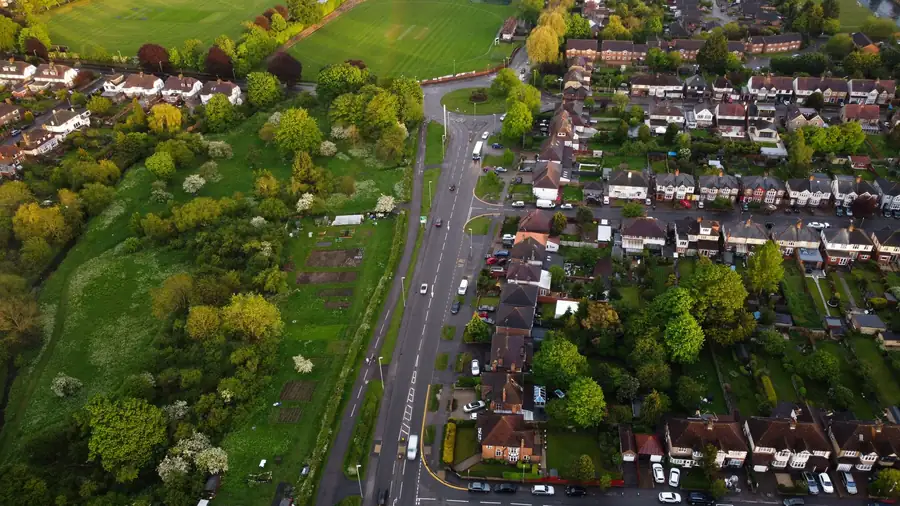
Many of these houses were built with clay tiles or slate and later re-covered in concrete interlocking tiles, mostly between the 1960s and the 1980s. Those tiles last perhaps 50 to 60 years, so a lot of them are reaching the end now. The faults are usually the same. Mortar on the hips and ridges cracks and falls out, the felt under the tiles has gone brittle and torn at the eaves, and the lead round the shared chimney stack has split. On a pair of semis the stack often sits on the party wall, so work to it needs a word with next door first.
Brompton is an old linen-weaving village, with eight mills working at its peak around 1820. It has its own conservation area, designated in 1987, so check with the council before changing the roof of an older house near the green. Willow Beck has flooded the Water End part of the village before, which is one reason we always look at the gutters and downpipes on houses there as well as the roof.
North Northallerton: around 900 new roofs ageing together
Persimmon and Taylor Wimpey have built roughly 900 homes in North Northallerton, linked by a new road and a bridge over the Middlesbrough railway line between Darlington Road and Stokesley Road. The bridge opened in December 2022.

These roofs will all age at about the same rate, which means problems tend to show up street by street rather than house by house. On new estates we most often see plastic dry verge caps cracked or blown off in a gale, ridge clips working loose, and loft condensation where the eaves vents are blocked by insulation. Solar panels can cause trouble too: badly placed roof hooks lift or crack the tiles above them, and the leak may not appear for a couple of years.
If your home is still young, take photos and report the fault to the builder in writing before you pay anyone. Under most warranties the builder has to put defects right during the first two years. After that, cover usually shrinks to structural problems, and a blown verge cap rarely counts as one. Our guide to new-build roof problems explains how snagging and warranty claims work.
Five becks and an open vale: what roofers in Northallerton check after heavy rain
Five watercourses cross the town: Brompton Beck, North Beck, Willow Beck, Sun Beck and Turker Beck. Northallerton flooded in 2009 and again in 2012, and in 2019 the Environment Agency added four flood warning areas for the town, covering nearly 650 properties.
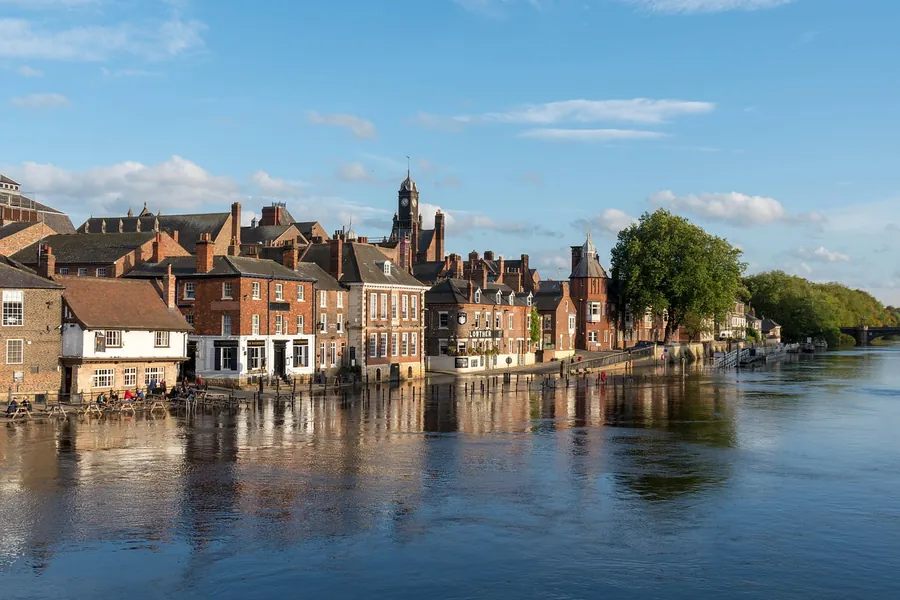
A roof cannot stop a beck rising, but it decides where the water from a cloudburst ends up. Gutters sized for ordinary rain overflow in a summer downpour. Hoppers block with leaves and moss. Downpipes that run into old clay drains back up as soon as the surface water system is full, and the water then soaks the wall instead of draining away. On the High Street, hidden valley gutters behind parapets are the worst spots, because nobody sees them until a ceiling stains. After a heavy storm, the first things to check are the gutter joints, the hoppers and the base of each downpipe.
Wind is the other part of Northallerton’s weather. The town sits in open farmland in the Vale of Mowbray, with the North York Moors about five miles to the east and the Pennines far off to the west, so a gale has little to slow it down. Verges and ridges take the worst of it, and we check them first when someone calls after a storm.
Planning, Article 4 and building control for Northallerton roofs
Planning, listed building consent and building control for the whole town are now handled by North Yorkshire Council. Older paperwork from the Hambleton days still sends you to the Civic Centre at Stone Cross, so use the current council’s contact details instead.
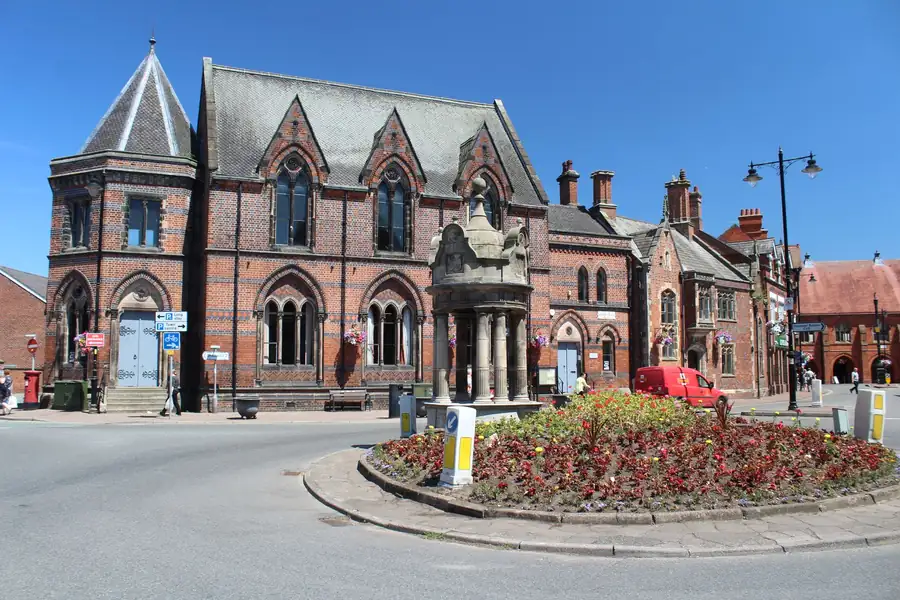
The Northallerton conservation area takes in the pre-1900 town: the High Street and the long plots behind it, the area round the church, South Parade and the civic buildings near County Hall. The council’s first designation statement came out in 1987, and the Northallerton Conservation Area Appraisal was adopted in December 2010. It proposed extending the boundary to take in North End and more of Thirsk Road and Romanby Road, so check the current map before assuming you are outside it.
On top of that sits a 2013 Article 4(1) direction covering houses around South Parade, Thirsk Road, Boston Avenue, Hatfield Road and Grammar School Lane. The council’s Article 4 leaflet and boundary map lists what it controls on houses facing a road, waterway or public open space: the chimney, the covering and features such as fascias and soffits on the front slope, front roof lights, rainwater goods and solar panels. It also catches any other alteration to a roof slope, which is wider than most people expect. Put back what is already there in the same material and you are generally fine. Change Welsh slate for concrete tile, add a roof light at the front or take down a chimney, and you need permission first. Listed buildings, and there are many along the High Street, need listed building consent for roof changes that affect their character.
Building regulations apply separately. Stripping and re-covering more than half a roof counts as renovating a thermal element, so building control has to be told and the insulation will usually need upgrading while the roof is open. Bedale is under the same council and the same rules, and our guide to roofers in Bedale and Leyburn shows how the approvals work out there.
If your roof is on any of the streets above and you are not sure which rules apply, book a free roof survey in Northallerton. We will check the slates, the timbers and the planning position before we give you a price.
Frequently Asked Questions
Who approves roof work in Northallerton now that Hambleton District Council has gone?
North Yorkshire Council, whose headquarters is County Hall in Northallerton itself. It took over planning, conservation and building control from Hambleton District Council on 1 April 2023. Leaflets printed before then still give the old Civic Centre at Stone Cross as the contact address, but applications and building control notices now go to North Yorkshire Council.
Which Northallerton streets have Article 4 rules that affect roofs?
The 2013 Article 4(1) direction covers houses around South Parade, Thirsk Road, Boston Avenue, Hatfield Road and Grammar School Lane. Where a house fronts a road, a waterway or public open space, planning permission is needed for work to the chimney, the covering and features such as fascias and soffits on the front slope, roof lights on the front slope, gutters and downpipes, solar panels, and any other alteration to a roof slope. The council’s leaflet includes a map of the exact boundary.
How much does it cost to re-slate a Victorian house on South Parade or Thirsk Road?
As a 2026 guide, stripping and re-slating a Victorian or Edwardian house in new Welsh slate costs roughly £11,000 to £18,000 including VAT, with scaffolding on top at around £800 to £1,800. Reusing the sound slates and topping up with matched reclaimed ones can bring the figure down, and decorative bands such as fish-scale courses add time because they have to be recorded and relaid in the same pattern.
My house in North Northallerton is only a few years old and the dry verge has come loose. Who pays?
Check your new-home warranty before paying a roofer. Under most of them the builder is responsible for defects reported in the first two years, and loose verge caps or ridge clips on a young roof are usually a fixing fault rather than wear. Report it to the builder in writing with photos. If the house is past that period, a repair is normally a small job costing £250 to £700.