
26 October 2026
Roofers In Bedale And Leyburn: Roof Costs, Stone Slate, Dales Weather And Who Approves The Work
Bedale and Leyburn are twelve miles apart on the A684, and their roofs have almost nothing in common. Bedale is a Georgian brick town in the Vale of Mowbray, and many of the roofs along its Market Place were stripped in the 1940s and 1950s and re-covered in concrete tiles that are now reaching the end of their working life. Leyburn sits nearly 200 metres up on a terrace above the River Ure. Its roofs are mostly local stone slate that weathers to a dark brown, and an Article 4 direction puts most changes to them through the planning system. If you are comparing roofers in Bedale and Leyburn, that difference matters more than the distance. The Met Office station at Leeming, about two and a half miles east of Bedale, records around 654mm of rain a year and 53 air frosts, which tells you the vale is dry but cold. This guide covers 2026 prices, the materials on each town’s roofs, the weather, and who approves what.
What roofers in Bedale and Leyburn are quoting for 2026
Most of the price on a roof in either town comes down to what it is covered with, whether the old material can go back on, and where the scaffold has to stand.
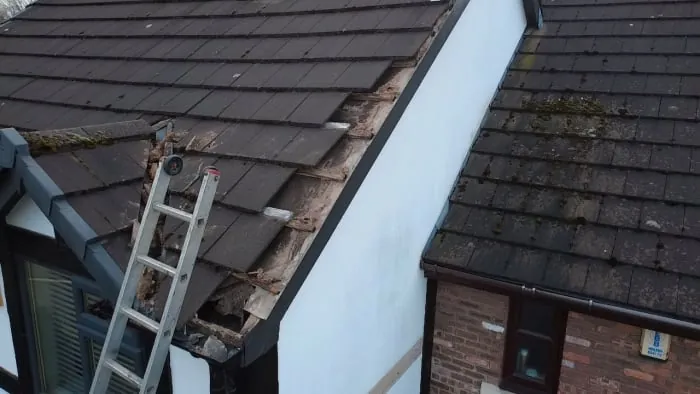
These are guide figures for ordinary houses, VAT included, assuming the rafters are sound:
| Job | Guide price, 2026 |
|---|---|
| Refixing a few slipped Welsh slates or concrete tiles | £150 - £400 |
| Resetting a patch of stone slates with new pegs or nails | £400 - £1,200 |
| Rebuilding a cut-down chimney stack to its old height | £1,200 - £3,000 |
| Re-covering a concrete-tiled Bedale frontage in clay pantiles | £7,500 - £13,000 |
| Re-slating a Victorian brick terrace in Welsh slate | £8,000 - £14,000 |
| Stripping and relaying one slope of a stone slate roof | £7,000 - £13,000 |
| Full strip and relay of a stone slate roof | £18,000 - £35,000 |
| Scaffolding for a typical house | £700 - £1,600 |
The stone slate rows have the widest spread because nobody knows how many slates will survive until the roof is open. A firm doing a full roof replacement on a stone roof should tell you roughly what proportion it expects to reuse and how it will price any shortfall. If a quote just says “re-roof”, ask what goes back on and what gets bought in.
Bedale: Georgian brick fronts under 1950s concrete tiles
Bedale got its market charter from Henry III in 1251, and the long burgage plots laid out behind North End and Market Place are still there.
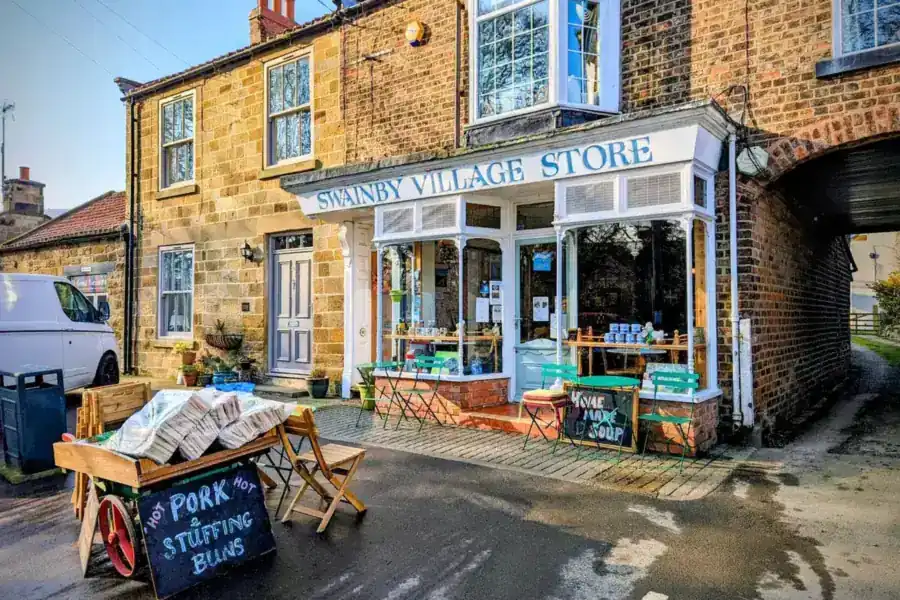
What you see now is mostly 18th-century rebuilding. The council’s appraisal of the conservation area says the main walling is red brick, or field cobbles hidden under render, and that the roofs on those Georgian rebuilds were mainly stone slate with some red clay pantile. Then, during the 1940s and 1950s, many of the roofs along Market Place and North End were stripped and re-covered in a shallow machine-made concrete tile. The appraisal says plainly that the tiles are heavier than the old structures were built for and do not suit the buildings.
They have lasted. But the same document, written in December 2010, expected those coverings to need replacing within about 20 years, which puts the deadline at around 2030. That is why a lot of Bedale roofs on the main street will come up for renewal at roughly the same time. When yours does, the council would like to see clay pantile or stone slate go back on, and it admits stone slate is getting hard to find. Our advice is to price pantiles next to a new concrete tile before deciding. The scaffold, the strip, the battens and the labour cost much the same either way, so the gap comes down mostly to the tiles themselves, and a lighter clay covering takes some load off rafters that have been carrying concrete for seventy-odd years.
Away from the centre, the Victorian streets and terraces are red brick with Welsh slate, and those are the most straightforward roofs in town to re-cover.
Leyburn: brown stone slate, Welsh slate and no clay at all
Leyburn’s roofs were traditionally local stone slate, laid in diminishing courses with big slates at the eaves and small ones at the ridge.
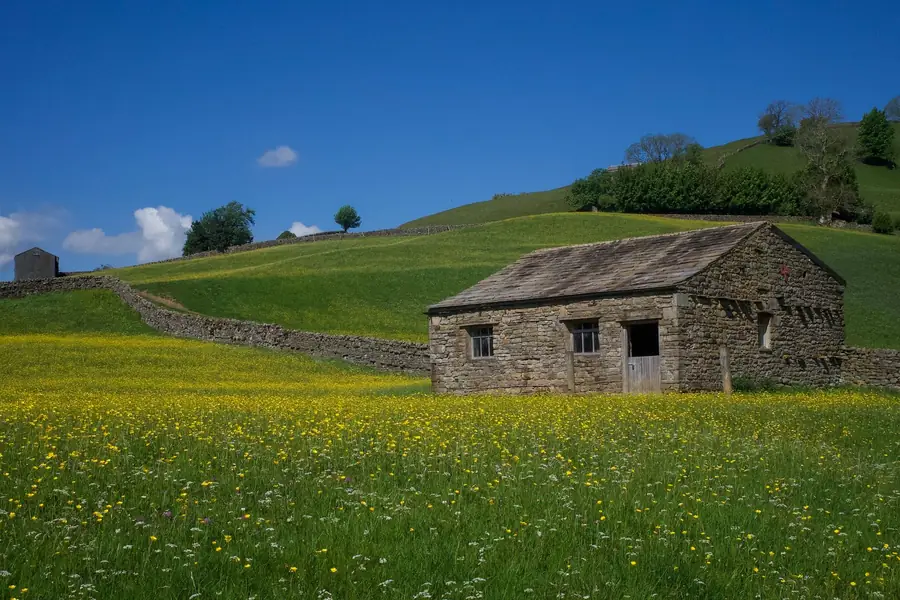
The conservation area appraisal notes something specific to the town: Leyburn’s stone slate weathers to a dark brown, not the grey you find a few miles to the north. Against the pale grey walling stone, that colour is a big part of how the place looks, which is why a mismatched reclaimed slate stands out here more than it would in most towns. The best surviving examples line the north side of the Market Place.
Grey Welsh slate began arriving once the railway reached the town in 1855, and it is now on a fair share of roofs, including St Matthew’s Terrace and buildings on High Street. A few higher-status houses, Thornborough Hall being the obvious one, have green Westmorland slate. Clay tiles are not used in the conservation area at all. Concrete tiles did get onto some buildings during the 20th century, on the south side of the Market Place and along Railway Street, and the council’s stated hope is that they will be swapped for traditional material when they wear out. If you want more background on salvaging and relaying this kind of roof, our guide to Yorkshire stone slate roofs goes into the sorting and the costs.
Vale of Mowbray frost against Wensleydale wind
The weather splits the same way the materials do.
Bedale sits low and dry on the edge of the Vale. The Leeming figures above, about 654mm of rain and 121 days a year with at least a millimetre, are modest by northern standards. The problem is the cold. Fifty-three air frosts a year means a lot of nights when water soaked into a tired concrete tile, a cement-pointed chimney or a soft brick freezes and expands. The Bedale appraisal itself mentions frost damage to soft clay bricks where cement mortar was used for repointing, and the same cycle loosens ridge mortar and cracks old tiles.
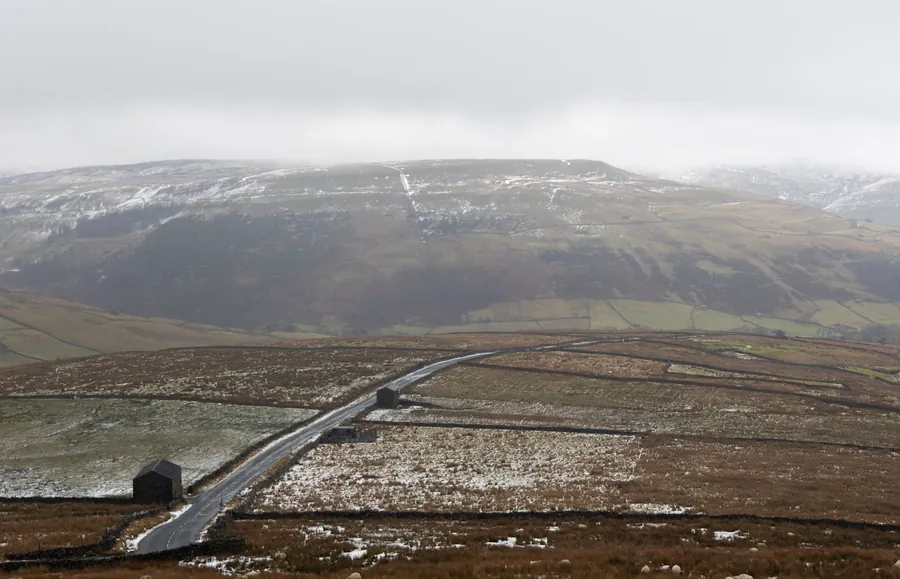
Leyburn is a different case. At almost 200 metres on the valley side, with open moorland about two kilometres to the north-west and the scar of The Shawl just west of town, it catches weather coming down Wensleydale that never reaches Bedale. There is no Met Office station in the town to give a figure, but expect more wind-driven rain and snow lying longer. Stone slate copes with that well when it is properly hung, because the slates are heavy. Where it fails is at the fixings: when the old oak pegs or iron nails rot, slates slip one at a time, and wind gets under the gap.
Who approves roof work in Bedale and Leyburn
Both towns now come under North Yorkshire Council. Bedale used to be in Hambleton district and Leyburn in Richmondshire, and both councils were abolished in April 2023, so older leaflets with either name on them are out of date.
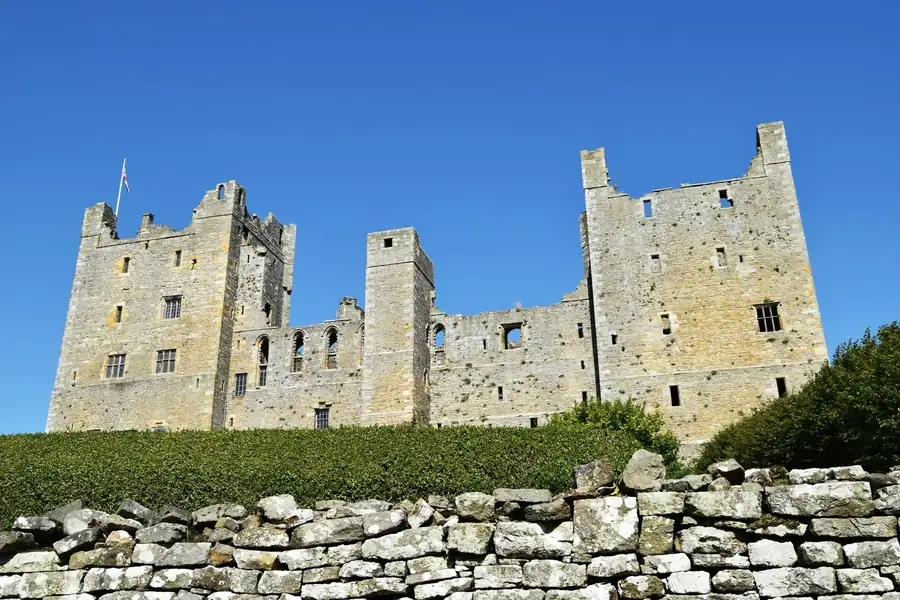
Leyburn is outside the Yorkshire Dales National Park, but not by much. Preston-under-Scar, a couple of miles west, describes itself as just outside the boundary, and Castle Bolton beyond it is inside. Once you are inside, the Yorkshire Dales National Park Authority’s planning service decides applications instead of the council. Building regulations approval still goes through North Yorkshire Council either way.
Within Leyburn, the conservation area was designated in 1973 and covered by an Article 4 direction in 1991. In practice, every house inside it needs planning permission to change its roofing material or to fit rooflights or solar panels. The Leyburn conservation area design guide, adopted in 2018, says concrete tiles should not be used, front dormers will usually be refused, rooflights belong on rear slopes in a conservation pattern, and old chimney stacks should be kept even if they are no longer used. The smaller Quarry Hills conservation area, built on the old workhouse site, has separate guidance that asks for natural grey slate and rules out concrete and clay tiles.
Bedale’s conservation area dates from April 1974 and contains 79 listed buildings, among them Bedale Hall and St Gregory’s Church. It has no Article 4 direction, so an unlisted house there keeps more of its permitted development rights than one in Leyburn. Dormers still need permission in any conservation area, and a listed building needs listed building consent for almost any change to its roof. The Bedale conservation area appraisal also asks for the chimneys on Market Place that were cut down, and lost their pots, to be rebuilt where that is appropriate.
What to ask roofers in Bedale and Leyburn before you book
Plenty of the hold-ups on a market town job happen at street level, not on the roof.
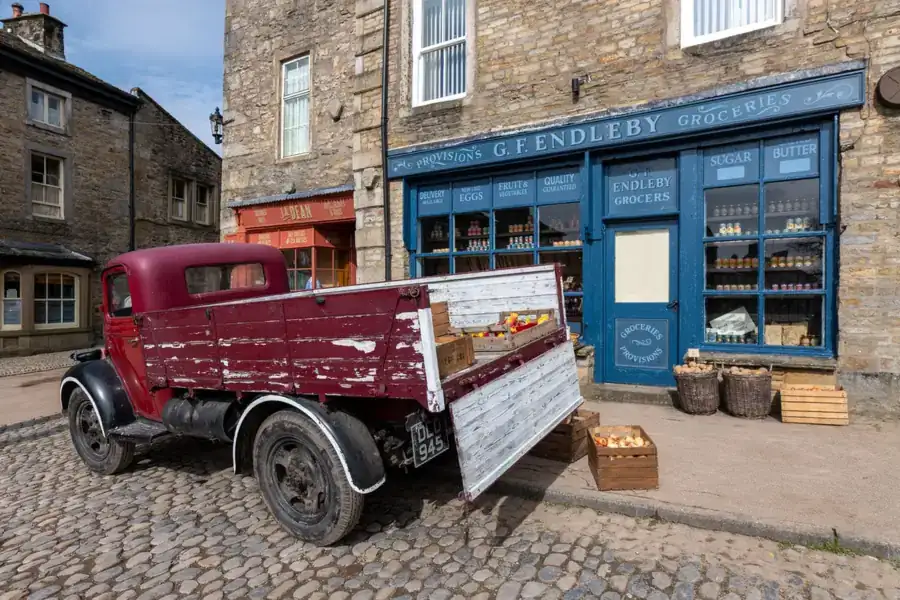
Bedale’s market is on Tuesdays and Leyburn’s fills the square on Fridays. A scaffold on a market place frontage needs a licence from North Yorkshire Council as highway authority, and it is far easier to get it up on a quiet weekday than to argue with stallholders. On a narrow street of terraced fronts, ask how materials will reach the roof and where the skip will go.
Beyond that, a few questions sort out most quotes:
- Is the covering original, and will the quote reuse it? On a Leyburn stone roof, ask for an estimate of how many slates will go back.
- If the house is in either conservation area, who checks whether consent is needed, and is that before or after the deposit?
- On a Bedale concrete-tile roof, will the timbers be checked for the extra weight they have carried since the 1950s?
- Are chimney flashings and pointing included, or priced separately?
If you are weighing up work further east in the Vale as well, our piece on roofers in Thirsk and Easingwold covers a similar mix of pantiles, frost and Article 4 rules.
When you are ready, ask us for a free roof survey in Bedale or Leyburn and we will look at the covering, the timbers and the planning position before we give you a figure.
Frequently Asked Questions
Is Leyburn in the Yorkshire Dales National Park for planning purposes?
No. Leyburn town is outside the National Park, so North Yorkshire Council decides planning applications there, as it does for Bedale. The boundary is close, though. Villages a short drive up the dale, Castle Bolton among them, are inside it, and there the Yorkshire Dales National Park Authority is the planning authority. Building regulations stay with North Yorkshire Council on both sides of the line.
Do I need planning permission to change the roof on a house in Leyburn’s conservation area?
Often, yes. An Article 4 direction made in 1991 means every house in the Leyburn conservation area needs planning permission to change its roofing material or to add rooflights or solar panels. A like-for-like repair in the same stone slate or Welsh slate is not usually a problem. The 2018 design guide also says concrete tiles should not be used and front dormers will normally be resisted.
What should replace the old concrete tiles on a Bedale Market Place roof?
The council’s 2010 appraisal of the conservation area encourages clay pantiles or stone slate when the concrete tiles put on Market Place and North End in the 1940s and 1950s finally fail. Stone slate is the more historically accurate choice but is getting hard to source, so clay pantile is the practical option on many buildings. Bedale has 79 listed buildings in its conservation area, and any of those needs listed building consent before the covering changes.
How much does roof work cost in Bedale and Leyburn?
As a 2026 guide, resetting a patch of stone slates costs about £400 to £1,200, and re-covering a concrete-tiled Bedale frontage in clay pantiles about £7,500 to £13,000. Re-slating a Victorian terrace in Welsh slate runs from about £8,000 to £14,000, and a full strip and relay of a Leyburn stone slate roof from about £18,000 to £35,000. Scaffolding adds roughly £700 to £1,600, more where it stands on a market place pavement.