
5 November 2026
Roofers In Grassington And Upper Wharfedale: Park Planning, Stone Slate And 2026 Prices
Ask North Yorkshire Council about a dormer on a cottage in Grassington and you’ll find it isn’t the council’s decision. Grassington and every village around it lie inside the Yorkshire Dales National Park. Planning there belongs to the National Park Authority. That catches out a lot of people looking for roofers in Grassington, and it shapes everything else: which roof jobs need permission, how long they take to approve, and what materials are acceptable. The buildings are part of it too. Grassington has 29 listed buildings, mostly gritstone with stone slate roofs, and it has been a conservation area since 1969. Linton, Burnsall and Kettlewell got the same status that year. Then there’s the dale itself. Great Whernside, the highest hill in Wharfedale, stands over Kettlewell. The lanes between the villages were laid out for carts, and a scaffold wagon struggles on most of them. This guide works through planning first, then the roofs, the weather, access and 2026 prices.
Roofers in Grassington answer to the National Park, not the council
The work splits two ways. The Yorkshire Dales National Park Authority decides planning applications and listed building consent for Grassington, Threshfield, Linton, Hebden, Burnsall and Kettlewell. North Yorkshire Council, which took over from Craven District Council in April 2023, still runs building control and licenses scaffolding on the highway. So a single re-roof in Kettlewell can involve both bodies, and it’s worth knowing which one you’re talking to.
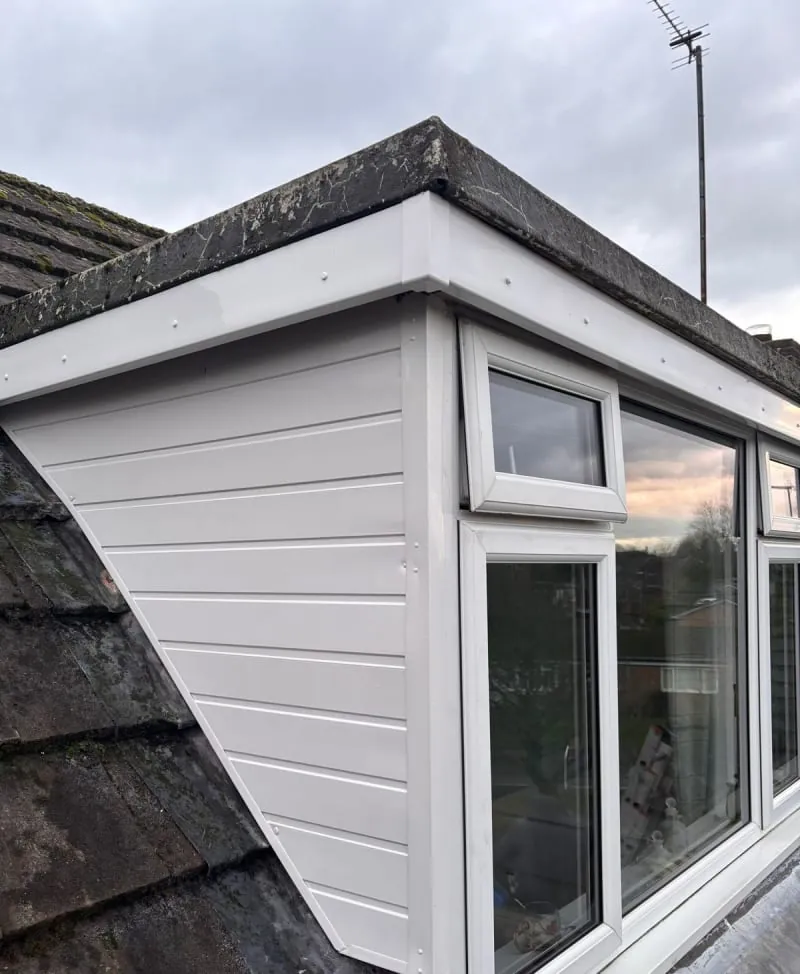
The rule people trip over is the one about dormers. The government’s technical guidance on householder permitted development rights says roof extensions are not permitted development in National Parks. The Authority goes further and says dormer windows always need planning permission. A dormer like the one in the photo above would need an application here even on a rear slope nobody can see. Rooflights come under a different class, so one that sits flush and projects no more than 15cm from the slope is usually allowed without an application. On a stone slate roof, a slim conservation-style frame is still the safer choice.
Repairs are simpler. Refixing slipped slates, rebedding a ridge or a like-for-like roof replacement in matching materials usually needs no planning permission. It will usually still need building regulations sign-off once a large part of the roof covering is replaced. One more thing: if your application involves taking a roof off, the Authority may ask for a bat survey, and those can only be done in certain months. A spring job can slip to autumn if nobody books the ecologist early.
Five conservation areas between Burnsall and Kettlewell
Most of the old cores in this part of the dale are protected. The national planning dataset lists Grassington, Linton, Burnsall and Kettlewell as conservation areas from 1969, and Hebden from 2006. The Yorkshire Dales National Park Authority’s conservation areas page carries the character appraisals for Linton, Hebden and Kettlewell. We couldn’t find Threshfield on either list, but check your own address before you rely on that.
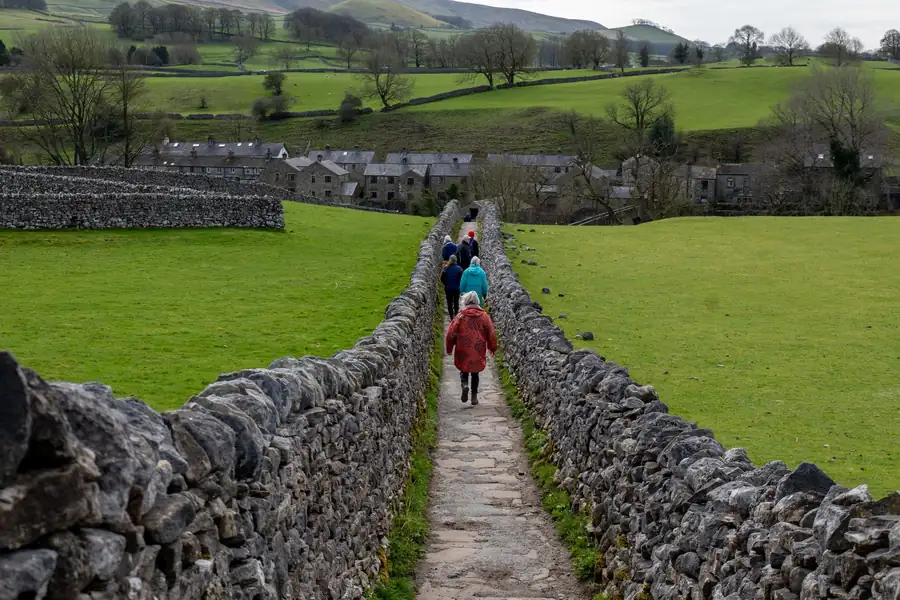
What surprises owners is how little conservation area status adds here. The Kettlewell appraisal points out that inside the park it has only a limited effect on permitted development, because National Park status already removes most of it. The extra controls cover demolition and trees: you have to tell the Authority six weeks before felling or cutting back a tree in a conservation area. That matters for roofers more than you’d think. An overhanging sycamore that wrecks the gutters every autumn can’t simply be lopped the week the scaffold goes up.
The appraisals still count for something, because planning officers judge proposals against the local character they describe. Kettlewell’s notes that the older houses have stone slate roofs laid in diminishing courses. The Victorian buildings, it says, have lighter imported slate laid in even courses. A proposal that ignores that difference is unlikely to get far.
Gritstone slates on a limestone dale
Grassington stands on limestone, and you can see the scars and pavements from the village. So why are the roofs not limestone? Limestone won’t split into thin flags, and sandstone and gritstone will. That’s why nearly every listed building in Grassington, from Church House of 1694 to the Methodist chapel of 1811, has gritstone walls under a graduated stone slate roof. Grassington House on The Square is one of the few limestone buildings. A handful of houses have grey slate roofs, Yarnbury House and Yarnbury Cottage up on the old lead-mining road among them.
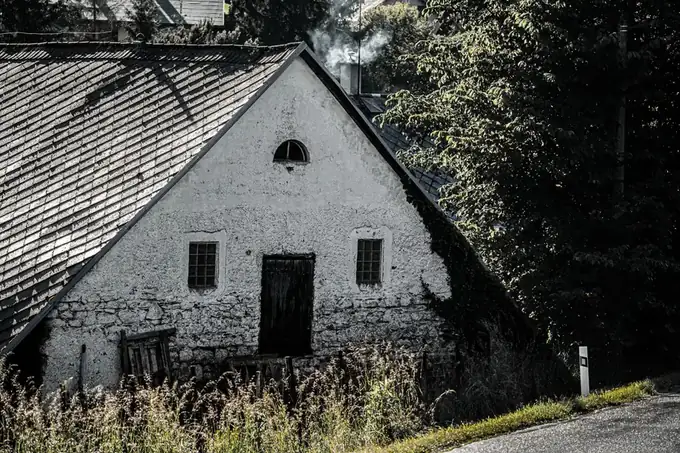
A graduated stone slate roof starts with the biggest, heaviest slates at the eaves and works up to small ones near the ridge. Each slate traditionally hung on an oak peg over a riven lath, and the joints underneath were often torched with lime mortar. When a roofer strips one, every sound slate is sorted by length so it can go back in the right course. Kettlewell has an even older layer as well. Its appraisal notes that Victoria Cottage may once have been a heather-thatched cruck building, which shows how many times some of these roofs have been rebuilt.
From the stone roofs we quote up the dale, the trouble is rarely the slates. Gritstone slates last for generations. The pegs rot and the laths sag, so a roof that looks fine from the street can be shedding slates from underneath. Our guide to Yorkshire stone slate roofs and salvage costs covers the strip-and-relay process step by step.
Weather at the top of the dale
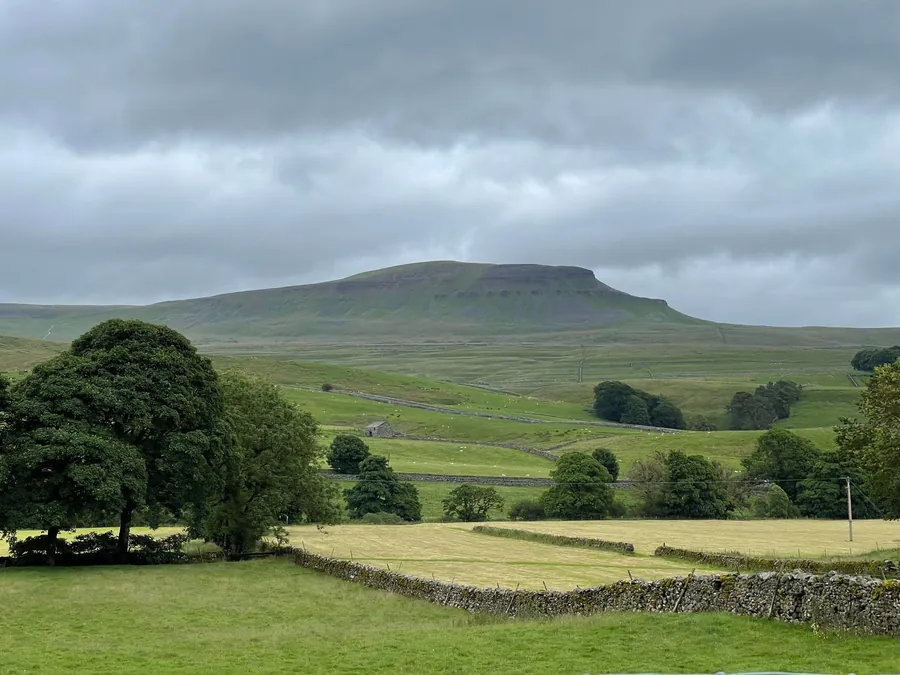
Grassington is high enough to feel it, and Kettlewell more so. Kettlewell sits on a south-facing gravel fan where Kettlewell Beck meets the Wharfe. Cam Pasture shelters it from the north, and the scars climb to Great Whernside on the east. That’s a kind setting for a village, but it does little to stop the westerlies, which drive rain onto west-facing gables and verges.
The damage comes in roughly the same order every time. Lime pointing at the verges washes out first. Snow drifts behind chimney stacks and into valleys, then thaws slowly, so lead that copes with rain sits in water for days. North slopes on the cottages along Grassington’s back lanes stay damp from October to April, and moss gets in under the slate tails and lifts them. Mortar-bedded ridges crack as the frost works into them.
Most of it is cheap to fix if someone catches it early. On a stone slate roof in Kettlewell, Burnsall or Hebden we’d suggest a look every autumn, because one slipped slate left over a winter lets water onto the laths, and that’s when a £300 job turns into a slope.
Scaffold on cobbles, bridges and village lanes
Grassington’s centre is cobbled. Main Street climbs steeply from The Square, and most of the houses stand right on the back of the pavement. A scaffold there goes on the highway, so it needs a licence. Under North Yorkshire Council’s scaffolding and hoarding licence rules the scaffolder has to give at least seven days’ notice and carry £5 million public liability insurance. At least 1.5 metres of footway must normally stay clear. A licence lasts up to four weeks. Levelling a scaffold on cobbles on a slope takes extra boards and time, and it’s priced in.

Elsewhere it’s the lanes. Kettlewell’s western streets are tight, with buildings lining them. In Burnsall the road crosses the Wharfe on an old stone bridge. Hebden and Linton are reached on narrow, walled lanes off the main roads. We often split deliveries into smaller loads and bring stone slates in on pallets that a small truck can lift off. Summer weekends bring heavy visitor traffic to Grassington and Burnsall, so we deliver early on weekdays. From Harrogate the route is over Greenhow Hill on the B6265. If you’re further down towards the Aire valley, our post on roofers in Skipton covers the town side of the same planning line.
What roof work costs in Upper Wharfedale in 2026
These are the ranges we would expect to quote around Grassington this year, including VAT and scaffold where the job needs it. Treat them as a check on whether a quote is in the right area, not as a fixed price.
| Job | Typical 2026 price |
|---|---|
| Refixing a few slipped stone slates from a tower or ladder | £250 to £550 |
| Rebedding a stone ridge in lime mortar on a cottage | £700 to £1,600 |
| New lead flashings to a chimney stack | £700 to £1,800 |
| Repointing and re-flaunching a chimney | £600 to £1,500 |
| Re-slating a Victorian house in imported slate | £9,000 to £16,000 |
| Re-covering a postwar concrete-tiled house | £7,500 to £12,000 |
| Stripping and relaying a stone slate cottage roof, topped up with reclaimed slate | £20,000 to £40,000 |
Up here, access and paperwork push a price up more often than the roof does. A scaffold licence and footway protection on Main Street, a split delivery to a Kettlewell lane, or a stone slate roof that needs a heritage statement for the Authority will all add cost. A wait for a bat survey adds time rather than money, but it can still push a job back by months.
Before you book a roofer up the dale
A few things save time on a survey visit. If the house is listed, say so. If you already have a planning decision or an Authority pre-application reply, have it ready. And tell us if you’ve seen bats in the loft.
When you compare quotes, check that each one says in writing:
- whether planning permission or listed building consent is needed, and who is applying for it
- whether a scaffold licence is needed, and that it’s included in the price
- what happens to the old stone slates, and how any shortfall will be matched
- whether the job needs building regulations sign-off
- what the guarantee covers
Book anything involving lime mortar for spring or early autumn so it can cure before the frosts. Making a leak safe can happen at any time of year. If you’d like a roof in Grassington, Threshfield, Linton, Hebden, Burnsall or Kettlewell looked at, we’ll check the loft as well as the slopes and tell you which body you’ll need to deal with. Book a free roof survey in Upper Wharfedale.
Frequently Asked Questions
Who gives planning permission for roof work in Grassington?
The Yorkshire Dales National Park Authority. Grassington, Threshfield, Linton, Hebden, Burnsall and Kettlewell all sit inside the National Park, so the Authority is the local planning authority there, not North Yorkshire Council. The council still handles building regulations and licences for scaffolding on the highway.
Is Grassington a conservation area?
Yes. Grassington has been a conservation area since 1969, and so have Linton, Burnsall and Kettlewell. Hebden was designated more recently. All of them are managed by the National Park Authority. Inside the park, conservation area status adds little to the permitted development limits that already apply, but it does bring controls on demolition and on felling or pruning trees.
Can I put a dormer on my house in Upper Wharfedale without planning permission?
No. Roof extensions are not permitted development anywhere in a National Park, and the Authority’s own guidance says dormer windows always need planning permission. Rooflights that sit no more than 15cm proud of the slope are treated differently, and a like-for-like repair or re-roof in matching materials normally needs no application at all. If the building is listed, check with the Authority first whatever you plan.
How much does a stone slate re-roof cost in Grassington?
On a two-storey cottage, stripping the stone slates, saving the sound ones and relaying them on new laths and membrane with reclaimed slates to make up the shortfall usually costs between £20,000 and £40,000 in 2026. The figure depends mostly on how many slates survive and whether the timbers need work, which is why we only price it after a survey.
Do you need a licence to put scaffolding up on Grassington Main Street?
If any part of the scaffold stands on or over the highway, including the pavement, yes. North Yorkshire Council issues the licence, needs at least seven days’ notice, and normally expects at least 1.5 metres of footway to stay clear. A licence lasts up to four weeks and has to be extended before it runs out. We apply for it as part of the job.