
18 September 2026
Roofing For Harrogate Hotels, Guest Houses And Commercial Buildings: How A Commercial Re-Roof Differs
Fifty-five articles into this blog and every one of them has been written for somebody who lives in the building. Hotels, guest houses, shops and offices work differently. The roof stops being a household expense and becomes a business asset with a maintenance budget, a depreciation profile and a direct line to your room revenue.
The numbers shift too. VAT at twenty per cent is a real cost to a homeowner and a recoverable one to a VAT-registered hotel. A single-ply flat roof can carry a manufacturer’s system warranty of fifteen to twenty-five years, which is a different animal to a roofer’s workmanship guarantee. And once a project is likely to run beyond thirty working days with more than twenty people on site at once, it becomes notifiable to the Health and Safety Executive, which is a sentence no domestic client ever has to read.
Here is what actually changes when the roof belongs to a Harrogate business rather than a Harrogate household.
Who signs the contract changes everything after it
The single biggest difference is legal, and it happens before anyone orders a skip. Under the Construction (Design and Management) Regulations 2015, a homeowner is a domestic client and most of their duties pass automatically to the contractor. A business is a commercial client and keeps them.
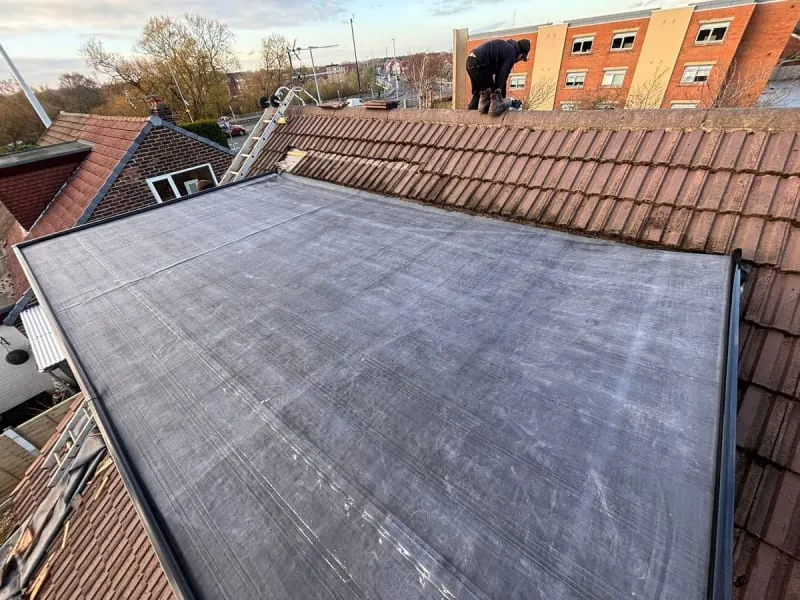
In practice that means four things sit with you as the building owner or operator. Making suitable arrangements for managing the work, which includes allowing a realistic programme. Appointing a principal designer and a principal contractor in writing whenever more than one contractor is involved, and a scaffold firm plus a roofer is already two. Providing the pre-construction information you hold, which is everything from asbestos surveys to where the incoming gas main runs. And checking that a construction phase plan exists before work starts, rather than assuming somebody else has it. The HSE’s guidance for commercial clients under CDM 2015 sets out the whole list.
None of this is onerous on a small guest house job, and a competent contractor will walk you through it. What it does mean is that “I left it to the roofer” stops being a defence. It also changes who you should be asking for quotes: a firm that handles commercial flat roofing work routinely will produce a construction phase plan without being chased, and a two-man domestic outfit generally will not.
Your building is open for business while the work goes on
A homeowner puts up with a week of banging. A hotel cannot, because the banging is happening above people who paid to sleep.
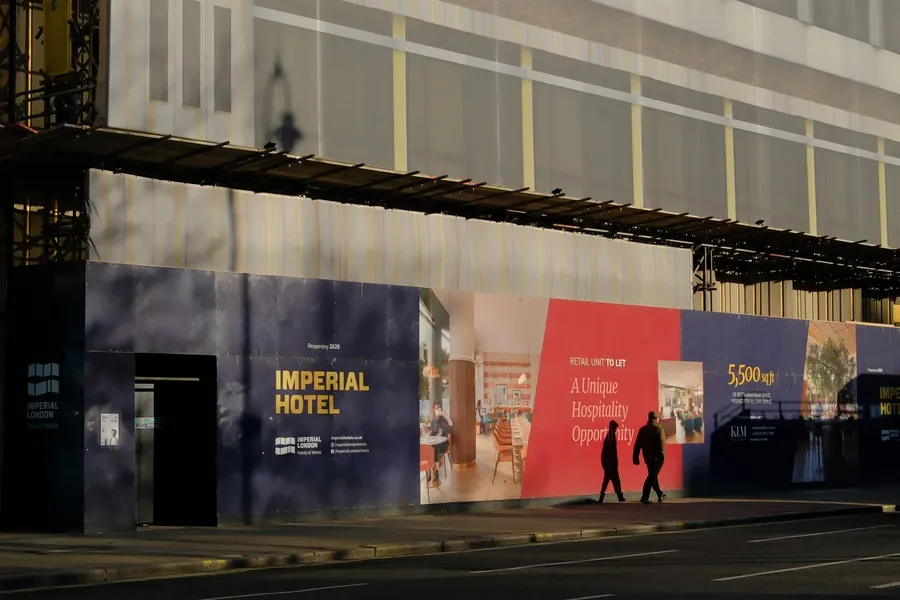
This is where a commercial programme earns its money. Noise windows are the starting point: no cutting, no fixing and no scaffold lifts before around nine in the morning, and a hard stop in the early evening. Strip work and anything involving a cut-off saw gets pushed into the middle of the day. Deliveries and scaffold alterations go on the same schedule, because a lorry beeping its way up a side street at seven does more damage to a review score than a day of tiling.
Then there is the calendar. Harrogate’s trade runs on events, with the Convention Centre on Kings Road filling hotel rooms for weeks at a time and the guest houses around Swan Road and the Montpellier Quarter taking the overflow. The quieter stretches in late January, February and the back end of November are worth a great deal to a roofing programme, and a contractor who asks to see your occupancy forecast before pricing the job is doing you a favour rather than being nosy.
Phasing follows from that. Rather than one big open roof, the work is split into sections that can be closed and made watertight at the end of every shift, with a defined block of rooms taken out of sale for each phase. It takes longer in total and it costs more in access. It is still cheaper than a fortnight of refunds.
One thing that catches owners out: business interruption cover generally responds to sudden insured damage, not to planned works you chose to carry out. The room nights you lose to a re-roof come out of your own margin, so they belong in the project budget from the start.
Scaffolding over a public pavement is a licence, not a phone call
On a suburban street the scaffold goes up in the garden and nobody needs permission. On Parliament Street, Cold Bath Road or any of the stone-fronted commercial terraces in the town centre, the scaffold stands on land that belongs to the highway authority.
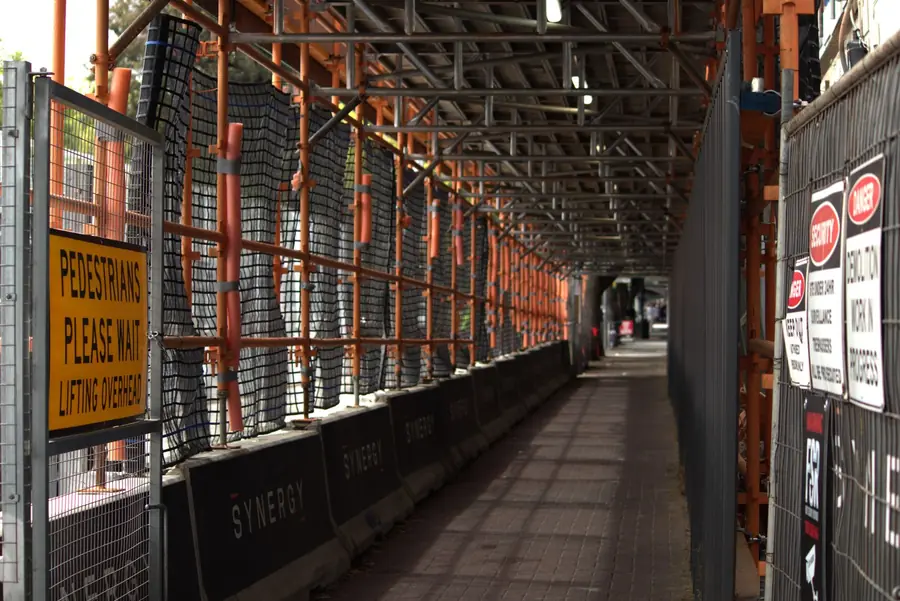
That needs a licence from North Yorkshire Council for scaffolding and hoarding on a road. Note the authority: Harrogate Borough Council was abolished in April 2023 and its highway and licensing functions now sit with the unitary council, so any contractor quoting you from an old bookmark is already behind. The licence covers the occupation of the highway only. Safety of the structure itself, including design, ties, netting, lighting and foundations, stays with the scaffold company.
What the conditions usually require is a protected walkway rather than a diversion, so pedestrians keep passing your front door, plus lit and signed edges, debris netting, and public liability insurance evidenced before erection. If the frontage is retail or your entrance is being obstructed, you may want hoarding as well, which is both a safety measure and a chance to keep your signage visible while the elevation is wrapped. Time this properly: allow a fortnight for the licence, more if the footway is narrow or a loading bay has to be suspended.
Access also runs the programme in a way it never does on a house. A scaffold that has to be built in three lifts around a working entrance, with a bridged section over a fire escape route, takes days rather than hours and has to be inspected weekly. Our guide to what scaffolding costs on a Harrogate roof job covers the domestic baseline, and a commercial frontage typically runs well above it.
The flat areas are far bigger than anything on a house
Look at almost any older Harrogate hotel or guest house from above and you find the same thing: a handsome slate front slope facing the street, and behind it a sprawl of flat roof covering rear ranges, kitchen extensions, function rooms, lift over-runs and plant.
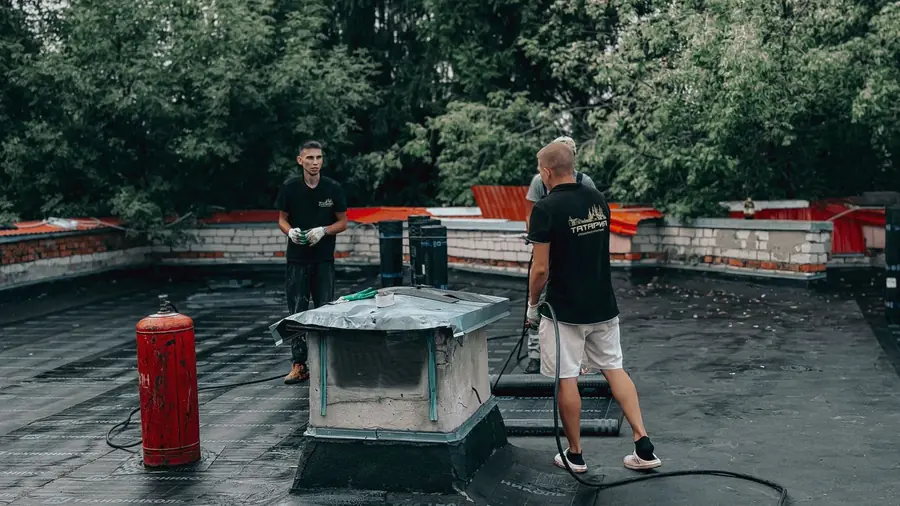
Those areas are where commercial roofs actually fail, and they bring problems a domestic flat roof does not have. Parapet gutters behind stone copings, which drain internally and flood a bedroom rather than a garden when they block. Long runs with almost no fall, built when a quarter-inch in a foot was considered adequate. Kitchen extract ducts, air conditioning condensers and aerials all penetrating the waterproofing, each one a detail somebody has to work around. And foot traffic from engineers servicing that plant, which is the single most common cause of damage to a flat roof that was otherwise fine.
So the domestic instinct - torch-on felt, three layers, done in a day - is often the wrong answer here. Large areas with plant on them want a covering that can be detailed around obstructions, walked on in defined routes and repaired locally without disturbing the rest. Which makes it a specification conversation before it is a price one. Get that settled before you ask three firms for a number, or you will be comparing quotes for three different jobs.
Single-ply and liquid systems, and a warranty from the manufacturer
Two systems dominate the commercial end that you rarely see on a Harrogate semi. Single-ply membranes, mechanically fixed or adhered in large sheets and hot-air welded at the seams. And liquid-applied waterproofing, brushed or rolled in situ, which is the usual answer where a roof is a maze of upstands, pipework and awkward junctions, or where the existing build-up is sound enough to overlay rather than strip.

The more important difference is what you get on paper afterwards. A domestic job comes with a workmanship guarantee from the roofer, and its value is exactly the value of the firm still trading in eight years. A commercial single-ply or liquid system can come with a manufacturer-backed warranty covering both material and installation, typically fifteen to twenty-five years, which survives the contractor going out of business. That only happens on conditions: the installer has to be approved and trained by that manufacturer, the specification has to be signed off in advance, and the manufacturer’s technician usually inspects during installation and again at completion before the warranty is issued. The Single Ply Roofing Association is the trade body for these systems and a sensible place to check what a proper specification should contain.
Ask for the warranty wording before you sign, not after. Two things to check: whether it is a full system warranty or only a materials warranty dressed up as one, and what maintenance it obliges you to carry out to keep it valid. Almost all of them require documented gutter and outlet clearance at set intervals, which is where plenty of warranties quietly die. We have written separately about what a roofing guarantee actually covers and the same reading habits apply here, only with more money at stake.
Conservation constraints on the spa-era frontages
Much of Harrogate’s hotel and guest house stock went up between the 1870s and the First World War, when the spa trade was at its height, and a good deal of it sits in a conservation area. The Montpellier Quarter is the obvious example, with stone frontages, deep eaves and steep slate slopes that are part of why visitors come at all.
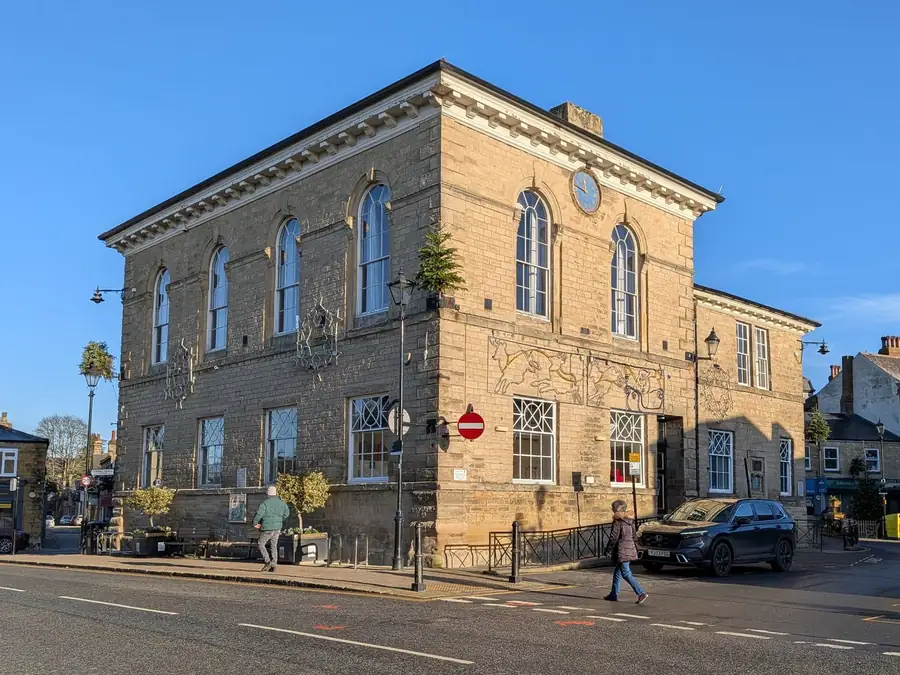
Material choice on anything visible from the street is therefore fixed before you start: a like-for-like slate, sized and laid to match, not the cheapest fibre cement alternative that would be perfectly fine on a rear range. Solar, rooflights, plant screens and extract terminals on a front slope stop being roofing decisions and become planning ones, and on a listed hotel they need listed building consent regardless of how modest they look.
Be conservative at the front and pragmatic at the back. Keep the street elevation authentic and put the rooflights, the vents and the photovoltaics on the rear ranges where nobody is looking. Our guide to roofing in a Harrogate conservation area or listed building has the detail, and the rules read the same whether the building is a home or a hotel. The money does not. A hotel that closes a wing because consent took four months has lost a season, not a weekend.
Condition surveys and a plan, instead of a phone call in a gale
The biggest cultural gap between domestic and commercial roofing is not technical at all. Homeowners are reactive by default. They ring a roofer when something drips. Businesses that manage buildings properly do not work that way, and the ones that do end up paying twice.
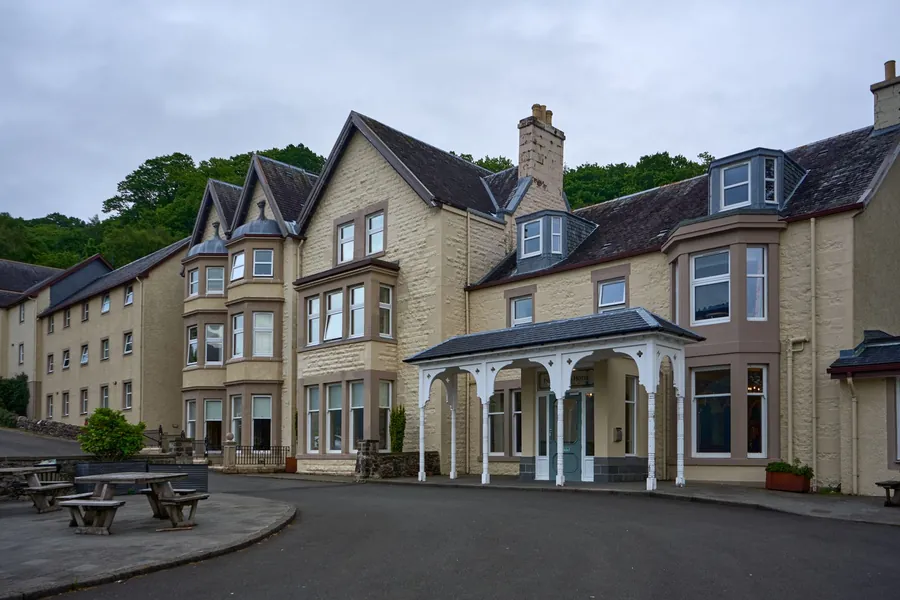
Start with a condition survey that produces a written schedule: every roof area on the building numbered, its covering type and approximate age recorded, its remaining life estimated, and a repair or replacement year attached to each. Core samples through flat areas tell you what the build-up actually is and whether the insulation is wet, which no amount of standing on the roof will reveal. From that you get a five-year plan you can budget against, and a defensible answer when a lender, an insurer or a buyer asks about the roof.
The maintenance half is unglamorous and matters more. Gutters, parapet outlets and rainwater hoppers cleared twice a year and signed off in writing. A walk-over inspection after any serious wind event. A rule that no contractor goes on the roof to service plant without telling somebody. Most commercial property policies contain a maintenance condition, and most storm damage claims that get declined are declined because the insurer concluded the defect was gradual wear rather than a sudden event. A dated inspection record is the cheapest insurance document you will ever produce.
How a commercial quote is put together, and why it reads differently
Open a commercial roofing quote next to a domestic one and the roofing is the part you recognise. It is everything else that looks unfamiliar.

Near the top there will be a preliminaries section, which is the cost of running the job rather than doing it: site management, the scaffold and its licence, weekly inspections, welfare, waste segregation, protection of the interior and the temporary works. The programme itself gets priced too, with out-of-hours or weekend premiums shown separately and every phase given its own start and finish date. Provisional sums cover anything that cannot be measured until the covering is off, which works the same way here as it does on a house, a subject we went through in what roofers find under the tiles mid-job. Then payment terms, usually with a retention of around five per cent held back until the defects period expires. That last one is standard in commercial work and almost unheard of domestically, and it surprises people every time.
The tax treatment is the last real difference, and it is worth a conversation with your accountant before you commit rather than after. Repairs to part of a roof are generally a revenue expense, deductible against trading profits in the year you spend the money. Replacing the whole thing, or improving it beyond what was there, is more likely to be capital, where the Structures and Buildings Allowance gives relief at three per cent a year on qualifying expenditure. VAT at twenty per cent is recoverable if you are VAT-registered, which alone puts a commercial quote in a different bracket to the same figure quoted to a homeowner. And if your business spends heavily on construction across a year, the Construction Industry Scheme can pull you in as a deemed contractor with deduction obligations of your own.
None of that changes what goes on the roof. It changes what the roof costs you after tax, which is the number that actually matters when you are deciding whether to do the rear range this year or next.
Frequently Asked Questions
Is commercial roofing in Harrogate more expensive per square metre than domestic work?
The covering itself is often cheaper per square metre, because a single-ply membrane laid over a large open area goes down faster than slates on a cut-up Victorian roof. What lifts the total is everything around it. Access over a trading frontage, out-of-hours working, phasing the job into sections so rooms stay in use, protection of the interior, waste segregation and a manufacturer’s inspection all cost money that never appears on a house quote. Most of the gap between a domestic figure and a commercial one comes from access and disruption rather than the roofing itself.
Who is responsible for safety on a commercial roof job, the hotel or the roofer?
Both, and the split is set out in the Construction (Design and Management) Regulations 2015. A business client cannot hand its duties to the contractor the way a homeowner can. You have to make suitable arrangements for managing the work, appoint a principal designer and a principal contractor in writing where more than one contractor is involved, pass on what you know about the building, and satisfy yourself that a construction phase plan exists before anyone starts. The roofer still owns the method, the scaffold design and the day-to-day supervision.
Do I need a licence for scaffolding outside a Harrogate hotel or shop?
Yes, if any part of it stands on or oversails the public highway, and that includes the pavement. The licence comes from North Yorkshire Council, which took over from Harrogate Borough Council in April 2023, and it is a highway licence rather than anything to do with planning. Expect conditions on lighting, a protected pedestrian route, signage and public liability insurance. Allow a couple of weeks before the start date, and longer if the frontage needs hoarding or the walkway narrows the footway on a busy street.
Can a hotel roof be replaced without closing the hotel?
Almost always, provided the job is split into sections that can be made watertight at the end of each working day and the programme is written around your occupancy rather than the roofer’s convenience. The usual approach is one elevation or one rear range at a time, with a block of rooms taken out of sale for that phase. The rooms directly under the working area are the ones to sell last. Harrogate’s quieter weeks either side of the conference calendar are worth planning around, because the same work in June costs you far more in lost room nights.
Is a new roof on a commercial building tax deductible?
It depends on whether HMRC sees it as a repair or an improvement, and that is a question for your accountant rather than your roofer. Repairing part of a roof is normally a revenue expense you can set against trading profits in the year you pay it. Replacing a roof outright, or upgrading it beyond its previous specification, is more likely to be treated as capital, where the Structures and Buildings Allowance gives relief at three per cent a year instead. A VAT-registered business can usually recover the VAT either way, which a homeowner cannot.