
6 August 2026
Shared Roofs and Party Walls: Repairing a Terraced Roof in Harrogate
Harrogate is a town of terraces. Whole streets of Victorian and Edwardian houses run in unbroken rows, and one thing homeowners often don’t realise until they need roof work is that the roof over their heads doesn’t stop at their walls. On a terrace, the roof is effectively one long structure shared by everyone under it - a continuous run of slopes, ridges, gutters and chimneys that crosses every boundary line. That has real consequences when something needs repairing. Your leak might be starting on your neighbour’s side; your chimney might be legally half theirs; and getting scaffold up to fix your own roof might mean standing it in their garden. This guide explains what you share, when the law gets involved, who pays for what, and how to get terraced roof work done without falling out with the people next door.

The terrace is really one long roof
Look along a Harrogate terrace and you see one continuous roof, not a row of separate ones. The slates or tiles run the length of the street, the ridge line is unbroken, and the gutters often run through from house to house. The dividing walls between the houses - the party walls - carry on up into the roof space and, in many cases, up through the roof as shared chimney stacks.
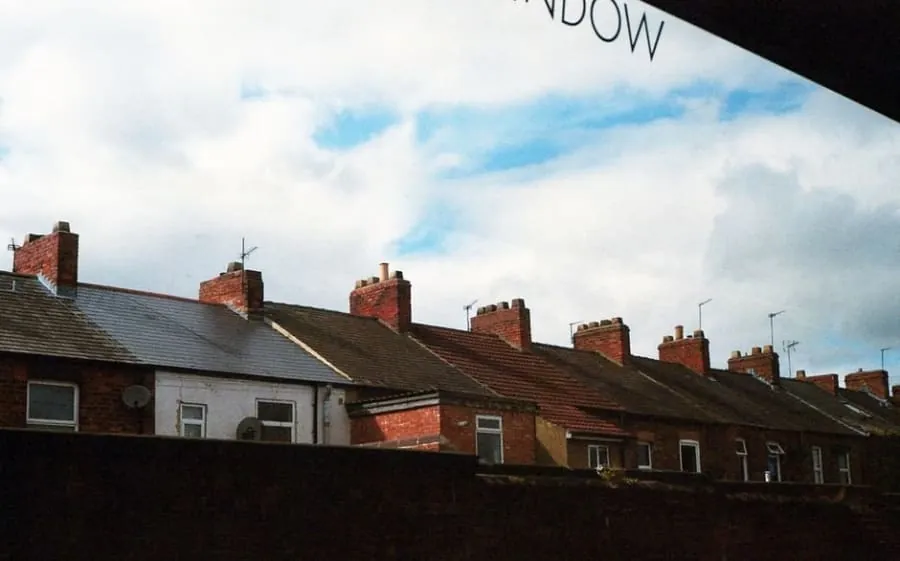
What this means in practice is that water and structure don’t respect the boundary. A leak that shows up in your bedroom can be entering two doors down and tracking along under the covering. A sagging section of roof can be pulling on the structure either side. It’s why terraced roof problems are rarely as self-contained as they look, and why a good roofer will always consider the neighbouring houses, not just yours.
Where you share more than a wall
The shared elements are worth knowing, because they’re the ones that bring rules into play. The most obvious is the chimney stack: on a terrace, a stack sitting on the party wall is shared between the two houses either side, and both owners have rights and responsibilities towards it.
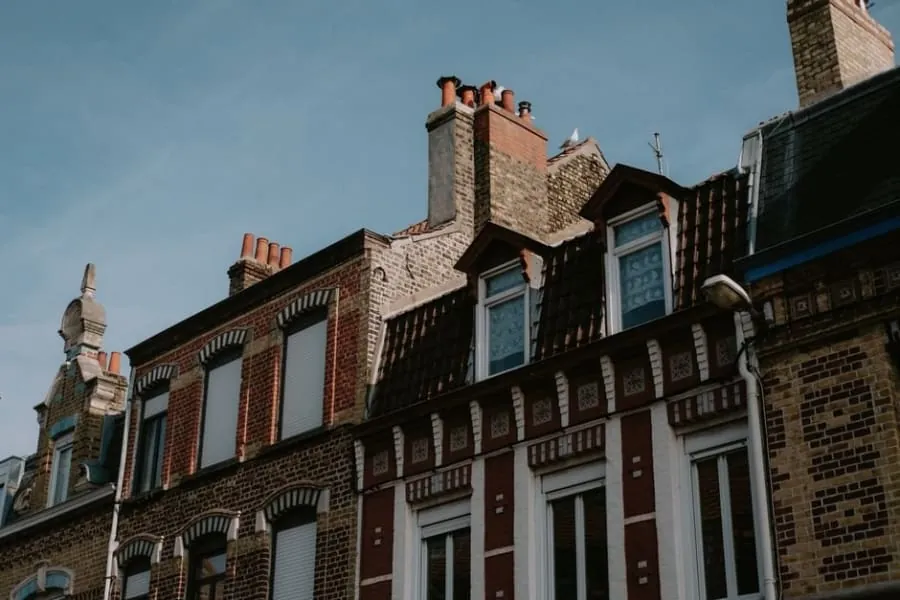
Then there are the valleys and gutters. Where two houses meet, there’s often a shared valley or a party gutter running along the boundary in the roof, taking water from both properties. The main roof covering itself is continuous, and so is the underlying structure. All of this means that repairs to “your” roof frequently touch parts that are legally or practically shared - which is exactly where the Party Wall Act comes in. We’ve touched on the chimney side of this in our guide to redundant chimneys in Harrogate.
The Party Wall Act: when you need your neighbour’s agreement
The Party Wall etc. Act 1996 governs work that affects a shared wall or structure, and terraced roofs fall squarely into it. If your work involves the shared chimney stack - repairing, rebuilding or removing it - or alters the roof covering or structure at the party wall, you may need to serve a formal notice on your neighbour and reach a party wall agreement before starting.
It isn’t there to stop you doing the work; it’s there to protect both sides and set out how the job is done and who’s responsible if something goes wrong. Straightforward repairs to your own slates well away from the boundary usually don’t trigger it, but anything touching the shared stack or the party wall line often does. The government’s party wall guidance sets out when a notice is needed and how to serve one. Getting this right matters most when you come to sell - a buyer’s solicitor will ask whether shared works had the proper agreements.
Scaffolding over the boundary
Here’s the one that catches terraced-house owners out most. To work on your roof safely, the scaffold often has to stand partly in your neighbour’s garden or yard, or oversail their property - and you can’t simply put it there. Access onto or over an adjoining owner’s land is itself notifiable, and under Section 8 of the Party Wall Act you have a right of entry to do the work, but only once a valid notice has been served and the process followed.

Most neighbours are reasonable about this - they’ll want the same courtesy when their turn comes - and a friendly conversation before the paperwork goes a long way. If a neighbour flatly refuses access that you genuinely need to repair your own property, the Access to Neighbouring Land Act 1992 provides a route to apply to the county court for an access order, though it’s very much a last resort. In practice, giving plenty of notice and being clear about how long the scaffold will be up avoids nearly every dispute.
Who pays when the shared part fails
Cost is where terraced roof jobs get delicate. If a shared chimney stack needs repairing, the sensible and usual position is that the two owners it sits between share the cost, since both benefit and both are responsible for it. The same logic applies to a party gutter or a shared valley that serves both houses.

In reality it isn’t always tidy - one neighbour may be keener to act than the other, or the damage may be worse on one side. The best outcome is almost always an agreement reached early and in good faith, ideally with the roofer providing a clear breakdown of what the shared element needs versus what’s purely on one house. Trying to force a reluctant neighbour through the courts is slow and expensive, and it sours a relationship you’ll live next to for years - so a fair, documented split is worth working towards.
Coordinating a terraced re-roof
There’s an opportunity hidden in all this. Because the roof is continuous, there are real advantages to neighbours coordinating bigger work rather than each going it alone. If several houses in a row are due a re-roof, doing them together shares the scaffold cost, keeps the covering matching along the terrace, and avoids the mess of one new roof butting up against a tired old one.

Matching matters on a terrace, especially in one of Harrogate’s conservation areas, where the continuous slate roofline is part of what’s protected. A single mismatched re-roof can stand out badly. It’s not always practical to get neighbours to act at once, but if the chance comes up, a coordinated job on a terrace is cheaper per house and better-looking than a patchwork of individual ones. Our roof replacement service handles terraced work and the coordination that comes with it.
Getting it right without falling out
The whole thing comes down to communication. Talk to your neighbours early, before the roofer is booked - explain what you need to do, whether it touches anything shared, and whether you’ll need access to their side. Serve any party wall notices properly rather than springing scaffold on them. And use a roofer who understands terraced work, because pinning down whether a leak is yours or next door’s, and what’s shared, is a job for someone who’s done it before.
Do that and terraced roof work is no harder than any other - just with a conversation attached. Skip it, and a simple repair can turn into a boundary dispute. If you’re not sure what’s shared on your roof or who’s responsible, our roof repairs team can assess it and help you work out the neighbourly side before anyone puts up scaffold.
Frequently Asked Questions
Do I need my neighbour’s permission to repair my terraced roof in Harrogate?
For repairs to your own slates away from the boundary, usually not. But if the work involves a shared chimney stack, a party gutter, or the roof structure at the party wall, the Party Wall Act 1996 may require you to serve notice and reach an agreement first. And if scaffold needs to stand on or over your neighbour’s land, that access is notifiable too. When in doubt, talk to them early and check whether a notice is needed.
Who is responsible for a shared chimney on a terrace?
A chimney stack sitting on the party wall between two terraced houses is shared, and both owners have rights and responsibilities towards it. In practice that means the cost of repairing or rebuilding it is normally split between the two households it serves. Reaching a fair, documented agreement early is far easier than trying to force a reluctant neighbour through a legal process.
Can I put scaffolding on my neighbour’s property to fix my roof?
Only with the right process. Access onto or over a neighbour’s land is notifiable, and Section 8 of the Party Wall Act gives a right of entry once a valid notice has been served. If a neighbour refuses access you genuinely need, the Access to Neighbouring Land Act 1992 allows an application to the county court for an access order, but that’s a last resort. A friendly conversation and proper notice resolves almost every case.
Should neighbours re-roof a terrace together?
If several houses are due at once, yes - it shares the scaffold cost, keeps the slate matching along the terrace, and avoids a new roof butting against a worn one. Matching is especially important in Harrogate’s conservation areas, where the continuous roofline is protected. It isn’t always possible to coordinate, but when it is, a joint terraced re-roof is cheaper per house and looks far better.