
22 August 2026
Roofing Felt and Battens: The Hidden Layers Under Your Harrogate Roof
Almost nobody buys a roof. What people actually buy is tiles, or slates, because that is the part you can see from the pavement. Underneath that covering sit two layers that get no attention at all until something goes wrong: a sheet of felt or membrane, and the thin timber battens the tiles are nailed to. Between them they handle every drop of rain that finds its way past a tile, and in Harrogate - sitting around 150 metres above sea level with the Pennines to the west, and taking noticeably more rain and frost than the flatter parts of Yorkshire - a fair amount of rain finds its way past a tile. When those hidden layers fail, the tiles above them can be in perfect condition and the loft will still be wet. This guide works from the outside in, explaining what each layer does, how it fails locally, what you can check yourself from the loft hatch, and what it costs to put right.
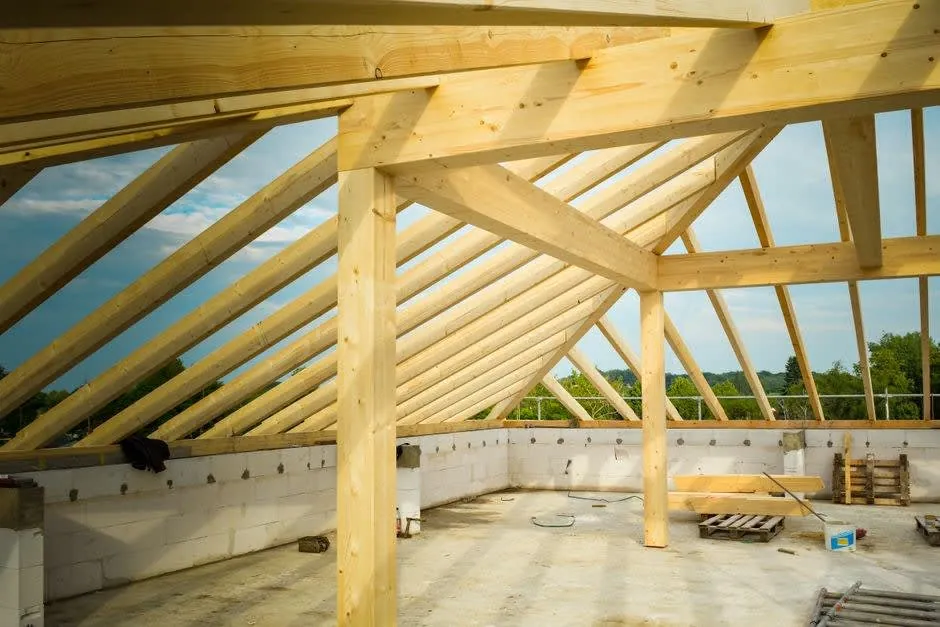
A roof in cross-section: what is actually up there
Cut through a typical Harrogate pitched roof and you get four layers. The rafters form the frame. Over the rafters goes the underlay - felt on older roofs, a breathable membrane on newer ones. Over that go the battens, thin lengths of treated timber running horizontally. And nailed or hooked to the battens is the covering: slate on the Victorian and Edwardian stock, clay pantiles on some of the older properties, concrete tiles across the post-war estates.
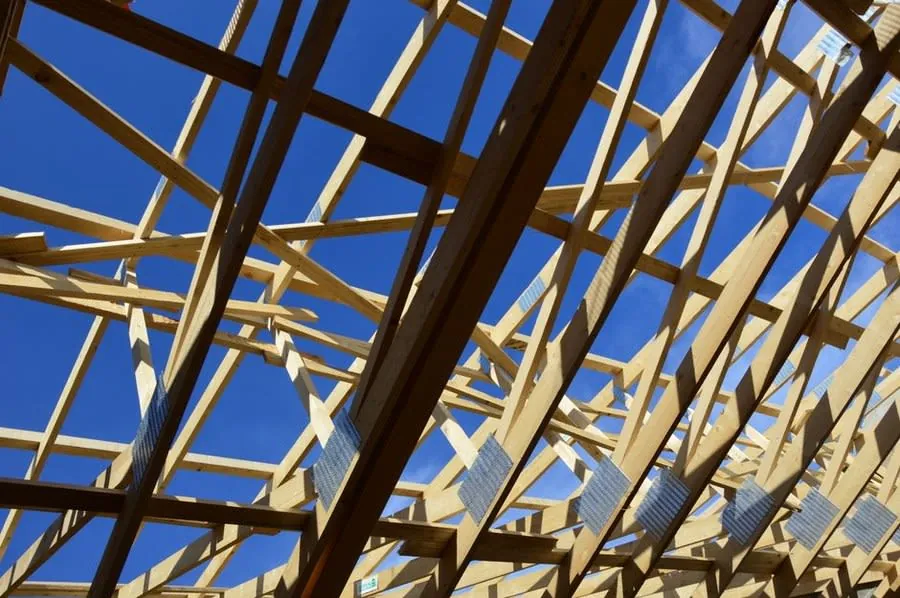
The key thing to understand is that the covering is not waterproof, and was never meant to be. Tiles and slates shed the bulk of the water, but wind pushes rain sideways under the laps, and snow blows in through gaps that water alone would never pass. The underlay catches that and runs it down into the gutter. So a roof has two lines of defence, and homeowners generally only know about the first. When people ask us to look at a leak on a roof whose tiles look fine, the second line is usually where the answer is - which is also why a proper roof repair starts with getting into the loft rather than straight up a ladder.
Bitumen felt or breathable membrane: which one you have
There is a rough dividing line in the early 2000s. Before it, roofs were felted with bitumen-impregnated sheet, usually reinforced with hessian or glass fibre. It is dark, heavy, and completely impermeable. After it, breathable membranes took over - lighter, usually white, grey or translucent, and designed to let water vapour out while keeping liquid water in its place.
That difference matters more than it sounds. A house generates a surprising volume of water vapour, and it rises. With impermeable bitumen felt, that vapour hits a cold barrier and condenses, which is why older roofs need ventilation at the eaves and ridge to work properly. Breathable membranes let much of it pass through instead, which is a large part of why loft condensation problems are far more common on 1960s and 1970s Harrogate housing than on anything built in the last twenty years. The requirements for keeping moisture out of a building envelope sit in the building regulations, and the relevant technical guidance is published in the government’s collection of Approved Documents.
Bitumen felt does not fail gracefully. It goes brittle with age and UV exposure, sags in swags between the rafters where water pools, then splits. Typical service life is around 30 to 40 years, so a roof last done in 1985 is due.
What to look for from the loft hatch
You do not need to go on the roof to learn most of what matters. Pick a bright day, take a torch, and put your head through the loft hatch.
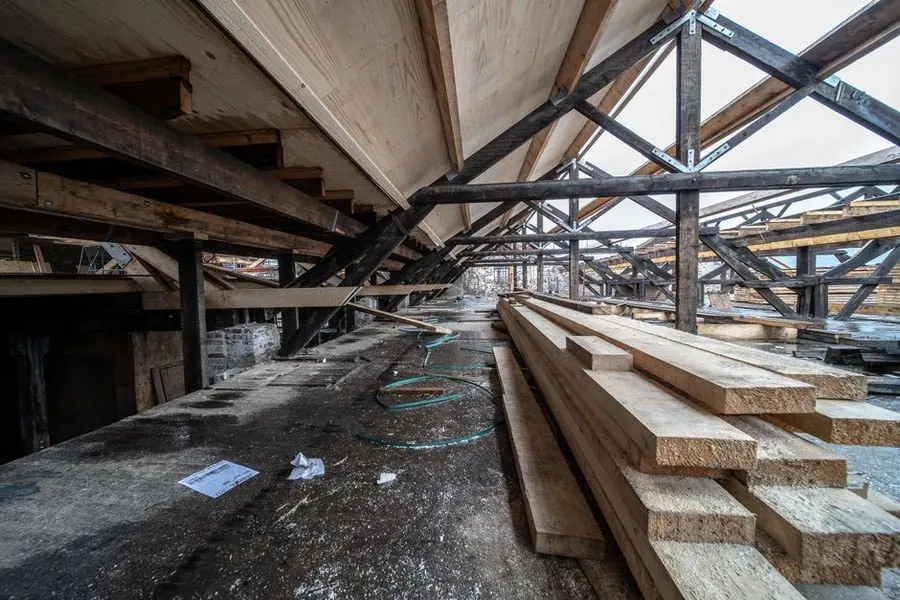
Look up at the underside of the roof. Sagging pockets of felt hanging between the rafters mean the sheet has stretched and is now holding water rather than shedding it. Daylight is the obvious one - a few pinpricks at the eaves are normal, a visible gap or a tear is not. Dark tide marks on the timbers show where water has run repeatedly. A musty smell and any bloom of black mould point to moisture that is not getting out, which is usually a ventilation problem as much as an underlay one.
Then look down. Loose grit, sand or dark fragments on top of the insulation are pieces of degraded bitumen felt dropping off, and that is a fairly definitive sign the layer has reached the end. If what you find is water rather than debris, our guide to loft condensation and roof ventilation explains how to tell a leak from condensation, because the two look almost identical at first glance.
Battens: the timber everything hangs on
Battens look trivial. They are thin strips of softwood, typically 25mm by 38mm or 50mm, nailed across the rafters at spacings set by the tile. Every tile and slate on the roof hangs off them, and their condition decides whether the covering stays put.
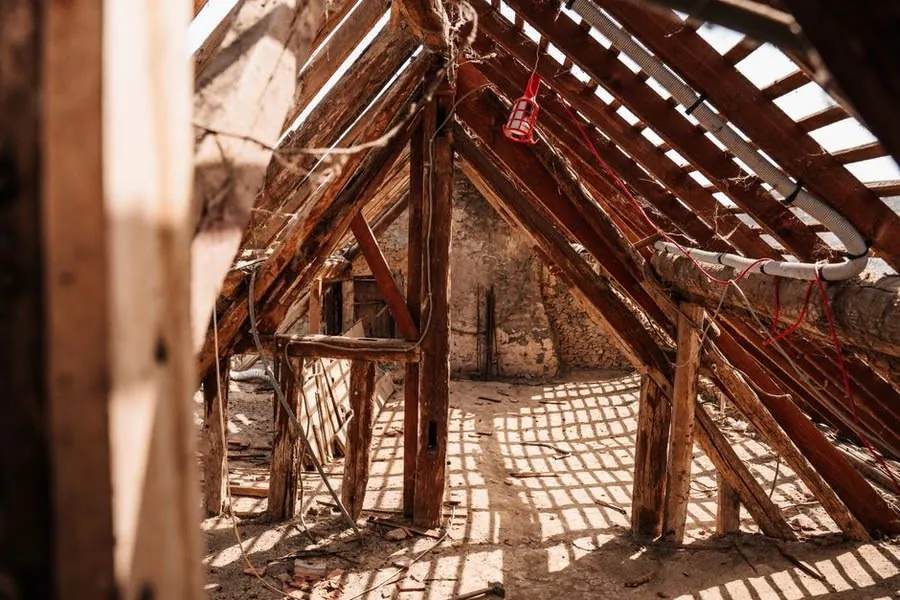
Two things kill them. The first is rot, where a leak has kept the timber damp for years and the wood softens until nails pull straight through. The second is age and specification: battens on older roofs were often ungraded timber, sometimes reclaimed, sometimes riddled with knots that split under load. Modern practice requires graded, pressure-treated batten of a specified size, and it is one of the checks a roofer makes as soon as a covering comes off.
The tell from ground level is a wavy line. Run your eye along a course of tiles - if the line dips or ripples rather than running straight, the timber behind it has sagged. Repeated slipped tiles in the same patch of roof point the same way: it is rarely the tile at fault, it is what the nail is going into. That is the usual explanation when slipped tiles keep coming back in the same spot after being refixed.
Why Harrogate weather is hard on the layers you can’t see
Every roof in Britain deals with rain. Harrogate’s roofs deal with a particular combination: high rainfall, frequent frost, and enough exposure to push that rain sideways.
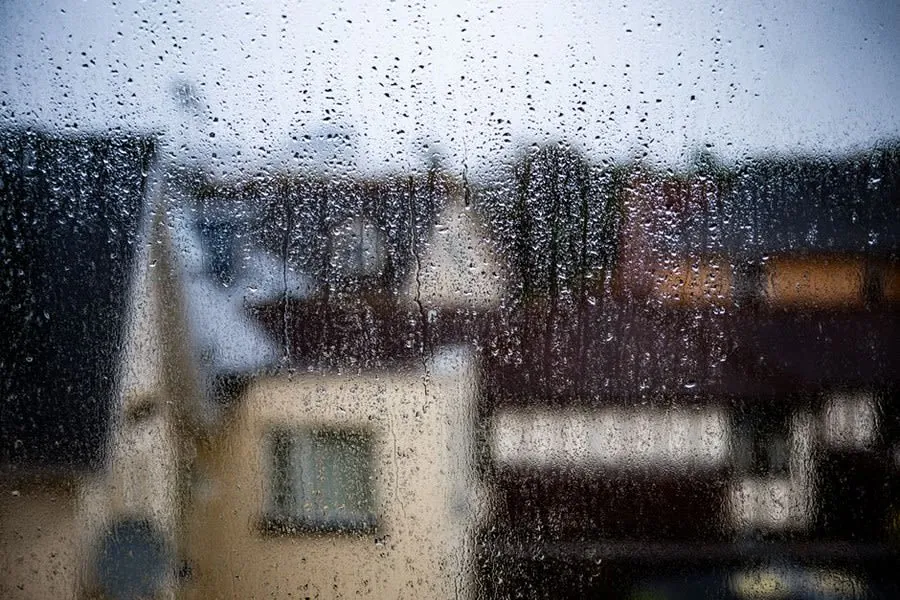
Wind-driven rain is what tests the underlay hardest, because it is water arriving from an angle the tile lap was not designed to stop. The more often that happens, the more work the felt does, and the sooner an ageing sheet finds its weak point. Frost adds the second problem: water sitting in a sagging pocket of felt freezes, expands, and enlarges every small split it finds. The Met Office’s UK climate averages show the pattern of rainfall and air frost days that roofs in this part of Yorkshire face each year, and it is meaningfully harsher than the national picture.
There is a third, quieter factor: moss. Harrogate’s cool, damp conditions and the number of tree-shaded, north-facing pitches around the town make moss growth prolific, and heavy moss holds water against the tile lap for days after the rain stops, giving it far more opportunity to find a route through to the felt.
Strip and relay: replacing the layers without a new roof
If the covering is sound but the felt and battens have gone, you do not need a full re-roof. The job is called a strip and relay, and it is one of the more common pieces of work on Harrogate’s older housing stock.

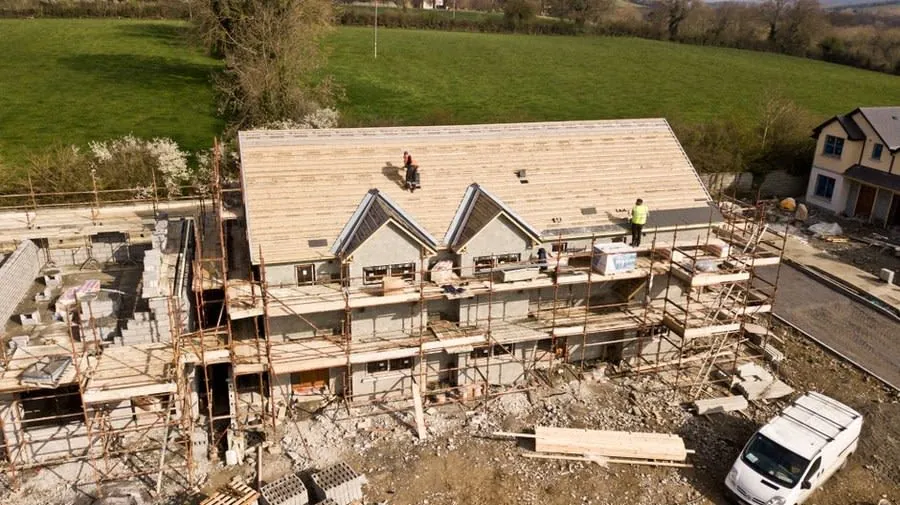
The tiles or slates come off and are stacked and sorted, damaged ones set aside. The old felt and battens are stripped back to the rafters. New membrane goes on, dressed properly into the gutter at the eaves, then new treated battens are gauged to suit the covering, and the original tiles go back with replacements made up for whatever did not survive. Flashings and ridge work are usually renewed at the same time, because the access is already there.
It is worth doing where the covering has real life left - natural slate especially, which routinely outlasts two sets of underlay. It is not worth doing on a concrete tile roof already at 50 years, where the sensible move is to replace the covering as well. Guidance from bodies such as the National Federation of Roofing Contractors is a useful reference point for what a properly specified relay should include.
What it costs in Harrogate
Prices depend on the size and pitch of the roof, access, and how much of the original covering survives handling, but some broad local figures help set expectations.

A small localised repair - refelting a section at the eaves, replacing a few rotten battens and refixing the tiles above - typically runs from a few hundred pounds up to around £900, depending on access. A strip and relay on one pitch of a mid-terrace is commonly in the £2,000 to £4,500 range. A full strip and relay of a whole semi-detached roof usually lands between £4,500 and £8,000, with natural slate at the upper end because it is slower and more fragile to handle.
Scaffolding is a real line item on all but the smallest jobs, generally £700 to £1,500 for a domestic property, and it is one reason to bundle related work into one visit. Two variables shift the total most: how many tiles break during removal, and whether any rafters need repair once they are exposed. A good quote will state the assumption on both.
Looking after the layers you cannot see
You cannot maintain underlay directly, but you can protect it, and almost all of that comes down to keeping water where it belongs.
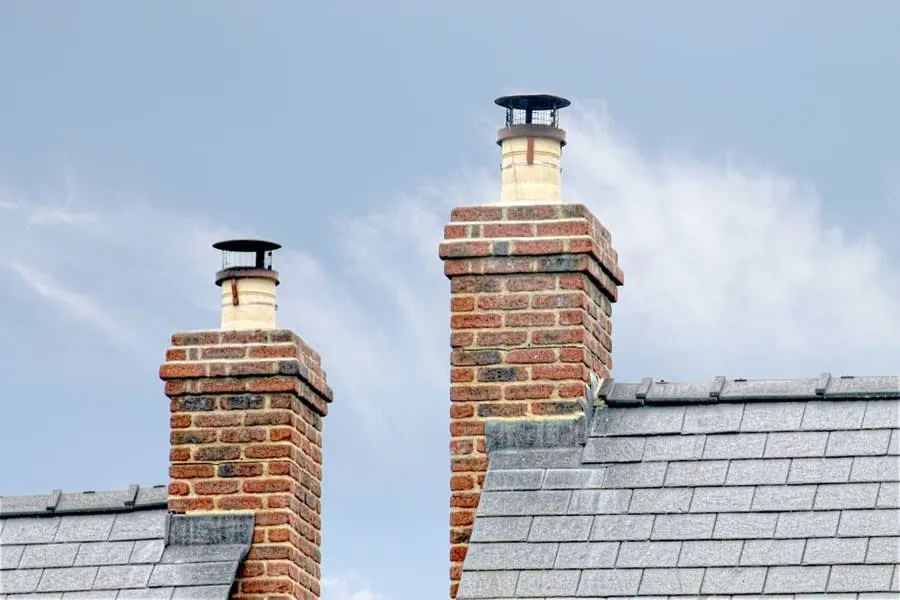
Clear the gutters twice a year, because a blocked gutter backs water up under the eaves course and straight onto the felt edge, which is exactly where old felt tears first. Get slipped tiles refixed quickly rather than leaving them through a winter, since every displaced tile is an opening pointed at the layer underneath. Keep moss in check on shaded pitches. And check the loft after any serious storm, which takes two minutes and catches problems while they are still cheap.
If your roof dates from before the millennium and has never been stripped, the felt beneath it is probably closer to the end than the tiles are. That is not an emergency - it is simply the part of the roof worth having looked at before the next hard winter tests it. If you would like someone to take a proper look at what is going on above your ceiling, our team covers Harrogate and the surrounding villages.
Frequently Asked Questions
What is roofing felt and what does it do?
Roofing felt, also called underlay or sarking, is the sheet layer laid over the rafters and beneath the battens and tiles. It is a secondary barrier: it catches the wind-driven rain and snow that gets past the tiles and carries it down to the gutter, and it stops draughts and debris entering the loft. On a well-built roof it is doing quiet work every time it rains, which is why a torn or sagging underlay causes damp long before any tile is visibly out of place.
How long does roofing felt last on a Harrogate house?
The old bitumen felt used on most roofs laid before the early 2000s typically lasts around 30 to 40 years before it becomes brittle, sags between the rafters and tears at the eaves. Modern breathable membranes are rated considerably longer, often 30 to 50 years, and they handle moisture from inside the house far better. If your roof was last done in the 1970s or 1980s, the covering may be fine while the underlay beneath it is at the end of its life.
Can roofing felt be replaced without replacing the whole roof?
Yes, and it is a common job in Harrogate. It is called a strip and relay: the tiles or slates are carefully removed and stacked, the old felt and battens are stripped off, new membrane and treated battens go on, and the original covering is relaid with any broken pieces swapped out. It costs less than a full re-roof because you are not buying a new covering, but it still needs scaffolding and full access, so it is not a small repair.
How can I tell if my roof battens are rotten?
From inside the loft, look for dark staining or a bloom of mould on the timbers, battens that look soft or crumbly at the edges, and daylight showing through in more places than you would expect. From outside, a wavy or dipping line along the courses of tiles often means the battens behind them have sagged or given way. Nails that no longer hold, so tiles slip repeatedly in the same area, are another sign the timber has gone soft.
Do I need to replace the felt when I have a new roof fitted?
On any full re-roof, yes - the underlay and battens should always be renewed as part of the job. Relaying new tiles onto forty year old felt and battens wastes most of the value of the work, because the layer most likely to fail next has been left in place. If a quote for a roof replacement in Harrogate does not itemise new membrane and new treated battens, ask why before you compare it against anything else.