
18 October 2026
Roofers In Tadcaster, Bramham And Thorner: Roof Costs, Stone, Floods And Which Council Decides
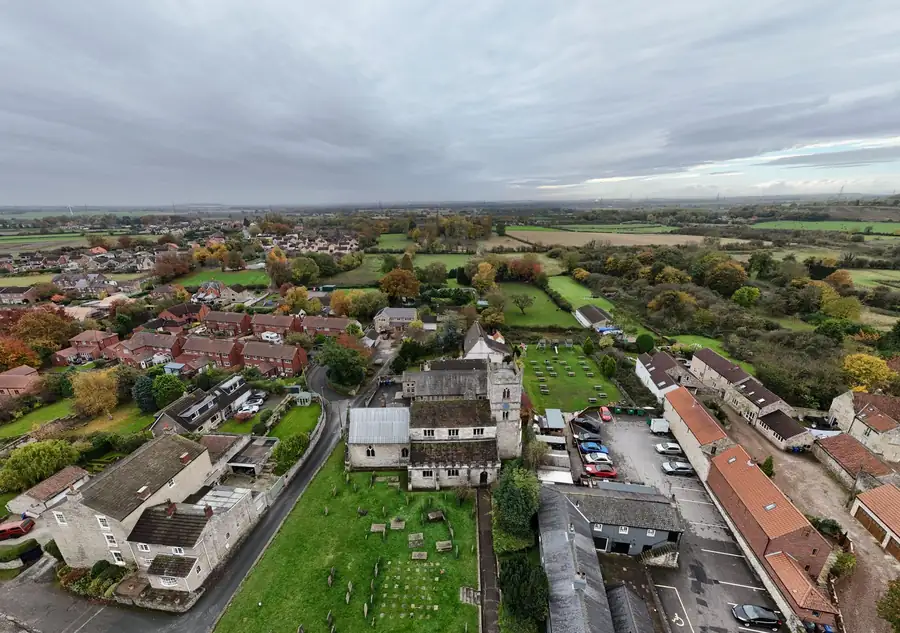
Search for roofers in Tadcaster and you will find firms on both sides of a boundary most people never notice. Tadcaster is a North Yorkshire town. Bramham, about four miles south-west near where the A64 meets the A1(M), and Thorner, a few miles beyond that, are villages inside the City of Leeds. All three are old, all three are conservation areas, and they were built from different stone. Tadcaster and Bramham sit on the magnesian limestone. Thorner, according to its own appraisal, mostly used local sandstone and once had roofs dominated by heavy stone slate. Then there is the river. On Boxing Day 2015 the Wharfe reached 4.51m on the Tadcaster gauge, the highest ever recorded there, flooded about 79 properties and partly brought down the town’s bridge. This guide covers who approves roof work in each place, what each village’s roofs are made of, what we are quoting in 2026, and the questions to ask before anyone climbs a ladder.
Two councils, three conservation areas: who signs off roof work

Tadcaster was part of Selby District until April 2023, when the district councils in North Yorkshire were wound up and North Yorkshire Council took over planning, conservation and building control for the whole county. A Tadcaster planning question goes to North Yorkshire Council. Bramham and Thorner have been inside the Leeds metropolitan district since 1974, so theirs go to Leeds City Council. That includes building control, and it includes the highway licence if scaffolding has to stand on the pavement.
Most roof work never goes near either council. Replacing tiles or slates like for like on an ordinary house is permitted development. If you just need roof repairs such as slipped slates, a cracked ridge or a run of failed flashing, the only paperwork is your quote and your invoice. Things change in three situations: the covering is changing to something that looks different, the building is listed, or a large part of the roof (more than a quarter of it) is being stripped and re-covered, which brings in the Building Regulations.
The conservation areas all have different histories. West Riding County Council designated Tadcaster’s in August 1973, and the boundary was widened in 2003 and 2004. Thorner’s came in 1970, with an extension in January 2009 to take in Sandhills. Bramham’s dates from 1975 and its boundary was reviewed in 2010.
Tadcaster: limestone walls, pantile roofs and the brewery skyline
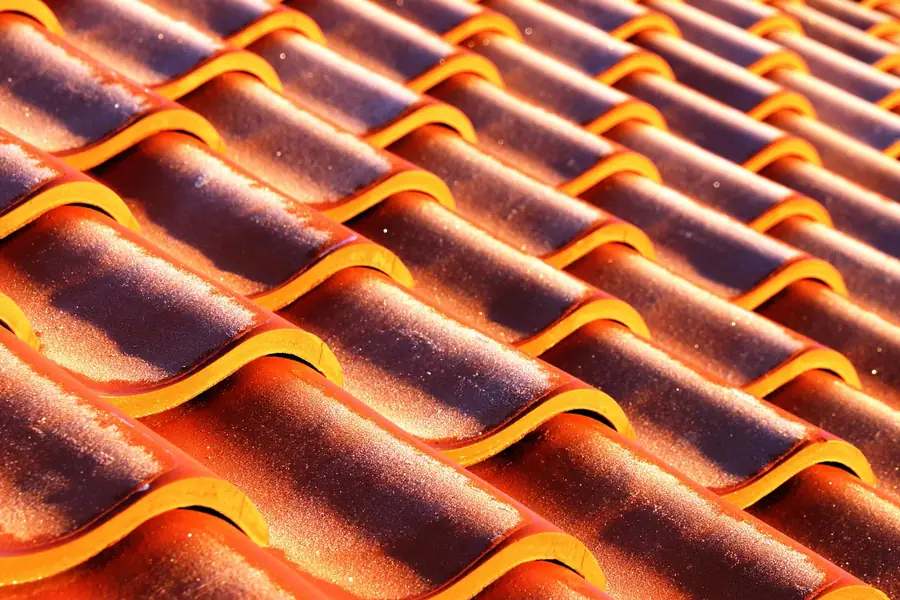
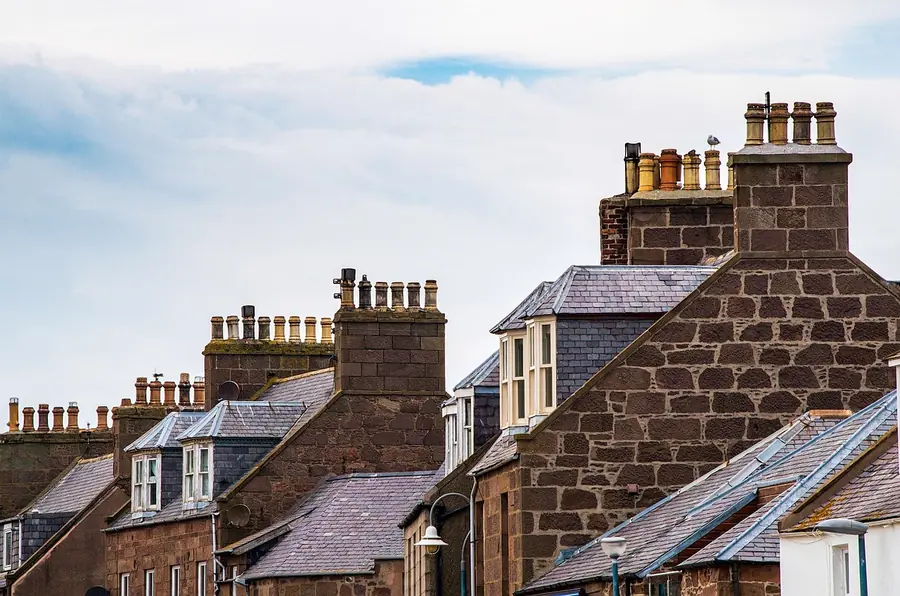
The Tadcaster Town Conservation Area Appraisal published in 2021 starts with the ground. The town stands on magnesian limestone, and that limestone went into its walls as both rough rubble and dressed ashlar. The appraisal’s glossary sums up the local vernacular as pantile roofs, sliding sashes, handmade red brick and magnesian limestone. On the older streets around Kirkgate, Bridge Street, Chapel Street and Westgate you see exactly that, with Welsh slate on the grander Georgian and Victorian frontages and stone slate here and there.
What sets Tadcaster apart is the breweries. Samuel Smith’s Old Brewery and John Smith’s, which Heineken now runs, sit along the south side of the High Street, and the appraisal says all three of the town’s breweries dominate the skyline. Their chimneys are visible from nearly every street. For roof work that means any change to how a roof looks is judged against some very prominent views, and the 2021 appraisal recommended an Article 4 Direction to bring roofs, windows and doors under closer control. Before you plan anything other than a like-for-like repair, ask North Yorkshire Council whether that recommendation has been acted on for your street.
Pantiles fail in their own ways. The tiles are thin and curved and rest on the tile below, so a slipped or snapped one leaves a gap straight through the roof. On older pantile roofs the underside was often torched with lime mortar instead of felt. When that torching drops away, wind-driven rain gets blown up between the laps. Most of the time the fix is to re-lay the roof with breathable membrane underneath, saving and reusing as many of the old tiles as will come off whole.
After the Wharfe: what 2015 still means for roofing in Tadcaster
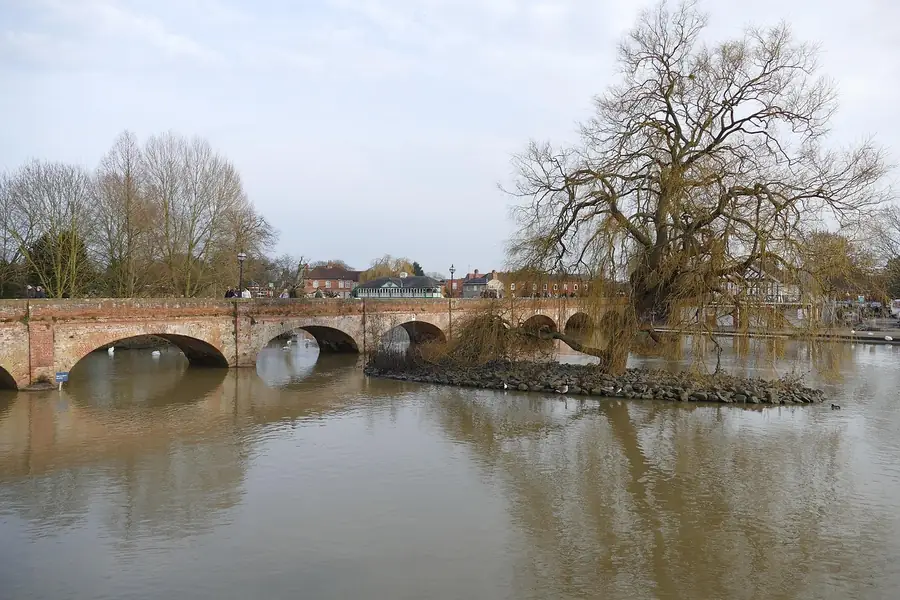
Storm Eva came through over Christmas 2015. The Wharfe overtopped Tadcaster’s defences, which according to a later North Yorkshire County Council report had been designed for roughly a 25 to 30 year event, and water got into about 79 properties. On 29 December part of the town’s listed bridge collapsed. The town was effectively cut in two until the repaired bridge reopened on 3 February 2017.
Floodwater rarely gets anywhere near a roof. It still matters here. The appraisal puts the riverbanks, Mill Lane and St Mary’s Church in Flood Zone 3, and land between the breweries and the A64 is a designated flood storage area. If your house is in that low-lying part of town, it changes how we plan the job.
Scaffold first. On ground that stays saturated through winter, a scaffold needs proper sole boards and someone watching the forecast, and now and then the honest advice is to wait for spring rather than start on soft ground in January. Then the diagnosis. After a flood, every stain on a wall or ceiling tends to get blamed on the roof, so we go into the loft and follow the line of the mark before quoting. A new ridge will not fix damp that came up through the floor.
Insurance is the last one. Flood and storm are separate perils on most home policies, and if a claim touches both, photograph and record the roof damage on its own.
You can check any address on the government’s long-term flood risk service. The Environment Agency has been working on a new flood scheme for the town and submitted a planning application in 2024, so it is worth keeping an eye on how that progresses.
Bramham: limestone cottages, slate roofs and the pantile question
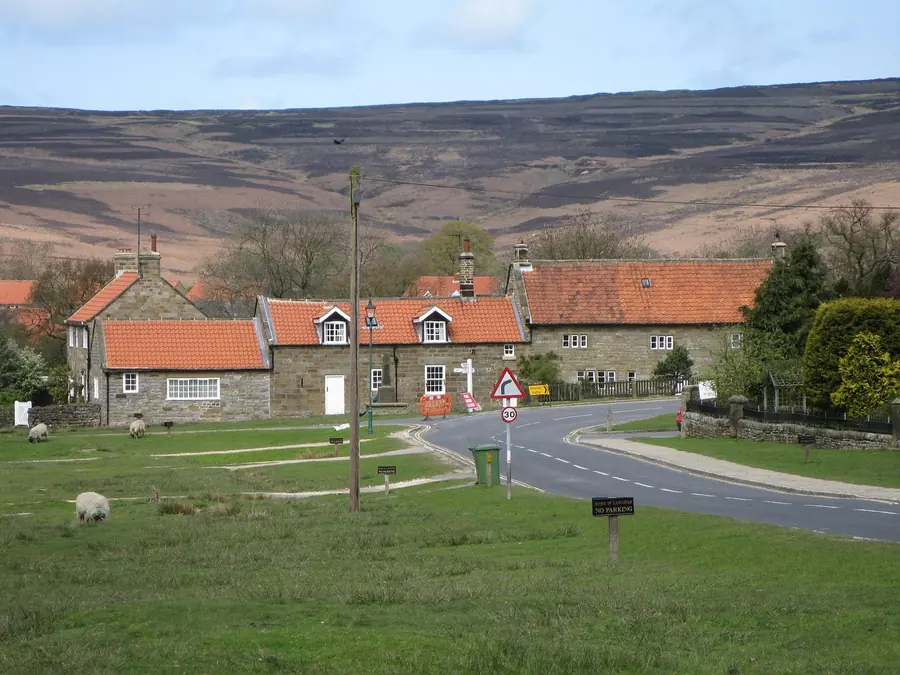
Bramham sits on the same limestone ridge. Its appraisal records that dolomitic limestone was being quarried in the village by the early fifteenth century, and that local magnesian limestone laid in regular courses is still the main walling material. Brick is unusual here. The appraisal’s best example is the old Methodist Chapel on Low Way. The older streets are Front Street, Town Hill, Almshouse Hill and Low Way, with Bramham Park and its estate on the edge of the village.
The roofs are where the debate is. The appraisal says the older houses were roofed in slate and that many newer houses have red pantiles. It also admits the split is not clean, because some older cottages have since been re-roofed in pantile. Its guidance for the older parts of the village is to keep the slate roofs. So if you own a slate-roofed cottage inside the conservation area, assume a switch to pantile, concrete or anything else that looks different needs a conversation with Leeds first, and the Bramham Conservation Area Appraisal and Management Plan is what that conversation will be based on.
Most of what we would expect to find on a Bramham slate roof is age-related. Nails rust through and slates slip. The mortar on ridges and abutments cracks. Lead soakers and flashings against the limestone gables wear thin after a century of frost. Reusing sound old slate keeps the roof looking right and usually costs less than new Spanish or Welsh slate. Where a few have to be replaced, reclaimed ones match better than new.
Thorner: sandstone, not limestone, and some of the heaviest roofs in the area
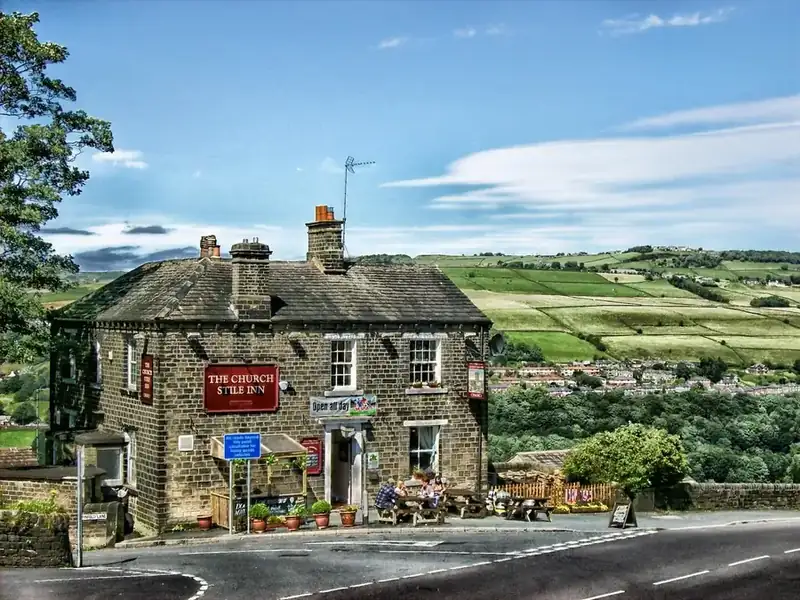
Thorner is the odd one out. People tend to assume it is another limestone village like Bramham. The Thorner conservation area appraisal from Leeds City Council says otherwise. The western half of the village sits on rough sandstone and only the eastern edge is on limestone, which the appraisal describes as not good enough for building. Thorner was built from the sandstone. It also says the roofscape was once dominated by locally produced heavy stone slate. Many of those roofs are still there, mixed in with Welsh slate and pantile, along the village core of Main Street, Mill Beck and St Peter’s Church.
Stone slate changes the whole job. The slates are thick, laid in diminishing courses from big ones at the eaves to small ones at the ridge, and often hung on oak pegs. Each slope weighs far more than a slated or tiled one. That causes two problems. The timbers underneath were sized for that load, and after a couple of centuries they have often sagged or spread. And when a roof is stripped, every slate has to be sorted, measured and stacked in order so the courses can go back up correctly.
Ask anyone pricing a Thorner stone roof how they plan to grade and store the slates, and what percentage they expect to reuse. If the answer is vague, or they suggest swapping to something lighter, that is a warning sign inside the conservation area.
Roof prices in Tadcaster, Bramham and Thorner for 2026
Our day rate is the same in all three places and the same as in Harrogate. What moves the price is the roof covering, the access, and whether a council is involved. These are guide ranges from the work we price across the district. Nobody should give you a fixed figure until they have been up to look.
| Job | Typical 2026 range | What pushes it up |
|---|---|---|
| Re-fixing a few slipped slates or pantiles | £150 to £450 | Pavement scaffold on a Tadcaster street frontage |
| Re-bedding or dry-fixing a ridge | £400 to £950 | Long ridges, broken ridge tiles that need matching |
| Re-roofing a pantile cottage | £7,000 to £12,500 | Reclaimed tiles, rotten battens, torching |
| Re-slating a slate-roofed limestone cottage | £8,000 to £15,000 | Low salvage rate, lead renewal at abutments |
| Strip and re-lay one slope of stone slate | £6,000 to £12,000 | Timber repairs, missing slates sourced reclaimed |
| Full stone slate re-roof on a modest house | £18,000 to £35,000 | Size, access, structural work |
| Scaffolding for a full re-roof | £700 to £1,500 | Highway licence and pedestrian walkway |
Two local points to add. On Tadcaster’s main streets most buildings front straight onto the pavement, as the appraisal notes, so a scaffold there usually needs a licence from North Yorkshire Council and a covered walkway underneath. In Bramham and Thorner the cottages often have a front garden or yard, which can make access cheaper, but some of the lanes are too narrow for a skip lorry.
What to send a roofer before the survey
Quotes come back quicker, and closer to the final bill, when we have these from the start:
- Photos from the ground of every slope, the chimneys and any obvious damage. Phone photos are fine.
- Photos inside the loft if you can get up there safely, especially of daylight showing through, stains on the timbers or loose torching.
- Whether the house is listed, if you know. Historic England’s list can be searched by address.
- Anything from a previous survey or insurance claim, including anything from the 2015 flood if you are on the low side of Tadcaster.
All three places are a short drive from our yard on Whinney Lane in Harrogate, and the A1(M) and A64 make Tadcaster and Bramham easy to reach. We have written a separate guide for the next villages up the Wharfe, with roof costs and Leeds planning rules for Wetherby and Boston Spa, which is useful if your house is in Clifford, Thorp Arch or Collingham.
When you are ready, book a free roof survey in Tadcaster, Bramham or Thorner and we will come out, go up, and put the price in writing.
Frequently Asked Questions
Is Tadcaster in North Yorkshire or Leeds for planning?
North Yorkshire. Tadcaster used to be in Selby District, and since Selby District Council was abolished on 1 April 2023 its planning, conservation and building control work has been done by North Yorkshire Council. Bramham and Thorner are only a few miles away but sit inside the City of Leeds, so their applications go to Leeds City Council.
Are Bramham and Thorner conservation areas?
Yes, both. Bramham’s conservation area was designated in 1975 and its boundary was looked at again in 2010. Thorner’s was designated in 1970 and extended in January 2009 to take in Sandhills. Leeds City Council has published an appraisal for each, and those documents are what an officer will read when deciding whether a change of roof covering is acceptable.
Did the 2015 Tadcaster flood damage roofs?
Not in the usual sense. Storm Eva was a rain event, and the damage in Tadcaster came from the River Wharfe rising to a record level and getting into around 79 homes and businesses at ground level. The roof questions come afterwards: wet ground under scaffolding, insurers separating flood damage from storm damage, and damp marks that get blamed on the roof when they started at floor level.
Can I change the slates on my Bramham cottage to red pantiles?
Ask first. The Bramham appraisal records that the older cottages were roofed in slate and that some have since been re-roofed in red pantile, and it says the slate roofs should be kept. Inside the conservation area, a change of covering that alters how the building looks is likely to need planning permission from Leeds City Council, and on a listed building it will need listed building consent as well.