
8 October 2026
Roofers In Pateley Bridge And Upper Nidderdale: Costs, Exposure, Access And Planning
Anyone hunting for roofers in Pateley Bridge soon finds out that the dale sets the price more than the roof does. The town sits where the River Nidd runs through at about 120 metres above sea level, and the valley sides climb to roughly 350 metres within a short walk. Greenhow, on the road west to Grassington, is above 400 metres. Houses on those slopes get a very different winter from a semi in Harrogate, and the lanes leading up to them were never built for scaffold wagons. Pateley’s older roofs are mostly gritstone slate on buildings from before the early 1800s and Welsh slate on what came after the railway reached the town in 1862. Above Gouthwaite reservoir, Ramsgill, Lofthouse and Middlesmoor are smaller, higher and more spread out. This guide covers what we charge up the dale, why hillside roofs wear out faster, how materials reach awkward sites, and what North Yorkshire Council will and won’t allow.
What roofers in Pateley Bridge find on the town’s roofs
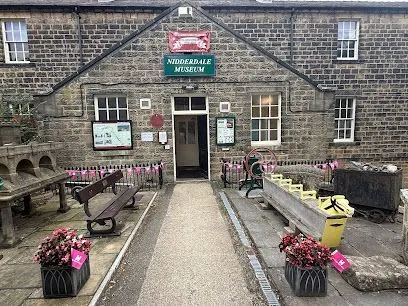
Pateley Bridge is built almost entirely from one material. In its 2010 appraisal of the town’s conservation area, the council notes that nearly everything put up before the Second World War is local coursed gritstone. Decades of coal smoke have turned it a dull khaki grey. Much of that stone came from quarries on the hillside just above the town, Scotgate Ash among them, and the appraisal records rows of terraces that were built for the quarrymen.
The roofs fall into three groups. The oldest buildings on the High Street and around St Cuthbert’s have graduated stone slate. Most of the 19th-century building has Welsh slate, which was cheap to bring in once the railway was open. Tiles are rare. The 1959 Memorial Hall’s big pantile roof is one of the few exceptions in the old core, while the postwar houses down by the river and up the hillside estates are mostly concrete tile.
Some of the detailing you only really see in Pateley. Gutters often sit on small timber or stone brackets under plain eaves rather than on fascia boards, and many of the older houses have parapet gables finished with stone copings and kneelers. If you need a roof repair in Pateley Bridge, the job usually starts at one of those junctions, where the stone parapet meets the slate. Once the pointing cracks, water gets down behind the coping, and the first sign is a damp patch on the gable wall inside.
Roof prices in Pateley Bridge and up the dale for 2026
We charge the same day rate in Pateley as in Harrogate. The price changes with the covering, the height of the building and how hard the site is to reach. These are the ranges we have been quoting in and around the town this year. Every roof is different, so treat them as a guide and not as a quote.
- Replacing a handful of broken Welsh slates from a tower or ladder: £180 to £450.
- Repointing a parapet coping and kneeler on one gable: £450 to £1,100, more if scaffold is needed on the street side.
- Rebedding a ridge in lime mortar on a cottage: £550 to £1,300.
- Leadwork to a chimney stack: £650 to £1,700.
- Re-slating a two-storey terrace in Welsh slate, saving the sound slates: £8,500 to £15,000.
- Re-covering a concrete-tiled postwar semi on the hillside estates: £7,000 to £11,500.
- Stripping and relaying a stone slate roof: priced only after a survey. We cover the method and the numbers in our guide to Yorkshire stone slate roofs around Harrogate and Nidderdale, so we won’t repeat it here.
For the same size of roof, three things push a Pateley job above the Harrogate figure. A three-storey building on the High Street needs a taller scaffold. A house above the town on a steep plot often needs a scaffold built over sloping ground, with extra standards and bracing. And in the upper dale, each trip in and out takes longer.
Why hillside roofs in the dale wear out sooner
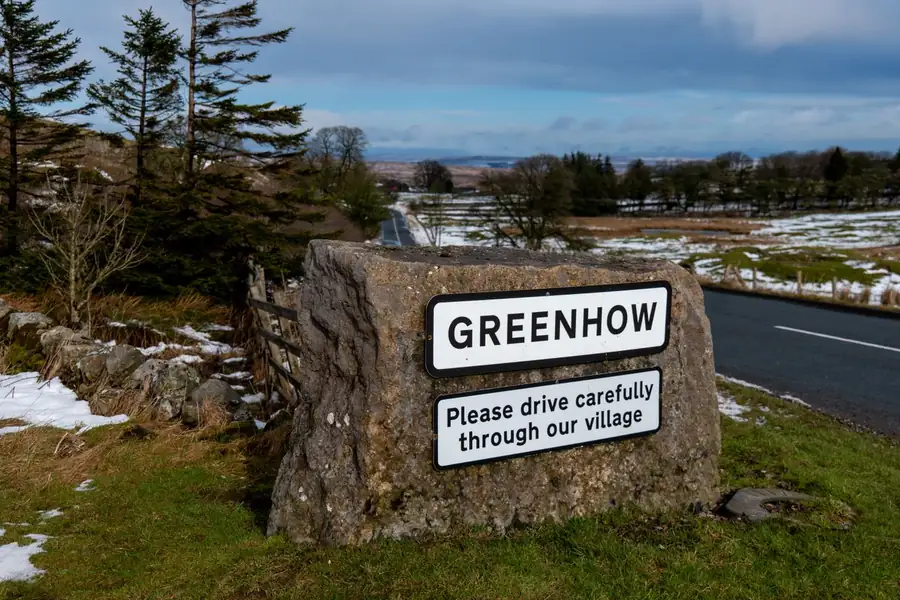
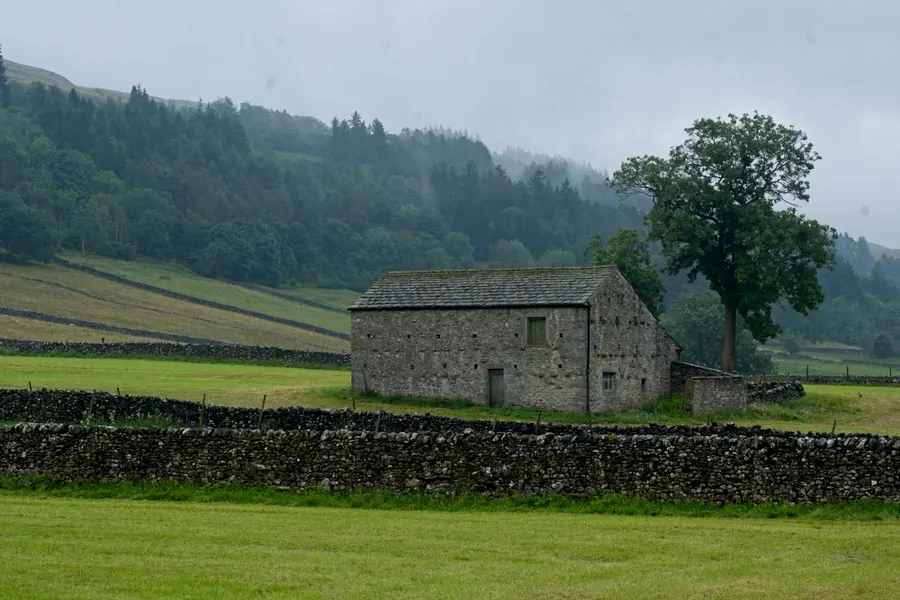
Height matters. Greenhow is one of the highest villages in Yorkshire, at between 400 and 420 metres, and Middlesmoor at the head of the dale is around 300 metres. The farmsteads scattered along both sides of the valley are all well above the river. At those heights the westerlies come in with nothing to slow them down, and rain hits gable walls and verges almost sideways.
We see the same faults again and again. On the higher sites we see verge mortar wash out years earlier than it would down in the town, and ridge tiles that were bedded in strong cement crack and lift as the roof timbers move. Snow drifts into valleys and behind chimneys, then melts slowly, so lead upstands and back gutters that would cope with rain end up sitting in water for days. Lichen and moss grow faster on the damp north-facing slopes, holding water against the slates through every freeze.
Inside the town it’s a little gentler. Houses down near the bridge are sheltered by the slope and by each other. The cottages along Old Church Lane and the newer estates above the High Street are more exposed. For any house above the town or up the dale, we suggest a look at the roof every autumn, with the gutters cleared at the same visit, rather than waiting for a stain on the ceiling.
Getting scaffold and slate to steep lanes and the upper dale
The High Street drops steeply all the way from the Ripon Road junction to the bridge, and many of its buildings stand right at the back of the pavement. A scaffold there has to go on the highway, which means a licence from North Yorkshire Council, careful levelling on the slope and some thought about the shops either side. Old Church Lane, which the appraisal describes as steep, narrow and twisting, is worse, and the climb up from Bridgehouse Gate towards Greenhow is not much better.
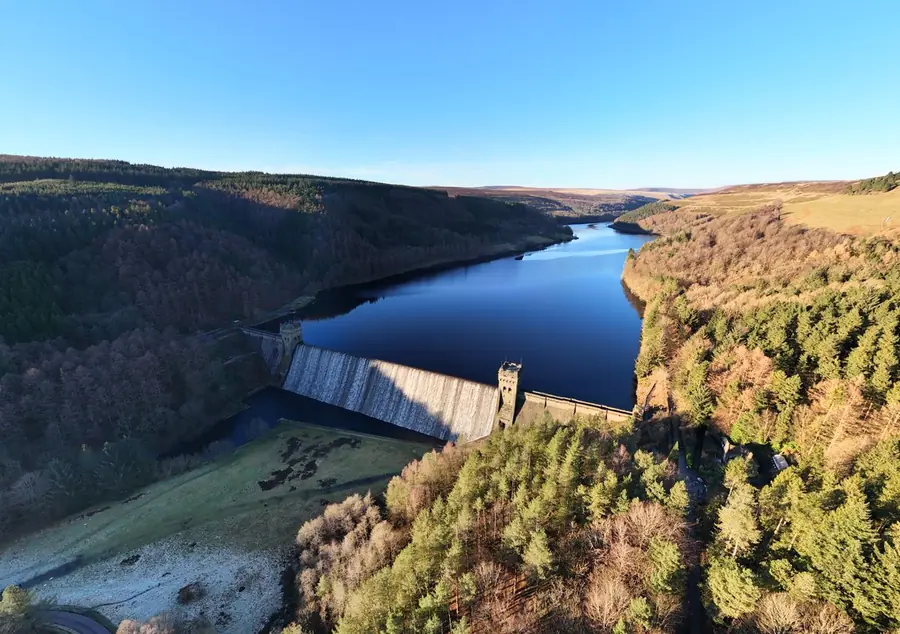
Up the dale, the road beyond Bridgehouse Gate follows the valley past Gouthwaite to Ramsgill and Lofthouse, then climbs to Middlesmoor. The light railway that once carried men and materials up the valley to build the Angram and Scar House dams closed long ago, so everything now goes by lane. Full-size wagons struggle with the bends and the stone-walled gateways, so we split deliveries into smaller loads. On some farm jobs the slate goes the last stretch on a telehandler or by hand.
Then there’s the calendar. The Nidderdale Show fills Bewerley Park every September and brings around 15,000 people into the town, and summer weekends bring a lot of visitor traffic. We plan scaffold deliveries for early weekday mornings and keep the High Street clear on show weekend.
Planning in Nidderdale: one council, one National Landscape, six conservation areas
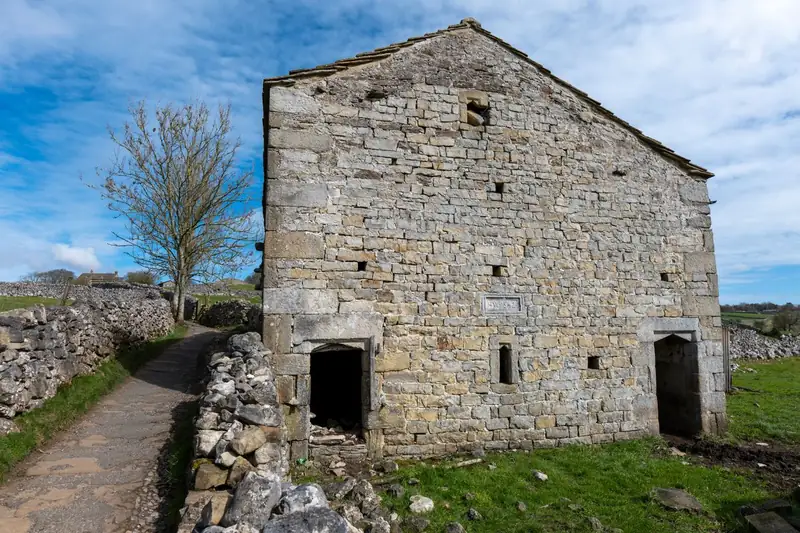
Since Harrogate Borough Council was abolished on 1 April 2023, North Yorkshire Council has handled planning, listed building consent and building control across the whole dale. Pateley Bridge sits near the middle of Nidderdale National Landscape, the area called an AONB until 2023. Under the permitted development rules that counts as protected land, and the government’s technical guidance on householder permitted development spells out what that removes. In practice, any dormer needs a planning application, whichever slope it faces, and so does cladding walls in stone, timber or render. A like-for-like re-roof does not.
On top of that, there are six conservation areas in this part of the dale: Pateley Bridge, Glasshouses, Wath, Ramsgill, Lofthouse and Middlesmoor. Each has its own appraisal on North Yorkshire Council’s list of conservation areas for the former Harrogate district, and they are worth reading before you plan anything visible. The Pateley Bridge conservation area appraisal is direct about roofs: it lists poor materials, intrusive dormers and unsuitable roof windows among the changes that will not be acceptable. It even singles out the Crown Hotel as a building that would look better re-roofed in graduated stone slate to match its neighbours.
The town’s conservation area was first designated in October 1970 and holds 17 listed buildings. If yours is one of them, any change to the roof beyond a straight repair needs listed building consent. When the appraisal was written there was no Article 4 direction removing householder rights in Pateley, but the document raised it as an option, so ask the council whether one now applies to your street. Like-for-like work, such as replacing slipped slates, relaying lead to the same detail or repointing a coping in lime, needs no consent at all.
Barn conversions, chapels and holiday lets up the valley
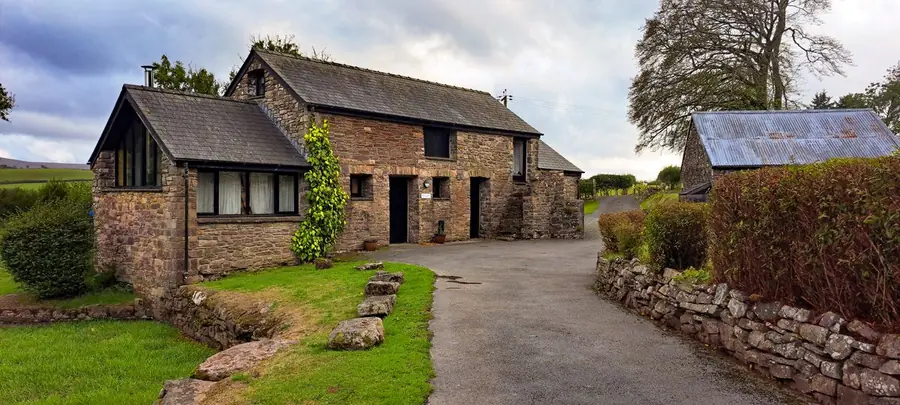
A lot of the roofs we work on beyond Pateley aren’t houses that were built as houses. Field barns, laithe houses, old Methodist chapels and mill buildings have been turned into homes and holiday cottages all the way from Glasshouses to Lofthouse. Their roofs go wrong in ways a normal house roof doesn’t.
None of them were built to be heated. When a barn becomes a home, warm, damp air rises into a roof that was built to let wind blow through it. If the conversion went in with too little ventilation, condensation soaks the battens and rafter feet, and the first sign is rot at the eaves. Big glazed openings and rooflights fitted at the time are another frequent leak point, especially where the flashing was done in a hurry. Holiday lets add a timing problem. Owners want the work done between bookings, so we plan the scaffold dates around the letting calendar.
Barns and chapels are also where bats are most likely to be roosting, and that can decide when work can start. If you have read our recent piece on roofers in Masham, a town just outside the National Landscape’s north-eastern edge, the pattern will be familiar: farm buildings take longer, cost more per square metre and need more checks before anything comes off the roof.
Booking roof work in Pateley Bridge
Spring and late summer are the easiest times to work up the dale. Days are long, the lanes are dry and lime mortar has a chance to cure before the frosts. Bookings in those windows fill early, so if you know a re-roof is coming, get it surveyed over the winter and booked in for March or April. Small repairs and emergency make-safe work go ahead all year.
Whoever you ask to quote, the written price should say exactly which roofs or slopes are covered, how high the scaffold goes and whether it needs a highway licence, where materials will be stored, and what happens to any slate that comes off. On a listed building or anything in one of the six conservation areas, it should also say who is responsible for the consent.
If you’d like us to look at a roof in Pateley Bridge or anywhere up the dale, we will come out, check the loft as well as the outside, tell you whether the building is listed or in a conservation area, and send a written quote that breaks out access and travel. Book a free roof survey in Pateley Bridge.
Frequently Asked Questions
Who gives planning permission for roof work in Pateley Bridge?
North Yorkshire Council. It took over from Harrogate Borough Council on 1 April 2023 and now handles planning, listed building consent and building control for Pateley Bridge and every village up the dale. Nidderdale National Landscape staff are consulted on some applications, but they don’t decide them. The Yorkshire Dales National Park Authority has no role here, because Nidderdale sits outside the park.
Can I add a dormer to my house in Pateley Bridge without planning permission?
No. Pateley Bridge and the villages up the dale are inside Nidderdale National Landscape, which counts as protected land under the permitted development rules, so a dormer needs a full planning application even on a back slope well away from the road. Inside the Pateley Bridge conservation area the council’s appraisal also says intrusive dormers and unsuitable roof windows will not be accepted, so expect the design to be looked at closely.
Do you charge extra to work in Lofthouse, Ramsgill or Middlesmoor?
Our day rate is the same as in Harrogate. What adds cost in the upper dale is the job itself: longer travel each day, smaller delivery loads on narrow lanes, and more weather days lost on high, open sites. We show each of those as its own line on the quote rather than burying them in a single figure.
How soon can you make a leaking roof safe in Pateley Bridge?
We are about 14 miles away in Harrogate, so a call made in the morning usually means someone on site the same day in normal conditions. Snow on the climb out of Harrogate or over Greenhow can slow that down. We carry sheeting and battens so the first visit makes the roof watertight, and the proper repair is quoted afterwards.