
10 October 2026
Roofers In Otley And Pool-in-Wharfedale: Roof Costs, Gritstone Houses And Leeds Planning
People looking for roofers in Otley tend to assume the town is just another part of the Harrogate patch. On the roof it isn’t, and on paper it isn’t either. Otley and Pool-in-Wharfedale both fall inside the City of Leeds, so every consent goes to Leeds City Council. The towns are built from coarse Millstone Grit hauled off the Chevin and the quarries on Pool Bank, and a good share of the older roofs still carry stone slate, a covering that can weigh roughly four times as much as Welsh slate. The Otley Conservation Area alone holds more than 200 listed buildings. Put those facts together and you get roof jobs that are heavier, slower to scaffold and more closely watched than the same size of job in Harrogate. Below we cover what the stone means for your roof, how the valley weather treats each side of the river, the prices we are quoting this year, and what Leeds will expect from you.
Gritstone, the Chevin and what roofers in Otley are really dealing with
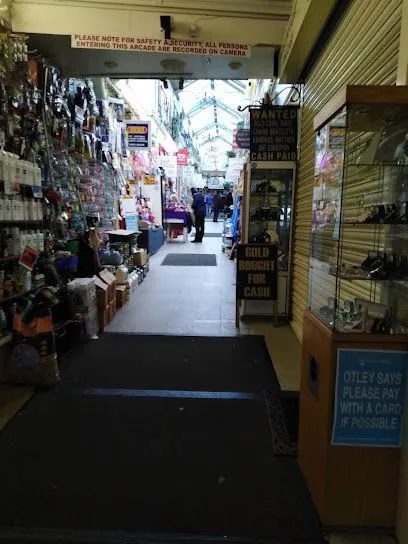
Leeds City Council’s appraisal of the town lists what “traditional Otley” is made of in plain terms: coarse Chevin gritstone masonry, stone or slate roofs, two or three storeys, stone lintels and sash windows. That holds from the Old Hall on Kirkgate to the shop rows on Boroughgate and the older houses facing Manor Square. Even the glazed roof over Kirkgate Arcade sits between gritstone walls.
Gritstone is hard, coarse and porous. It lasts for centuries in a wall, but it holds water at the joints, and on a roof that means the stone around it stays damp. Chimney stacks are where we see that most. A gritstone stack that was repointed in hard cement mortar sheds water poorly, the stone faces start to flake, and the leadwork at the base ends up doing far more than its share. A lot of the roof repairs we carry out in Otley start at a stack rather than the slates.
The roof coverings split roughly by age. Before the mid-1800s, the local choice was graduated sandstone slate, laid in diminishing courses with the biggest stones at the eaves. Once Welsh slate could be brought in cheaply, most new terraces and villas used it instead. Mixed streets are common, and a stone-slated house can share a party wall with a Welsh-slated neighbour, which matters when the two roofs meet.
Heavy stone slate: why the timbers matter as much as the covering
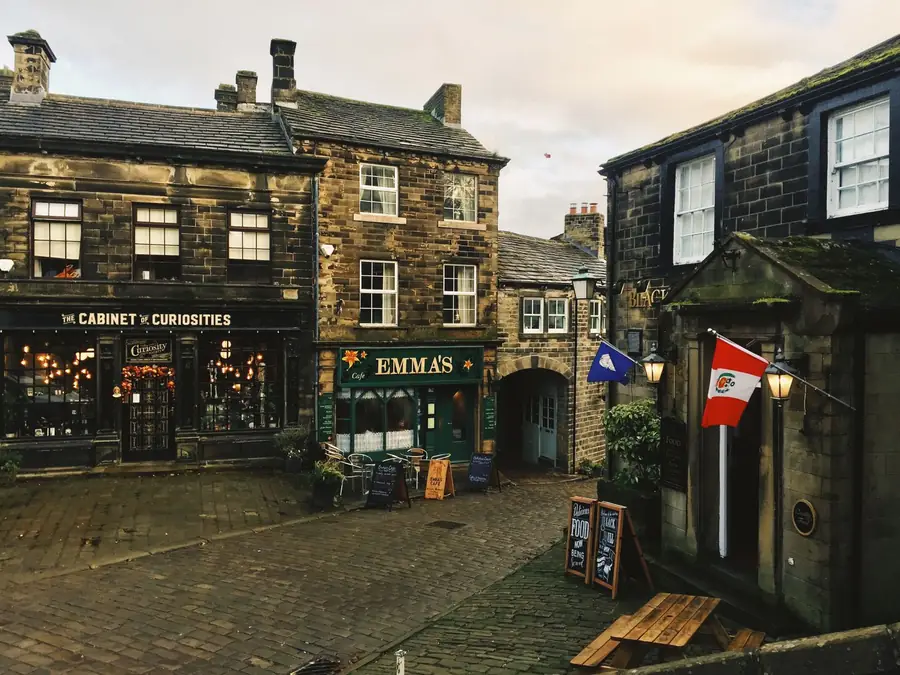
A stone slate roof can weigh 80 to 100 kilograms per square metre or more. Welsh slate is closer to 25. The rafters, purlins and wall plates under an old Otley roof were cut to carry that load, and two hundred years of it shows. Sagging ridges, a slight dip between purlins, and rafter feet that have rotted where the wall stays wet are all normal findings when we strip one of these roofs.
So the job is priced differently. On a Welsh slate re-roof we expect to keep most of the structure and spend the money on slate, battens and membrane. On a stone slate roof we allow time to check every timber once the stone is off, to sister or replace rafters that have failed, and to sort, dress and store the old stone so it can go back on in its proper courses. Reusing it is nearly always the cheapest route, provided enough sound stone comes off. Honestly, it is also the best-looking one. New or reclaimed stone to make up the shortfall is expensive, and the gaps are often filled with reclaimed slates from other old buildings in the area.
We also get asked, fairly often, whether the stone can just go. Replacing stone slate with concrete tile or a lighter slate sounds sensible, but a roof built for heavy stone can rack or lift once it loses that weight, especially on an exposed gable. If a change of covering is on the table, the structure should be looked at by someone who understands it before anyone orders materials.
Wharfedale weather from both sides of the river

The Chevin rises steeply behind the town to 282 metres at Surprise View, and Chevin Forest Park covers around 700 acres of woods, crags and heath on that south side of the valley. Houses at its foot get some shelter from southerly weather, but they also sit in shade for much of the winter. North-facing roof slopes along Chevin Side and the streets climbing up towards it stay damp for weeks, and moss and lichen on those slopes hold water against the slate through every frost.
On the north bank, around Newall and the roads above the river, the picture flips. Those roofs face the Chevin across open ground and catch the westerlies that come straight down Wharfedale. Rain driven along the valley hits verges, gable copings and the leading edges of hipped roofs, which is where we find mortar washed out and slates working loose.
Pool gets a bit of both. The village sits low by the river, but the A658 climbs Pool Bank right behind it, and anything on the slope gets far more wind than the houses on Main Street. Leeds Bradford Airport, on the high ground just south of the Chevin, is known for fog and low cloud for the same reason.
Mill terraces, villas and postwar estates: where Otley’s roofs fail
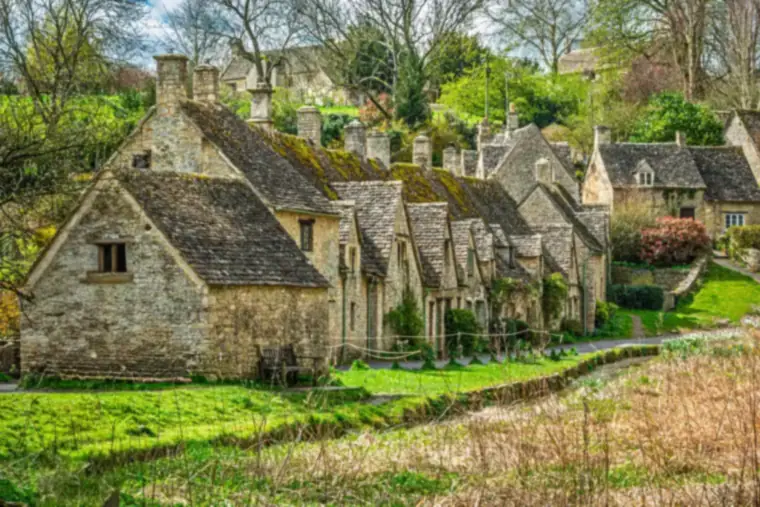
Otley grew on paper, printing machinery and worsted, and much of its housing was built to serve the mills. The appraisal singles out six terraces around North Parade, North Street, North Avenue, Ramsey Terrace and Wharfe Street, built beside the Silvine works of William Sinclair & Sons, and notes that one row still has its original dormers. Rows like these share long continuous roofs. The usual faults are failed lead where each house’s chimney meets the slope, back gutters behind stacks that fill with debris, and patches where one owner re-roofed in a different material and left a weak joint with next door.
The Victorian and Edwardian villas towards the Chevin are a different job: bigger roofs, more valleys, decorative ridges and bay roofs in lead. Valleys and bay leadwork are where those houses leak first, often decades before the main slopes need anything.
Then there are the 20th-century estates, such as the streets off Weston Lane. These are mostly concrete tile on trussed rafters, and the faults look the same as in Harrogate. Ridges bedded in cement crack, felt underlay perishes at the eaves, and the first generation of tiles is now reaching the end of its life on many of them.
Roof prices in Otley and Pool for 2026
Our labour rate in Otley is the same as in Harrogate. The covering, the weight and the access are what move the figure. These are typical ranges from jobs we have priced in and around the town this year. Nothing goes in writing until we have seen the roof.
| Job | Typical 2026 range | What pushes it up |
|---|---|---|
| Refix or replace a few Welsh slates | £180 to £450 | Three-storey frontage on Boroughgate or Kirkgate |
| Repoint and reflash a gritstone chimney stack | £600 to £1,800 | Badly spalled stone that needs replacing |
| Rebed a ridge on a terrace | £450 to £1,200 | Lime mortar and matching old ridge stones |
| Re-slate a two-storey terrace in Welsh slate | £8,000 to £14,500 | Shared roof lines and party wall details |
| Strip and relay a stone slate roof | Survey first, usually £14,000+ | Timber repairs and shortfall of reusable stone |
| Re-tile a postwar semi off Weston Lane | £5,000 to £8,500 | Rotten fascias found once the old tiles are off |
Scaffold is the wild card. In the old centre many buildings front straight onto the pavement, so a scaffold needs a licence from Leeds City Council as highway authority, pedestrian protection, and sometimes a gantry over a shop door. Otley’s market days around the Market Place limit when the lorry can unload. On a stone slate job, the scaffold also has to take the weight of the old stone stacked on it while the timbers are sorted, which means a heavier specification and a bit more cost.
Planning in Otley and Pool: Leeds City Council decides
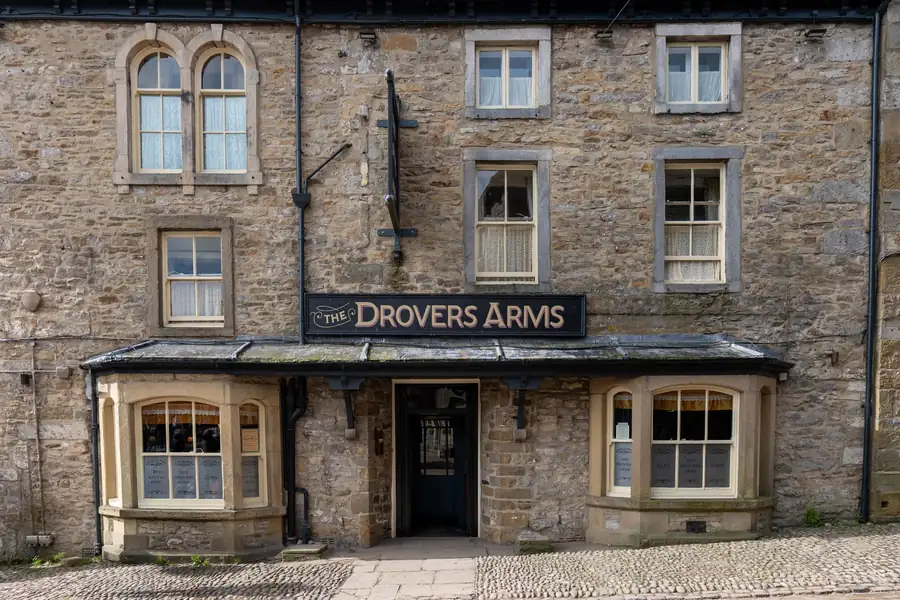
Neither place has anything to do with North Yorkshire Council. Planning, listed building consent and building control all sit with Leeds, the same arrangement we described for Wetherby and Boston Spa. The difference in Otley is the sheer density of protected buildings.
The Otley Conservation Area appraisal from Leeds City Council records a designation first made in 1970, extended in 1978 and reviewed in 2003, covering 101 hectares and more than 200 listed buildings. All Saints’ Church on Kirkgate is Grade I, and the Old Grammar School on Manor Square and the Old Hall at 15 to 17 Kirkgate are Grade II*. The appraisal is clear that inside the area some minor house works lose their permitted development rights, naming rear dormers and external cladding, and that higher design standards are expected for alterations.
In practice, for a roof in the conservation area:
- Like-for-like repairs need no consent. That covers relaying slates, replacing lead to the same detail and repointing a stack in a matching mortar.
- A dormer anywhere on a house in the conservation area needs planning permission, front or back.
- Changing stone slate or Welsh slate to a different covering is likely to need permission in the conservation area and will need listed building consent on a listed building.
- On a listed building, even changes that look minor, such as new rooflights or removing a chimney, need consent before work starts.
We check the listing and the conservation area boundary for every Otley address before we quote, and if consent is needed we say so in writing.
Pool-in-Wharfedale: a village built from its own quarry
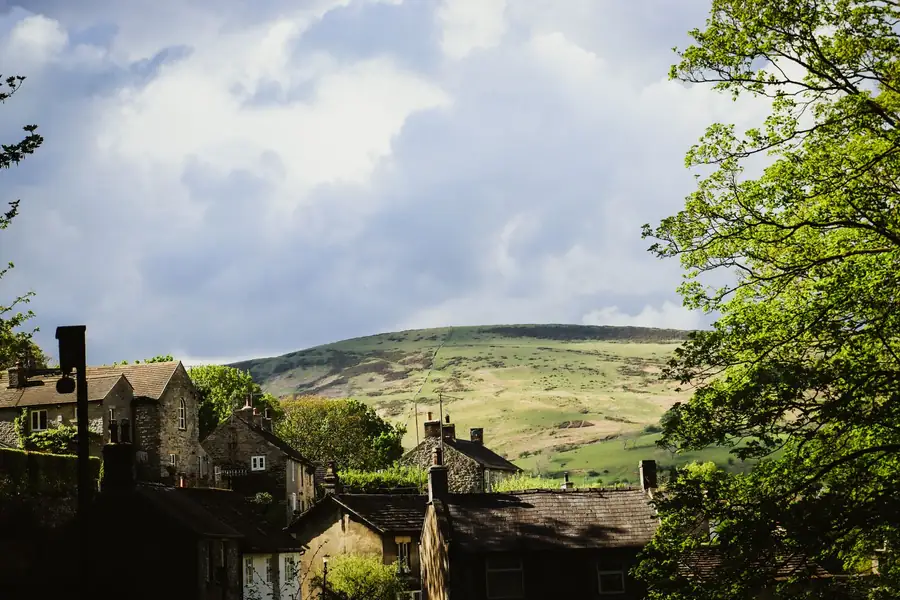
Pool became a conservation area on 21 September 2009. Its conservation area appraisal describes houses mostly of two storeys, with full-height gables and roof pitches of about 35 to 45 degrees, built from millstone and sandstone taken from the now disused Pool Bank Quarries. It names heavy stone slate and Welsh slate as the main roof coverings, and asks for slate roofs, chimney stacks and pots to be kept.
The appraisal also points to the A658 traffic through the village, and the dirt it leaves on stonework, as a real problem. Up on a roof we see the same grime in valleys and on lead. It is worth clearing when you have scaffold up anyway, so you can see what state the lead is in under it. Terrace rows along Main Street are where piecemeal changes show most, and the appraisal names the loss of original roof coverings as one of them, so a full re-roof there should go back in natural slate.
The village also has a neighbourhood plan, which Leeds has now adopted. It adds local design policies on top of the conservation area. For most roof repairs it makes no difference, but for a dormer, extension or new-build in the parish it is worth reading before anything is drawn up.
If you have a roof in Otley, Pool or the villages in between that needs looking at, we will come out, go into the loft as well as up the ladder, tell you whether the house is listed or in either conservation area, and send a written quote with scaffold and any licence shown separately. Arrange a free roof survey in Otley or Pool.
Frequently Asked Questions
Is Otley in Leeds or North Yorkshire for planning?
Leeds. Otley and Pool-in-Wharfedale are both inside the City of Leeds district, so planning permission, conservation area questions, listed building consent, building control and scaffold licences on the highway all go to Leeds City Council. Otley Town Council and Pool Parish Council are consulted on applications in their areas, but the decision is made in Leeds.
Is Otley town centre a conservation area?
Yes. The Otley Conservation Area was first designated in September 1970, extended in 1978 and reviewed again in December 2003, when Leeds adopted the appraisal that still guides decisions. It covers about 101 hectares, including the old centre around Kirkgate, Boroughgate and Manor Square, the riverside, North Parade and Chevin Side, and it contains more than 200 listed buildings.
Can I swap the stone slates on my Otley house for something lighter?
Sometimes, but rarely without asking first. On a listed building it needs listed building consent, and inside the Otley or Pool conservation areas a change of covering that alters the look of the roof is likely to need planning permission. Outside those areas it is your choice, though the timbers were sized for the stone, and a much lighter covering can let an old roof spread or lift in a gale unless the structure is checked.
How far is Otley from your Harrogate base?
About 11 or 12 miles. We come down the A658 through Pool and along the A659 into Otley, which takes around 25 minutes outside rush hour. Pool-in-Wharfedale is a few miles nearer. For a leak we can usually be on site the same day, and the van carries sheeting, battens and spare slate so the first visit leaves the roof watertight.