
27 September 2026
Roofers In Knaresborough: Costs, The Local Stock And Who Signs Off Roof Work
Knaresborough is eight minutes down the A59 from Harrogate and a different roofing proposition entirely. The town grew on the edge of a gorge, on Carboniferous gritstone capped with magnesian limestone, and its houses are stacked on that slope in a way nowhere in Harrogate is. That geography shapes the bills. Somewhere close to two hundred listed buildings sit inside the conservation area boundary alone, most of them Grade II, and the ordinary housing runs from seventeenth-century stone on Kirkgate to 1970s semis on the Aspin estates. Since 1 April 2023 every planning decision and every building control sign-off for all of it has been handled by North Yorkshire Council rather than the borough council people still ring by habit. Here is what that means when you come to pay for a roof.
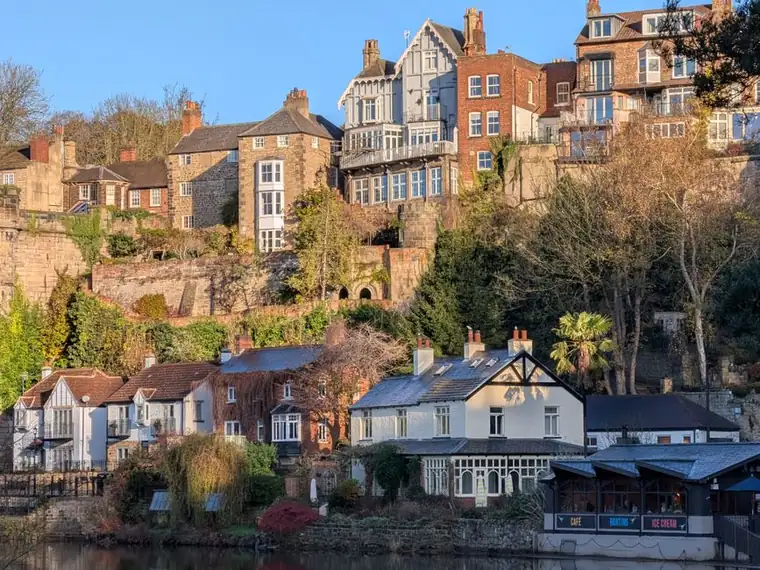
Knaresborough sits on a cliff, and its roofs know it
Stand on High Bridge and look back at the town and you can read most of the roofing problems from where you are standing. The old core is built up a bank, so the houses are terraced into the slope rather than laid out flat, and roofs sit at wildly different heights within a few yards of each other. A gable that is single storey at the back can be three storeys at the front.
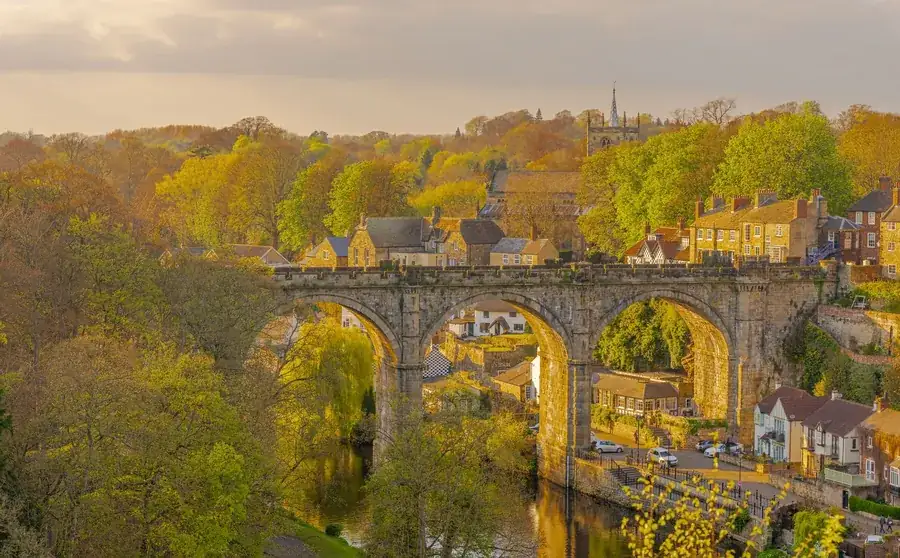
The rock underneath is Plompton and Addlethorpe Grit with the pale Cadeby limestone appearing high in the gorge cliffs, and the town was quarried out of it. That gritstone is why so many of the older buildings are the colour they are, and it is also why the ground behaves the way it does when a scaffolder starts looking for somewhere to stand.
Then there is the tree cover. The gorge sides are thick woodland, the river holds moisture, and north-facing pitches on the valley side of the town get very little winter sun. Moss and algae build faster here than they do on an open site out towards Scriven or Calcutt, and blocked valleys and gutters on the riverside properties are a year-round fixture rather than an autumn event. Most of our roof repairs in Knaresborough start with something that grew rather than something that broke.
What the town is actually built from, street by street
There is no single Knaresborough roof, which is why a quote given over the phone is worthless here. Four broad groups cover almost everything.
The old town around Market Place, Kirkgate, Briggate and Bond End is stone-built, often seventeenth or eighteenth century, frequently altered, and covered in a mix of Welsh slate and clay pantile. Pantile is the giveaway that you are in the older stock: it was the cheap local covering long before Welsh slate reached the railway, and where it survives it is usually bedded in lime and nailed sparsely. Roofs of this age rarely have felt at all.
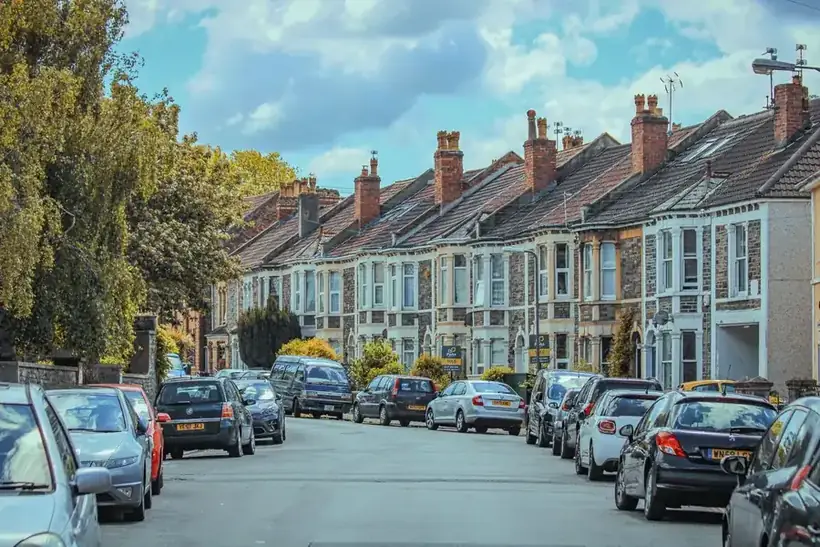
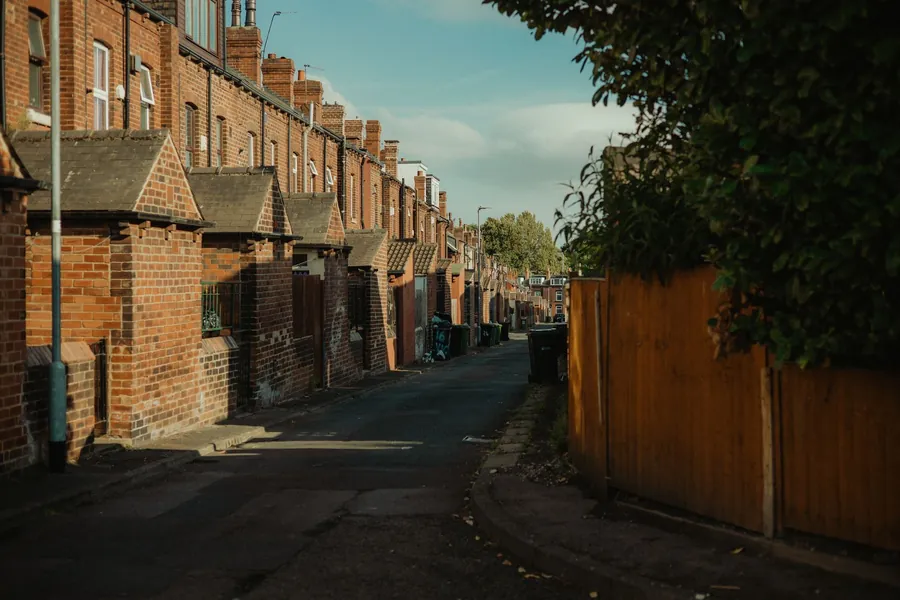
The Victorian and Edwardian expansion outward from the centre gave the town its bay-fronted terraces and semis, almost all in natural slate on softwood battens, with mortar-bedded ridges and clay pots on the stacks. These are the roofs where nail sickness and perished bedding mortar drive most of the work, and where owners are usually deciding between another decade of patching and a full strip.
Interwar and postwar housing - Aspin, Stockwell, the estates off Boroughbridge Road and Manse Lane - is mostly concrete interlocking tile on trussed or purlin roofs. Cheaper to work on, quicker to strip, and now reaching the age where the original 1960s and 1970s tiles have lost their surface and the underlay below has gone brittle. Newer developments on the edges of the town are modern concrete or clay interlockers with dry fixed ridges and generally little wrong with them beyond snagging.
Four groups, four different price brackets, sometimes within the same postcode.
Waterside, Abbey Road and the roofs you cannot reach
Every town has a handful of awkward properties. Knaresborough has a whole riverbank of them.
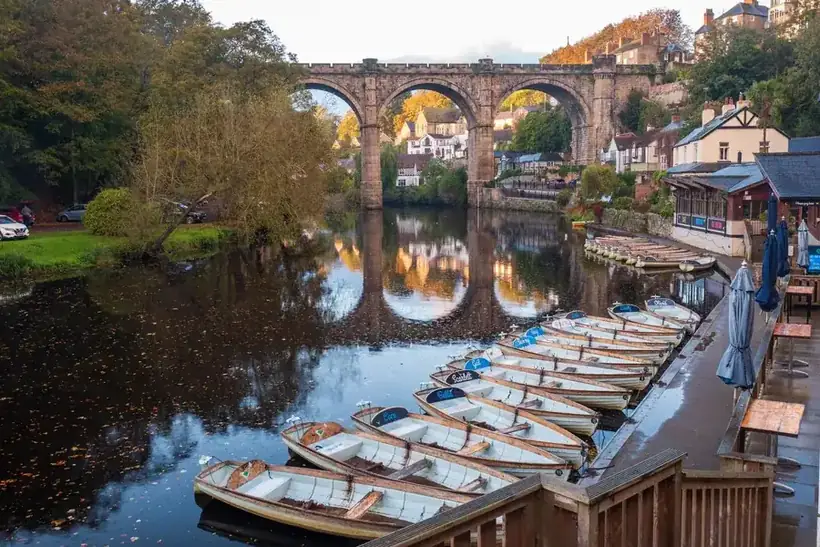
Waterside, Abbey Road and the houses perched above them on the cliff share a problem that has nothing to do with the roof covering. There is often nowhere flat to build from. The lane is narrow, the riverside footpath is in public use, parking is restricted or non-existent, and the ground on the downhill side drops away into the gorge. A scaffold in that situation may need a bridged or cantilevered design, sometimes tied into the building rather than freestanding, and occasionally a licence to occupy part of the highway or the footpath.
That is before materials come into it. On a normal job, a lorry tips a load onto a drive and a telehandler or a wheelbarrow does the rest. On a cliff-side property with a stepped path and no vehicle access, every pallet of tiles and every skip load of stripped slate is moved by hand. Slow, expensive, and miserable in November.
None of this makes the work impossible, and plenty of these roofs get done properly every year. It does mean that any roofer who gives you a figure for a Waterside property without coming to look at the access is guessing, and guessing low. Expect the access element alone to be a meaningful share of the total, and expect an honest contractor to tell you that before they talk about tiles.
What roof work costs in Knaresborough in 2026
Numbers first, then the reasons they move. These reflect the work we price around the town and they assume a proper scaffold rather than ladder work.
Small repairs sit where you would expect: refixing a handful of slipped slates typically runs from around £180 to £450 including access, re-bedding a ridge from roughly £600 to £1,400 depending on length, and replacing a failed lead flashing to a chimney from about £400 to £900. Chimney repointing on the taller old-town stacks is usually £700 upwards, more if the scaffold has to be designed around a neighbour’s roof.
Full coverings are where the spread opens up. A concrete-tiled semi on one of the postwar estates commonly lands between £7,500 and £12,000 stripped and re-covered with breathable underlay, new battens and dry fixed ridge and verge. A Victorian terrace in natural slate is usually £9,000 to £16,000, and the biggest single variable is what proportion of the existing slate comes back off the roof intact. Larger detached period property in or near the old town frequently passes £20,000 once access, stone or pantile matching and chimney work are in. If you are weighing a full strip against another few years of patching, our page on roof replacement in Knaresborough sets out where the line usually falls.
Three things move those figures more than anything else. Access, as above. The condition of the timbers, which nobody can price from the ground and which is the most common reason a job grows mid-week. And whether the covering is being matched to something historic, because sourcing salvaged pantile or the right slate size costs money and takes time that a builder’s merchant order does not.
Who signs off roof work now - and it is not Harrogate Borough Council
This one trips people up constantly, and not only homeowners. Harrogate Borough Council was abolished on 31 March 2023. From the following morning, North Yorkshire Council’s building control service has been the authority for Knaresborough, along with planning, conservation and listed buildings. Old paperwork, old signage and a good deal of old web copy still says otherwise.

What actually needs sign-off is narrower than most homeowners fear and wider than most assume. Straight repairs are exempt. Once you strip and re-cover more than a quarter of the total roof area, the work is treated as renovation of a thermal element and building regulations apply, which in practice means insulation must be brought up to the current standard for that roof type at the same time. Structural changes - new dormers, altered rafters, a rooflight cut into the slope - bring their own requirements regardless of area.
There are two routes to that sign-off. Either the council’s own building control team inspects and issues a completion certificate, or a contractor registered under a competent person scheme self-certifies and notifies on your behalf. Both are valid. What is not valid is neither, and the point at which that bites is usually five or ten years later when a buyer’s solicitor asks for the certificate. We covered the mechanics of that in more detail in our guide to building regulations and roof work, and everything in it applies here with North Yorkshire Council as the authority.
The conservation area, and what it does to a re-roof
The Knaresborough conservation area covers the historic core - the castle grounds, Market Place, the streets running down to the river, and a good deal of the riverside. Inside it, the roofscape is part of what is being protected, which is a polite way of saying that what you put back matters.
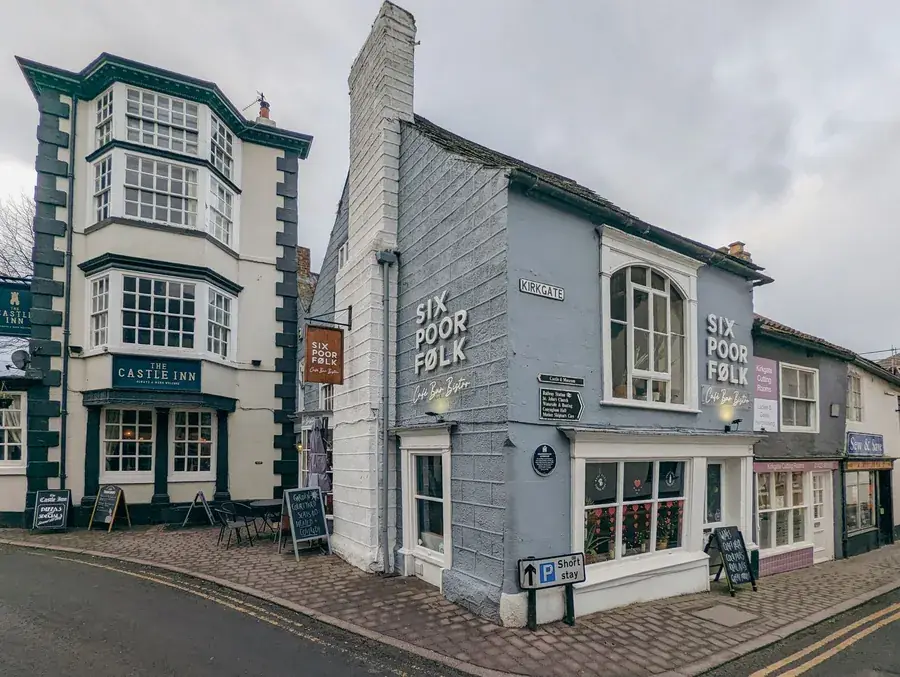
For an unlisted house in the area, a genuine like-for-like re-roof usually proceeds without a planning application, because nothing about the appearance changes. Swapping natural slate for concrete tile, changing the colour or profile of a covering, adding rooflights to a street-facing pitch or altering a chimney can all count as a material change, and that is where an application becomes necessary. The safest habit is to check the designation and any local restrictions on North Yorkshire Council’s conservation areas and listed buildings pages before specification, since the boundary is not obvious from the street and several properties just outside the core are still within it.
Listed buildings are stricter again. With that many listed structures concentrated in a small town centre, plenty of ordinary-looking houses on Kirkgate and the High Street are on the list, and listed building consent is normally needed for re-roofing work even where the materials are identical. Doing it without consent is a criminal offence rather than a planning breach, which is a distinction worth knowing before someone books a scaffold for you.
Picking a roofer who has actually worked in the town
The practical test is not whether a contractor covers Knaresborough on their website. It is whether they can talk about your specific street without prompting.
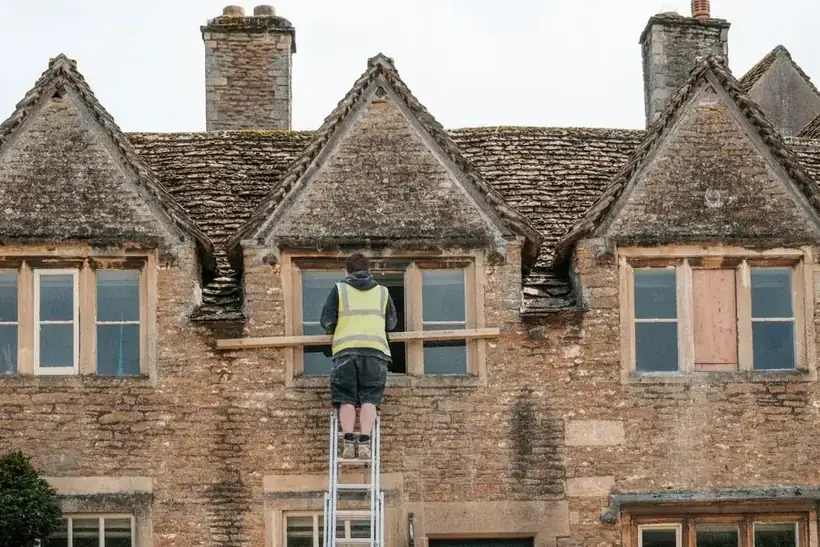
Ask three questions on the site visit. Where will the scaffold stand, and does it need a highway licence. What happens to the existing covering, and if it is pantile or natural slate, how much is coming back on. And who notifies building control, you or them. A contractor who has done this work in the town will answer all three without hesitating. One who has not will be vague about the scaffold, which is exactly the part that costs the most.
Check registration independently rather than taking a logo on a van at face value. The TrustMark homeowner search lets you confirm a firm is registered under a government-endorsed scheme, and it takes a minute. Ask for a written quote that itemises scaffold, materials, labour and waste separately, so you can see what you are actually paying for the access rather than having it buried in a single figure.
We are based in Harrogate and have been working across Knaresborough for years, including the awkward ones on the bank. If you want a figure you can rely on, the only way to get one here is to have someone stand in front of the building.
Frequently Asked Questions
Which council deals with roof work in Knaresborough?
North Yorkshire Council. It became the unitary authority for the whole county on 1 April 2023, and Harrogate Borough Council was abolished the day before. Planning applications, listed building consent, conservation area matters and building control for Knaresborough all sit with North Yorkshire Council now. If a roofer or a website still tells you to ring Harrogate Borough Council, that information is at least three years out of date and worth questioning.
Do I need planning permission to re-roof a house in Knaresborough?
For most houses outside the conservation area, a like-for-like re-roof is permitted development and needs no planning application, though it will still need building control. Inside the conservation area, or on any of the listed buildings in the old town, the position changes: a material change in the appearance of the roof can need consent, and listed building consent is normally required regardless of how minor the work looks. Ask North Yorkshire Council before materials are ordered, not after.
How much does a new roof cost in Knaresborough?
As a broad guide, a straightforward re-roof on a three-bedroom semi off Aspin Lane or Boroughbridge Road usually lands somewhere between £7,500 and £12,000 with scaffolding and new underlay. A Victorian terrace with a front slope in natural slate is often £9,000 to £16,000 depending on whether the slate is reused. A detached period house in the old town, or anything above Waterside, can run well past £20,000, mostly because of what it takes to get a scaffold up safely.
Why are roofing quotes higher for houses on Waterside and Abbey Road?
Access. Those properties sit on or above a steep gritstone bank with a river below, narrow lanes, limited parking and in several cases no level ground to stand a scaffold on at all. The roof itself may be ordinary. Getting a platform to it safely, moving materials down or up the bank by hand, and keeping a footpath open while you do it is not, and it can add several thousand pounds before a single slate is touched.
Is building control needed if I only replace part of a roof?
It depends on how much you replace. Renewing a few slipped slates is a repair and needs nothing. Once you are stripping and re-covering more than a quarter of the roof area, it counts as a renovation of a thermal element and building control applies, which usually means insulation has to be brought up to current standards at the same time. The threshold catches more Knaresborough jobs than people expect, particularly phased work on a large rear slope.