
12 October 2026
Roofers In Ilkley And Burley-in-Wharfedale: Roof Costs, Moorland Weather And Bradford Planning
Most of the calls we take from Ilkley start the same way. Someone has a slate missing above the bay, or a damp patch on a bedroom ceiling, and they want to know whether a Harrogate firm will come that far. We will, and we like the work, but roofers in Ilkley and Burley-in-Wharfedale have to work to a different set of rules from the ones we use at home. Both towns sit inside the City of Bradford district, not North Yorkshire. Ilkley’s own conservation area appraisal lists three separate roof coverings across the town, and the moor behind it climbs to about 402 metres, so the weather that reaches a roof on Wells Road is harsher than anything on the Stray. Bradford’s survey of Ilkley in 2006 also found that 83% of the original features on its older buildings were still in place. That is high, and it means planners notice when a roof changes. This guide covers the stock, the weather, the prices and the paperwork.
What roofers in Ilkley and Burley-in-Wharfedale are actually working on
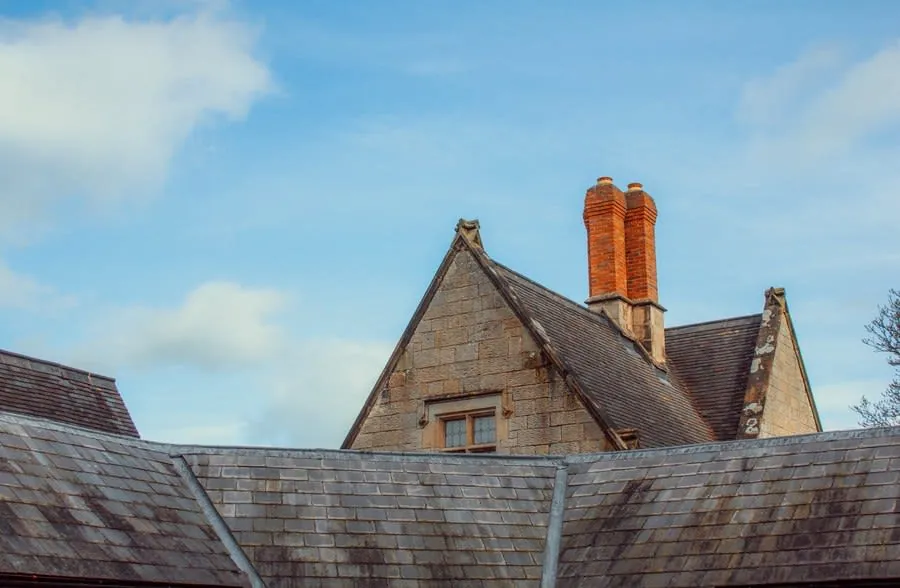
Ilkley was a farming village with a Roman past until the water cure arrived. White Wells, the little bath house up on the moor, was followed by hydros such as Troutbeck in 1863 and Rockwood in 1871, and once the railway reached the town in 1865 it filled up with visitors and then with commuters. Bradford’s appraisal splits the conservation area into six zones, from the medieval core on Church Street to the big houses on Queens Road and Hebers Ghyll Drive. Each zone has its own kind of roof, and it pays to know which one you are standing under.
Burley is smaller and older in feel. It was an agricultural village that took on industry when Greenholme Mills opened in 1790, and its Main Street still has 17th-century buildings such as Dial House. Between the two towns you get just about every roof type found in the Pennines, from heavy sandstone slabs to thin Welsh slate on Victorian terraces. Much of the slate roof work we carry out out here is repair, not replacement. Old roofs in this part of Wharfedale tend to fail at the details long before the covering itself is worn out.
Stone slate, Welsh slate and red clay: three roofs in one town
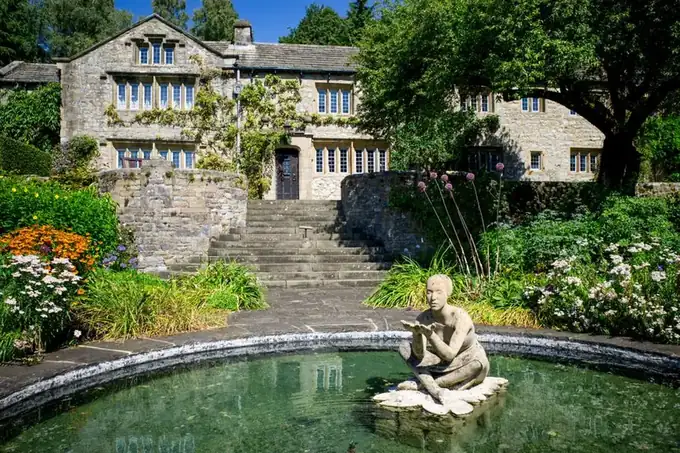
The Ilkley Conservation Area appraisal published by Bradford Council sets out the coverings plainly. Stone slates sit on the earlier buildings in the middle of town. Welsh or blue slate, or red terracotta tiles, cover the later ones. They fail in quite different places.
Stone slate is the oldest and the heaviest. Around Church Street and the Manor House, it was laid in diminishing courses, with the biggest slabs at the eaves, and fixed with oak pegs or nails that rust through. When those fixings go, a slab slides, and because every course laps the one below, one loose stone can open up a gap in three rows. We relay these roofs using the stone already there, and keep any we take off sorted by size so it goes back in the same course.
Welsh slate arrived with the railway and covers most of the terraces and villas built after 1865. It is light and thin, and its weak point is the nail. Look for a “nail sickness” line of slipped slates across one slope, often on the side facing the weather.
The red clay roofs are the ones people do not expect in a Yorkshire stone town. Ilkley’s Edwardian and Arts and Crafts houses, especially on the slopes towards the moor, often carry small plain tiles with swept valleys, bonnet hips and tile-hung gables. Lovely to look at. Fiddly to fix. A cracked valley tile lets water run straight onto the boarding underneath, and fixing it means cutting and fitting tiles by hand to follow the curve.
Living under Ilkley Moor: rain, frost and a long winter shadow
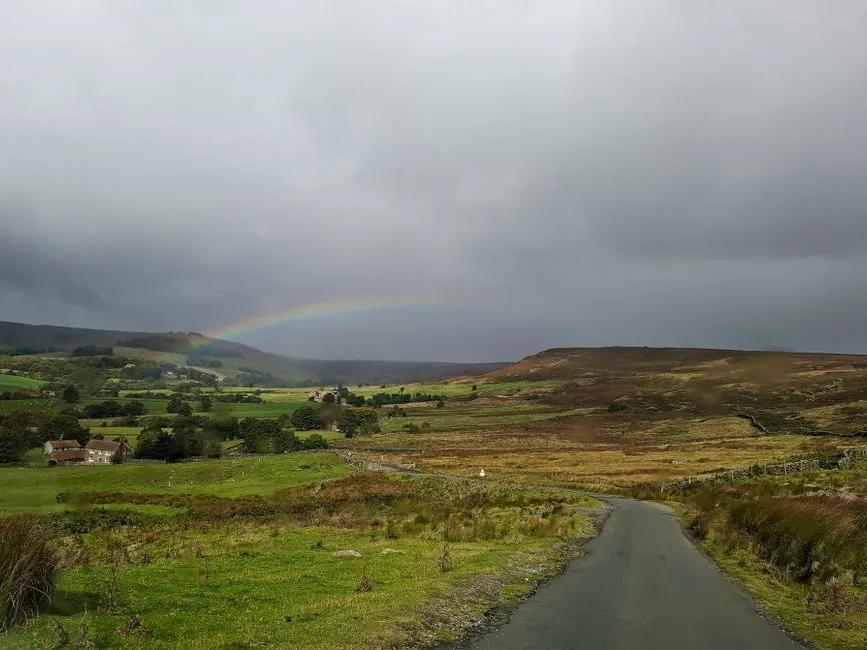
Ilkley is built on the south bank of the Wharfe, and the town climbs uphill towards the moor. The ground falls north to the river, so a lot of houses have the moor rising straight behind them. In winter the rear slopes of houses on the upper roads can sit in shade for most of the day. Slate and stone that never fully dries is where moss takes hold, and moss on a stone slate roof soaks up water, packs the joints and lifts the slabs a little more with every frost.
The moor also changes the weather. In our experience, showers coming in from the west often break over the high ground and the town just below it, and the stretch of Wharfedale upstream towards Addingham and Bolton Abbey gives the wind a long run at the western end of Ilkley. The roofs at the top of Cowpasture Road and along Wells Road take the full force of it, and we find verges and ridges there with their mortar scoured out years before the same work is due lower down.
Burley gets a gentler version. It lies lower and further down the valley, but the houses on its northern edge face straight across the flat fields to the river and the hills beyond, with not much in between to slow the wind.
Spa villas and big Victorian houses: where the money goes
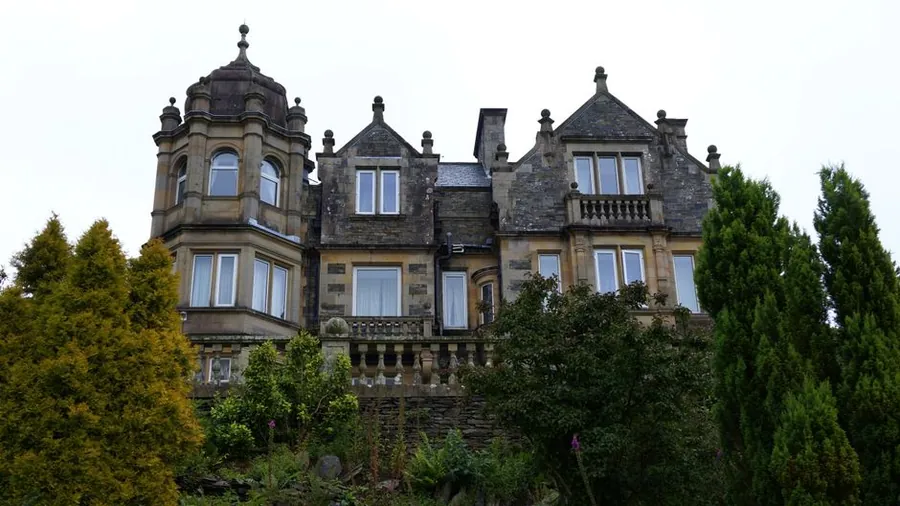
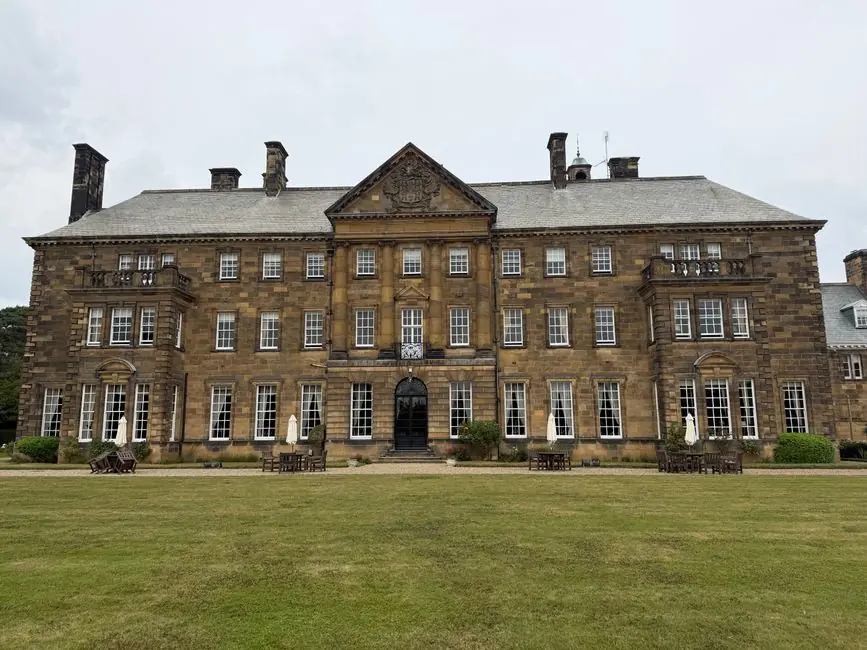
The big houses around Wells Road, Crossbeck Road and Queens Road were built for people with money, and their roofs show it. Towers, turrets, steep gables, decorative ridge tiles and a lot of lead. They also have corniced chimney stacks, which the appraisal singles out as part of Ilkley’s character, and those stacks are often the first thing to go wrong.
A stack like that is tall, exposed and made of porous sandstone. Over a century the lead flashing at its base fatigues and cracks, the mortar between the courses washes out, and the cornice at the top lets water into the stonework below. If the damp patch is in the corner of a top-floor room next to a chimney breast, the stack is the most likely cause, whatever the slates look like.
Many of these houses have also been split into flats, which changes who pays and how a job gets agreed. If the roof is shared, the freeholder or management company usually arranges the work, and the leaseholders contribute through the service charge. It is worth sorting that out before anyone is up a ladder, because a quote that has not been through the right process can stall for months.
Hidden lead gutters behind parapets are the other recurring problem. They are easy to forget because nobody can see them from the street, and when the outlet blocks with leaves from the mature trees these roads are known for, water backs up under the slates.
Burley-in-Wharfedale: Main Street stone, mill rows and Sun Lane
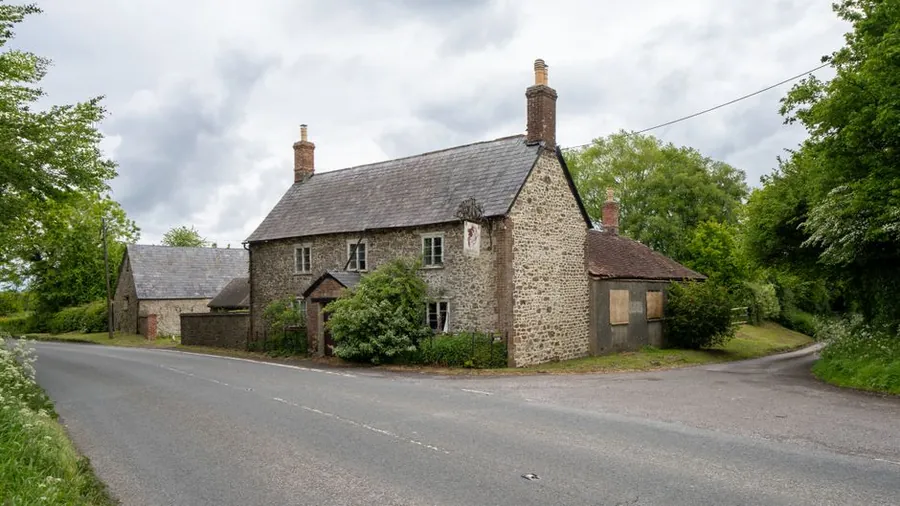
Most of Burley’s old roofs are still there. The council’s 2007 appraisal found that stone slate and blue-grey slate were still the main coverings, with nearly all of the buildings in the conservation area keeping their original roofing, and it said the chimney stacks made a strong contribution to the roofscape. The same document floated an Article 4 direction to protect stone slate roofs and chimney stacks if residents supported it. Check the current position on the Burley-in-Wharfedale Conservation Area page on Bradford Council’s website before you plan anything beyond a straight repair.
The mill housing, such as the 19th-century terraced cottages on Iron Row, is where we see the classic terrace faults. Long shared roofs where each owner has repaired their own bit at different times, valleys and back gutters behind stacks that fill with moss, and lead soakers at the party walls that have done their time.
Burley is also getting a lot newer. After a long fight that went as far as the High Court, permission was confirmed for 500 homes and a new primary school at Sun Lane on the western side of the village. As those homes go up, their roofs will be modern trussed roofs with concrete or clay-look tiles and dry-fix ridges, and their early problems tend to be snagging issues, such as missing ridge clips, badly sealed vents and gutters set with the wrong fall. If you have bought one, report roof defects to the builder and the warranty provider while the cover is still in its first two years.
Roof prices in Ilkley and Burley for 2026
We charge Ilkley the same day rate as Harrogate. What changes the bill out here is the size of the houses, the coverings and how much of the roof has to be done by hand. The ranges below are typical of what we would expect to quote this year, before we have seen the roof. The written figure comes after a survey.
| Job | Typical 2026 range | Why it might cost more |
|---|---|---|
| Replace a handful of cracked plain clay tiles | £200 to £500 | Tiles need sourcing to match an Edwardian colour |
| Re-form a swept or laced clay valley | £900 to £2,400 | Boarding underneath has rotted |
| Relay a patch of stone slate after a gale | £700 to £2,000 | Shortfall of matching reclaimed stone |
| Reflash and repoint a corniced sandstone stack | £800 to £2,200 | Cornice stones cracked or loose |
| Re-slate a terrace between Railway Road and Leeds Road | £8,500 to £13,500 | Party wall details and shared scaffolding |
| Re-roof a large villa off Queens Road or Wells Road | Survey first, often £25,000+ | Turrets, hidden lead gutters and height |
Scaffolding is a bigger share of the price on the hillside streets than it is in Harrogate. Ground that slopes steeply across a frontage needs a taller lift at one end, and some of the villas sit behind high walls and long gardens, so materials have to be carried further. On The Grove and Brook Street, anything standing on the pavement needs a licence from Bradford as the highway authority, so we try to avoid the busiest shopping days.
Planning in Ilkley and Burley: Bradford Council decides
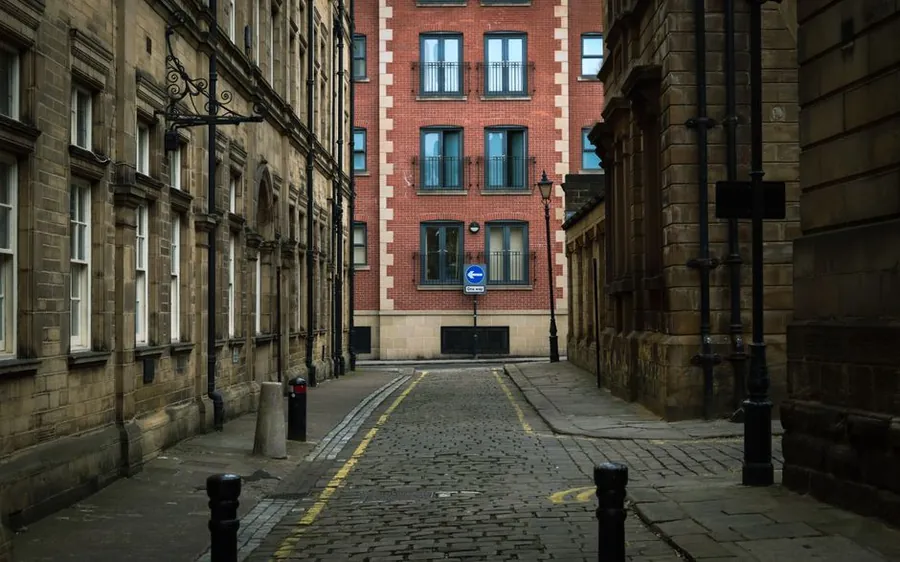
Both towns have been part of the City of Bradford Metropolitan District since local government reorganisation in 1974. So the planning department, listed building officers and building control for an Ilkley roof are in Bradford, not Northallerton and not Leeds. It is the same split we explained for Otley and Pool-in-Wharfedale, just with a different council a few miles up the A65.
Here is how it usually works out for a roof:
- A repair that uses the same materials and leaves the roof looking as it did does not need planning permission, even in a conservation area. The Planning Portal’s guidance on roofs and planning permission sets out the general rule.
- Changing the covering, for example from stone slate to concrete tile, alters the look of the roof. In the Ilkley, Ben Rhydding or Burley conservation areas, ask Bradford before you order anything.
- Dormers and front rooflights in a conservation area are where most applications are needed. The Ilkley appraisal named poorly designed dormers as one of the small things spoiling the area.
- On a listed building, almost any change to the roof needs listed building consent, including taking down a chimney.
- A full re-roof also counts as building work, so it has to meet the Building Regulations on insulation and structure. Bradford’s building control, or an approved inspector, signs it off.
We look up the conservation area boundary and listing for each address before we price a job, and if a consent is needed we put that in writing on the quote so it does not come as a surprise.
If your roof in Ilkley, Ben Rhydding or Burley needs looking at, we will come out, check it from the loft and from the outside, and send you a written price with scaffolding shown as its own line. Book a free roof survey in Ilkley or Burley-in-Wharfedale.
Frequently Asked Questions
Which council handles planning for roof work in Ilkley and Burley-in-Wharfedale?
City of Bradford Metropolitan District Council. Both towns moved into the Bradford district in the 1974 reorganisation, so planning permission, listed building consent, conservation area queries and building control all go to Bradford rather than North Yorkshire Council or Leeds. Ilkley Town Council and Burley Parish Council get a say on applications, but Bradford makes the decision.
Is my Ilkley house in a conservation area?
Quite possibly. The Ilkley Conservation Area was designated in 1977, extended in 1982 and had its boundary revised in 2002. It takes in the old centre around Church Street, Brook Street and The Grove, the spa-era streets around Wells Road and Crossbeck Road, the terraces between Railway Road and Leeds Road, and the later villas around Queens Road and Parish Ghyll Road. Ben Rhydding has a separate conservation area of its own. We check the boundary for every address before we quote.
Can I swap the red clay tiles on my Edwardian Ilkley house for concrete tiles?
We would advise against it, and inside the conservation area it may need planning permission because it changes how the roof looks. Interlocking concrete tiles are far bigger than plain tiles, so they cannot follow the swept valleys and bonnet hips these roofs usually have, and the batten spacing and weight are different too. Reclaimed or new clay plain tiles keep the roof looking right and avoid an argument with Bradford.
How long does it take you to get from Harrogate to Ilkley?
Ilkley is roughly 17 miles away, about 35 to 40 minutes by van through Otley, and Burley-in-Wharfedale is a few miles nearer along the A65. For a leak we aim to get there the same day, and the first visit is about making the roof watertight with sheeting and temporary fixings before anyone talks about a quote.