
4 October 2026
Roofers In Boroughbridge: Roof Costs, Pantiles, The River Ure And Aldborough
Boroughbridge is a brick town on a big river. People who come from Harrogate expect stone and slate, and they find red brick, orange clay pantiles and the River Ure running straight through the middle. Around 3,400 people live in the parish, which has taken in Aldborough and Minskip since 1938, and the National Heritage List records 76 listed buildings across it. Most of those have pantile roofs. If your house is one of the older ones, the questions a roofer has to answer are different from the Harrogate ones: where to find tiles that match, how the roof copes with weather blowing across open farmland, and whether the Roman town under Aldborough affects anything you dig.
A brick and pantile town, not a stone one
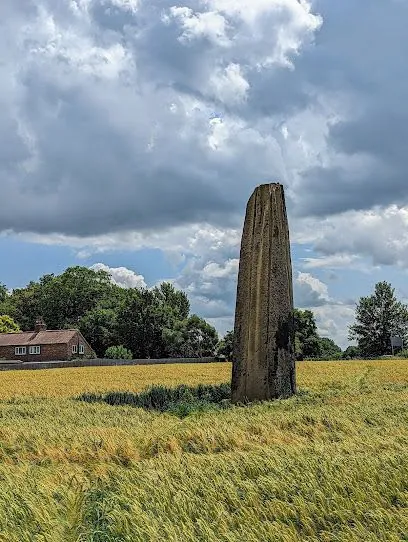
Harrogate is built from gritstone. The Vale of York around Boroughbridge has clay and river gravel instead of good building stone, so the town was made from fired clay: brick for the walls and curved pantiles for the roof. Welsh slate came in during the 19th century, mostly on the better houses and the coaching inns that served the old Great North Road. Aldborough Hall, put up in 1628-29, is red brick under Welsh slate, and the grander houses in the parish tend to follow that pattern.
That mix shapes almost every roof repair in Boroughbridge we quote for. On Horsefair, Fishergate and High Street you will see pantile and slate roofs side by side, often on houses of the same age. The pantile roofs tend to be lower pitched and the slate ones steeper, and they fail in different ways. Pantiles lift and slide when the wind gets under them. Slates slip one at a time when the old nails rust through. A good survey tells you which one you have before anyone talks about price.
Further out, Langthorpe across the river and the edges of the town have estates from the 1960s onwards, plus newer streets off Leeming Lane. Those are concrete interlocking tiles on felt or modern membrane, and they behave much like estate roofs anywhere else in the district.
Matching an old Boroughbridge pantile
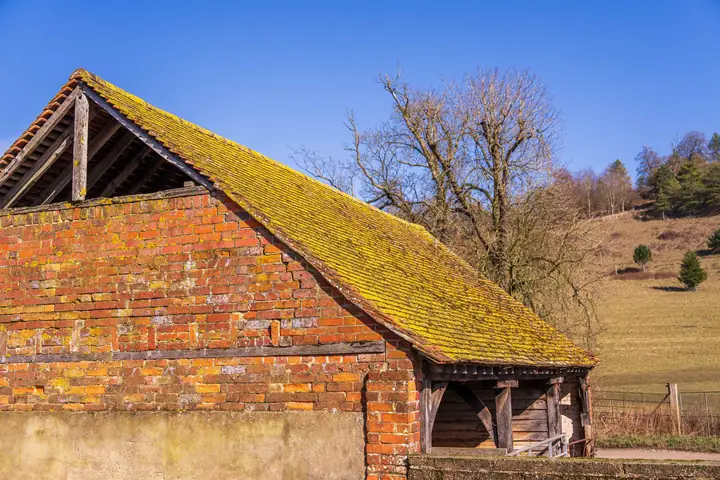
A local firm, J.W. Green, made clay pantiles that carried the Boroughbridge name, with one nib or three on the back. The works has long since closed, but plenty of those tiles are still on roofs round here, and reclamation yards still sell them by the pallet. That matters, because a modern machine-made pantile is rarely the same size or curve as an old handmade one. Mix them on one slope and the laps do not sit right, water tracks sideways, and the roof looks patched from the street.
So when a few tiles on an old roof crack, the first thing we do is turn one over and look at the back. If it is a Boroughbridge or another northern handmade tile, we try to match it from reclaimed stock. If we are stripping a whole slope, we save every sound tile, use them on the front where they show, and put new tiles of the closest size on the rear.
One newer rule changes the sums. When a roof is re-covered now, the British Standard for slating and tiling expects every tile to be mechanically fixed with nails or clips. A lot of old pantile roofs were laid with only the odd course nailed, relying on the nib and the weight of the tile. That is why so many of them shift in a gale, and it is also why a proper re-roof costs more than relaying tiles the old way.
The Ure, Langthorpe and Roecliffe: living with a river that rises

The river is the biggest thing in Boroughbridge, and it floods. The Environment Agency’s river level page for the Ure at Boroughbridge puts the normal range at 9.62m to 14.20m and warns that property flooding is possible above 15.30m. The highest reading in its recent record is 15.79m, on 26 September 2012. The same page notes that houses in Langthorpe have flooded in the past at 16.24m and that Bar Lane in Roecliffe flooded at 16.60m. Storm Ciara pushed the river over its banks again in February 2020.
Floodwater does not reach a roof, but it changes how we plan roof work on low ground. Scaffold on a soggy riverside garden needs wide sole boards and sometimes extra ties, and we will not leave a roof stripped back on a low-lying house when the gauge is climbing and heavy rain is due. The river also keeps the air damp. North-facing slopes near the water stay wet for days, and moss grows faster there than it does on the same kind of roof a mile away on higher ground.
Gutters matter more here as well. If your downpipes run into a drain that backs up when the river is high, the water has nowhere to go and the gutter overflows down the wall. So before anyone sells you bigger gutters, find out where your downpipes actually go.
Aldborough and Minskip: roofs over a Roman town
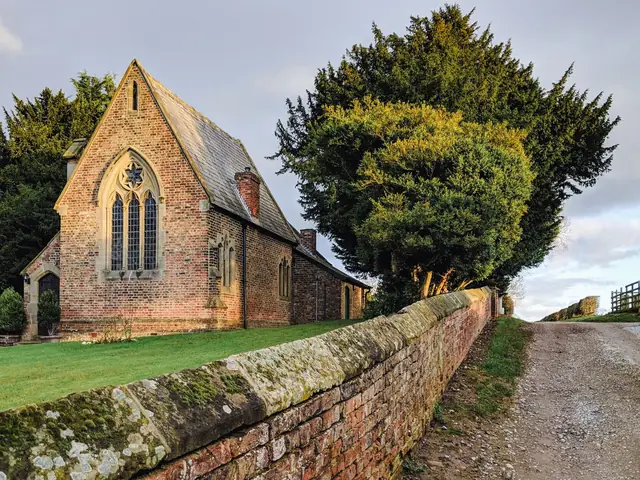
A mile south-east of the town, Aldborough sits on top of Isurium Brigantum, the Roman capital of the Brigantes. English Heritage looks after the Aldborough Roman Site, with its mosaics and a stretch of the town wall, and much of the Roman town is protected as a scheduled monument.
A re-roof does not disturb the ground, so for most owners the Roman remains change nothing. They become relevant when roof work is part of something bigger: a new extension, a garden room, a soakaway for the downpipes or a trench for a new drain. Any digging inside a scheduled area needs scheduled monument consent, applied for through Historic England, before a spade goes in. If you live in Aldborough and your roofing job includes groundwork, check this first. Finding out halfway through costs a lot more.
Minskip, just west of the A1(M), is a smaller place with a mix of brick cottages, farm buildings and newer houses. Farm buildings there and around Roecliffe often have big pantile roofs on old timber, and the timber is usually what decides the price.
What roof work costs around Boroughbridge in 2026
We charge the same day rate in Boroughbridge as in Harrogate. What changes the bill is the roof itself. These are the ranges we are seeing this year, and none of them replaces a survey:
- Resetting slipped or cracked pantiles: £120 to £350 for a handful, if the tiles can be matched and the job can be done from a ladder or tower.
- Re-bedding or converting a ridge to a dry fix system: £400 to £950 on a typical terrace or semi, depending on length and whether the ridge tiles are reusable.
- Full re-roof of an old pantile cottage: £7,000 to £12,500, with reclaimed matching tiles, new battens, membrane and every tile fixed to current standards.
- Full re-roof of a 1970s or 1980s semi in concrete tile: £5,000 to £8,500, with more for hipped roofs or attached garages.
- Re-slating a Victorian brick house: £8,500 to £15,000, depending on how many slates can be reused.
- Scaffolding: £700 to £1,400 for a house with a garden or drive. Anything on the pavement along High Street or Fishergate needs a highway licence, which should be a separate line on your quote.
If you are comparing these figures with towns nearby, our guide to roofers in Wetherby and Boston Spa explains why prices shift between places that use the same contractors.
Planning, the conservation area and building control
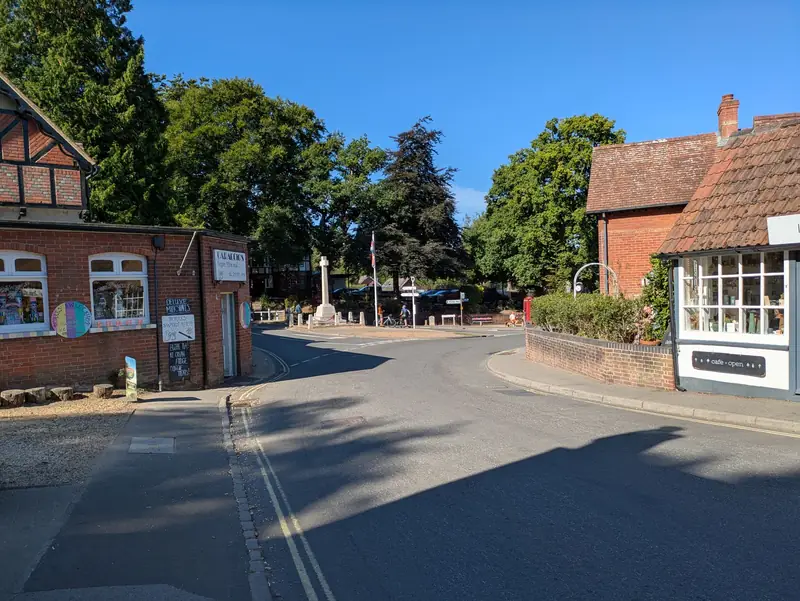
Boroughbridge moved from Harrogate Borough Council to North Yorkshire Council on 1 April 2023, along with the rest of the old district. Same staff in many cases, different name on the letterhead. Planning, conservation and building control all sit with the new council.
The centre of Boroughbridge is a conservation area, and the council’s character appraisal for it is still used when decisions are made. Repairs using the same material need no permission. Changing the covering, adding rooflights on the front slope or taking down a chimney stack can need planning permission, and on a listed building almost any change to the roof needs listed building consent. With 76 listed buildings in the parish, it is worth checking the national list before assuming your house is not one of them.
Building control is separate from planning. Re-covering more than 25 per cent of a roof needs Building Regulations approval, and if more than half of it is replaced the roof generally has to be brought up to current insulation standards where that is practical. North Yorkshire Council’s building control team can inspect it, or a roofer registered with a competent person scheme can certify it. Your quote should say which, and you should get a completion certificate at the end. You will need it when you sell.
Wind off the Vale, and the run up the A1(M)
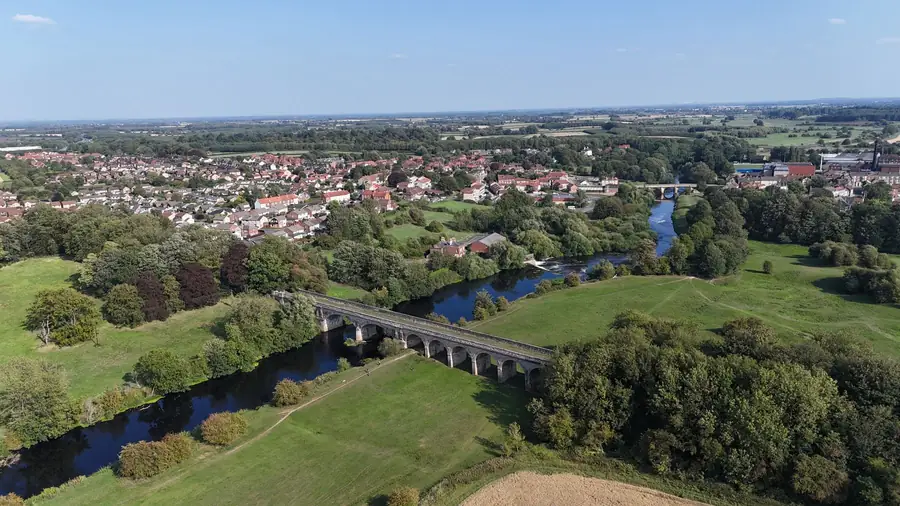
Boroughbridge sits on the flat floor of the Vale of York, and there is not much between it and a westerly gale apart from hedges. Houses on the edge of town, and the farmhouses out towards Roecliffe and Kirby Hill, catch the full force of it. That is when loose pantiles and mortar verges fail, and exposed gable ends usually go first.
Access is simple. Junction 48 of the A1(M) is on the edge of town, and the motorway stretch between Walshford and Dishforth has been open since 1995, so suppliers and skip lorries can get in without crossing the centre. From Harrogate we come through Knaresborough, and a callout to Boroughbridge, Langthorpe or Aldborough usually takes about 25 minutes.
If you would like someone to look at your roof, we can survey it, take photos from the scaffold or a pole camera, check the loft and give you a written quote. That quote will say what covering is going on, how many tiles we expect to save, who is handling building control and what the scaffold will cost. Book a free roof survey in Boroughbridge and we will arrange a time to come out.
Frequently Asked Questions
Who approves roof work in Boroughbridge now that Harrogate Borough Council has gone?
North Yorkshire Council. It took over planning, conservation and building control for the old Harrogate district on 1 April 2023, so Boroughbridge, Aldborough, Minskip, Langthorpe and Roecliffe all deal with the same authority. A like-for-like re-roof normally needs no planning permission, but replacing more than a quarter of the roof covering is building control work, which either the council inspects or a competent person scheme roofer self-certifies.
Can I swap old clay pantiles for concrete tiles on a Boroughbridge cottage?
Outside the conservation area and on an unlisted house, usually yes, because a change of covering on a house is generally permitted development as long as the roof keeps its shape. Inside the Boroughbridge conservation area, or on one of the 76 listed buildings in the parish, ask North Yorkshire Council first. A switch from handmade clay to concrete changes how the street looks, and the council can refuse it or require consent. Matching reclaimed clay pantiles is the safer route for those houses.
Does living near the River Ure affect my roof?
Not directly, because floodwater stops well below the eaves. What it does affect is the work around the roof. Damp riverside air keeps north slopes wet longer, so moss and lichen build up faster on houses near the water in Langthorpe and along the Ure. Scaffold standing on soft flood-plain ground needs proper sole boards, and we avoid booking big jobs on low-lying properties when the Environment Agency gauge at Boroughbridge is running high.
How long does it take a Harrogate roofer to reach Boroughbridge?
From our base on Whinney Lane it is roughly 11 miles, about 25 minutes through Knaresborough on a quiet morning. Roecliffe and Langthorpe are a few minutes further. For storm damage we bring sheeting, battens and spare tiles on the van, so the first visit usually leaves the roof watertight while matching pantiles or slates are sourced.