
6 August 2026
Roof Valleys: The Hidden Leak Point on Harrogate's Period Roofs
There’s a part of your roof that handles more water than any other, gets the least attention, and causes a surprising share of the leaks a Harrogate roofer gets called out to. It’s the valley - the internal angle where two roof slopes meet and run together. Rain from two whole slopes funnels down that single channel, so if there’s a weak point anywhere on it, that’s where the water finds its way in. On the town’s older houses the problem is doubled, because Victorian and Edwardian rooflines are full of valleys - all those L-shaped plans, dormers and bay windows create them. When a period Harrogate home gets a leak that isn’t the chimney and isn’t a slipped slate, the valley is the usual suspect. Here’s how valleys work, why they fail, and what it takes to put one right.
What a valley is, and why it’s a weak spot
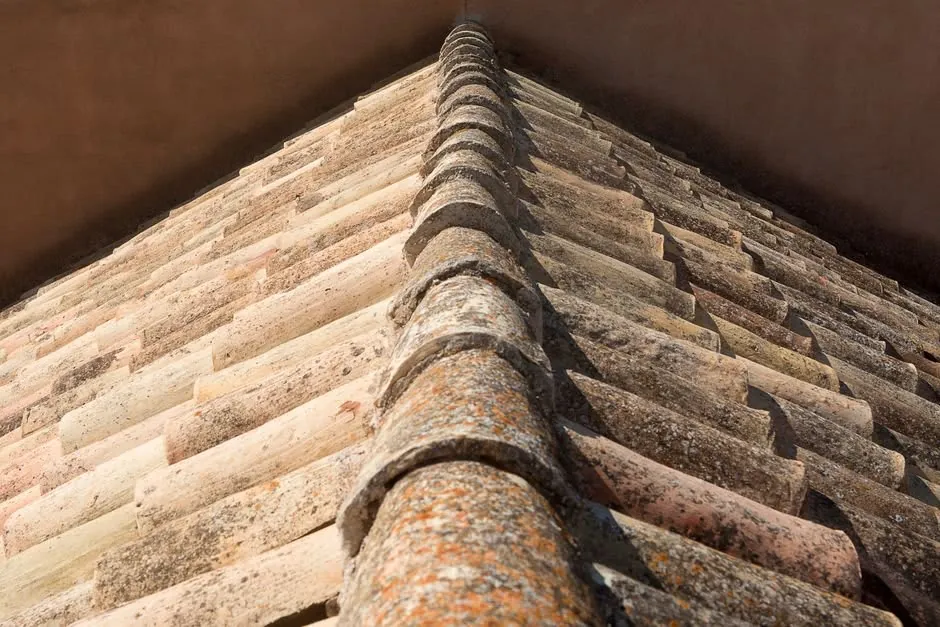
A valley is the trough formed where two pitched roof surfaces meet at an internal angle, like the inside of a folded piece of paper. Its job is to collect the water running off both slopes and carry it down to the gutter. That’s a lot of water passing over one narrow strip of roof, which is exactly why it’s vulnerable.
Everywhere else on a roof, the tiles or slates simply shed water down the slope. In the valley, the water is concentrated and channelled, often moving fast in heavy rain, and it’s relying on whatever lines the valley - lead, tile or fibreglass - to stay watertight under that load. Any crack, gap, blockage or worn spot in that lining, and the water backs up and gets underneath the roof covering. A fault that would be harmless in the middle of a slope becomes a leak in a valley.
Why Harrogate’s period roofs have so many
Simple roofs - a plain rectangle with two slopes - have no valleys at all. The trouble is that almost none of Harrogate’s period housing is that simple. The Victorian and Edwardian villas and terraces that fill the town were built with far more interesting rooflines: L-shaped and T-shaped plans, projecting gables, bay windows with their own little roofs, and dormers set into the slopes.

Every one of those features creates a valley where its roof meets the main roof. A typical Harrogate semi might have two or three; a larger villa with multiple gables and a bay can have half a dozen. More valleys means more of these high-risk channels to maintain, and it’s a big part of why period roofs here need more attention at the junctions than a modern estate house ever will. It’s the same reason the town’s roofs are heavy on lead flashing - complex shapes mean more joints.
The types of valley you’ll find
Not all valleys are built the same, and the type you have shapes how it fails and how it’s fixed. The traditional one is an open lead valley: a wide strip of lead dressed into the trough with the tiles or slates stopping short on either side, leaving the lead channel open to view. Done well it’s excellent and lasts for decades.
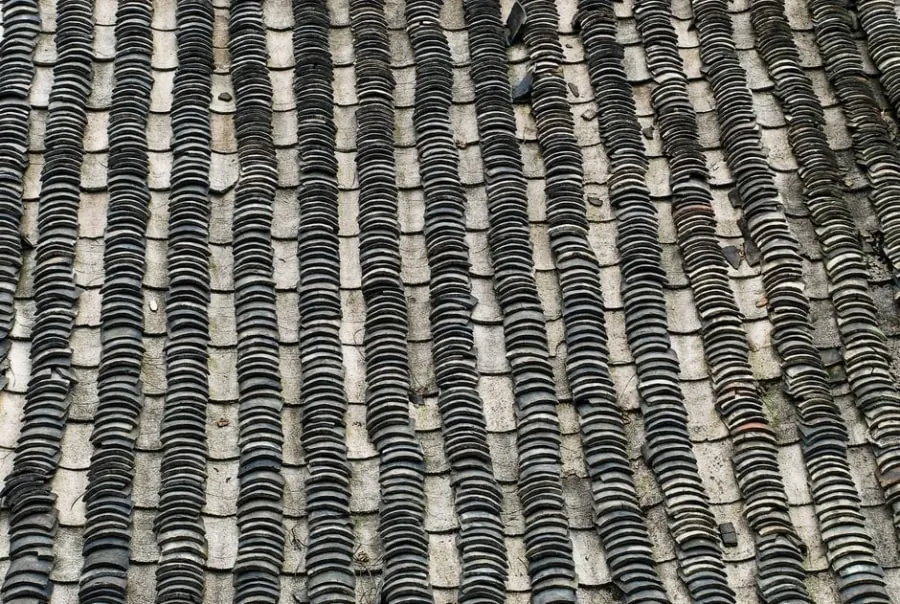
Then there’s the closed or mitred valley, where the tiles are cut and laced across the join so no lining shows - neat, but only as good as the cutting and the secret gutter beneath. Older properties sometimes have a mortar-bedded valley, which is the one most prone to cracking with age. And the modern option is a GRP (fibreglass) dry valley: a preformed channel that’s quick to fit, formed in one piece with no joints to fail. When an old valley is beyond repair, a GRP conversion is often the sensible replacement.
Why valleys leak
Most valley failures come down to one of three things. The first is the lining wearing out or cracking. A lead valley suffers the same problem as lead flashing - if the lead was laid in over-long lengths it can’t expand and contract freely, so it fatigues and splits, usually right in the fast-flowing centre where a crack does the most damage. Old mortar valleys simply crack with age and frost.

The second is blockage, and it’s the one homeowners cause without realising. Leaves, moss and debris collect in the valley because everything washing off both slopes ends up there. Once it dams up, water backs up over the edges of the lining and straight under the tiles. On a tree-lined Harrogate street this happens every autumn, which is why keeping valleys clear matters as much as keeping gutters clear. The third is bad original detailing - a valley cut too narrow, or a secret gutter with too little overlap - which no amount of maintenance fully cures and which needs re-forming to fix.
The signs your valley is the problem
Valley leaks have a signature. Because the valley runs down the middle of the roof rather than at the edge, the water usually shows up as a damp patch or ceiling stain some way in from the outside wall, often tracking down a line rather than spreading from a corner. If your leak is nowhere near the chimney and nowhere near an outside wall, a valley is high on the list.

Up close, the tell-tales are a valley full of debris or thick with moss, visible cracks or splits in a lead or mortar valley, and tiles alongside the valley that have slipped or lifted. From inside the loft, damp or stained timbers running along the line of the valley confirm it. If you’ve spotted a stain and can’t place the source, our guide to why ignoring a small roof leak gets expensive is worth a read - valley leaks are slow and sneaky, and they rot timber quietly before you ever see a drip.
Repairing or replacing a valley
What’s needed depends on the valley and how far gone it is. A blocked valley just needs clearing and the surrounding tiles checking - cheap and quick, and often all it takes. A lead valley with a single split can sometimes be patched, but if the lead has fatigued in one place it’s usually tired all over, so a re-line is the lasting fix rather than chasing cracks.

Replacing a valley means lifting the tiles or slates along both sides, taking out the old lining, and forming a new one - either fresh lead worked in proper lengths, or a GRP dry valley. It’s more involved than a flashing repair because the roof covering has to come up and go back, but on the right roof a GRP conversion is durable, jointless and often more economical than re-leading. A qualified roofing contractor will tell you which makes sense for your valley, and there’s useful background on valley construction from the Roof Tile Association.
What valley work costs
The range is wide because “valley work” covers everything from a ten-minute clear-out to a full re-line with scaffold. Clearing a blocked valley and re-bedding a few tiles is a modest job, often a few hundred pounds or bundled into a general maintenance visit. A full valley replacement - stripping back, new lining, re-laying the covering - typically runs from several hundred pounds up to well over a thousand per valley, driven mostly by length, the covering type and whether scaffold is needed to reach it.
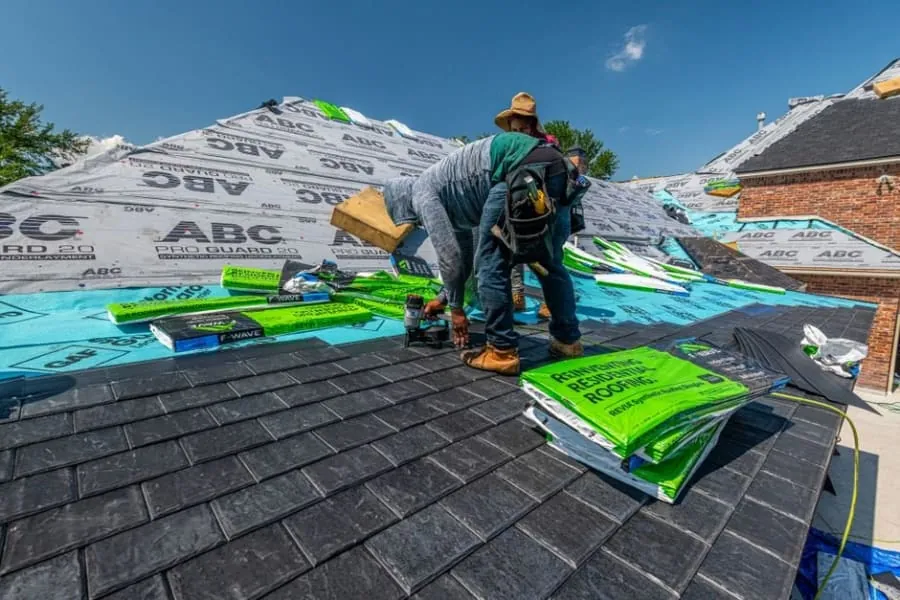
As always, access is the swing factor: a valley low over a single-storey bay is cheap to reach, while one high on a two-storey villa needs proper scaffold. The thing not to do is ignore it - a leaking valley soaks the roof structure continuously, and the repair only gets bigger. If you suspect a valley, our roof repairs team can pinpoint it and tell you whether it’s a clean-out or a re-line.
Frequently Asked Questions
How do I know if my roof valley is leaking?
The clearest sign is a damp patch or ceiling stain part-way in from the outside wall, rather than in a corner or near the chimney, often tracking down a line. In the loft, look for damp timbers along the line of the valley. On the roof itself, a valley choked with leaves and moss, visible cracks in the lead or mortar, or slipped tiles beside the valley all point to it as the source.
Why do roof valleys leak so often on Harrogate homes?
Because a valley carries the water from two whole slopes down one narrow channel, any weakness there leaks under heavy load - and Harrogate’s period houses have lots of valleys thanks to their gables, bays and dormers. Add the town’s heavy rain and the leaves that collect in valleys on tree-lined streets, and they become the most common non-chimney leak point on older roofs.
Should I replace my lead valley with a GRP one?
Often, yes. If a lead valley has fatigued and cracked, a GRP (fibreglass) dry valley is a durable and frequently more economical replacement, formed in one piece with no joints to fail. On a listed building or in a conservation area, lead may be required to keep the original appearance, so it depends on the property. A roofer can advise which suits your roof and setting.
How much does it cost to repair a roof valley?
Clearing a blocked valley and re-bedding a few tiles is a modest job, often a few hundred pounds. A full valley replacement - stripping the covering back, fitting a new lining and re-laying - typically runs from several hundred pounds to over a thousand per valley, depending mainly on its length, the roof covering and whether scaffolding is needed for access.