
5 September 2026
Pigeon And Bird Proofing For Harrogate Roofs: What It Costs And What Actually Works
Anyone who has stood outside Bettys on a Saturday morning has seen where Harrogate’s pigeons spend their days - and most of them are roosting on a roof within a few streets of the town centre by nightfall. Stone parapets, wide Victorian window ledges and disused chimney pots give them exactly what a rooftop needs to offer: a flat, sheltered spot out of the wind, close to food. The birds are not really the problem. What they leave behind is, and by the time most homeowners notice, it is usually a blocked valley gutter or a stained soffit board that brings them to the phone rather than the pigeons themselves. Here is what actually stops birds using a roof, what each method costs, and where the law says you have to leave well alone.
Why pigeons pick out certain Harrogate roofs
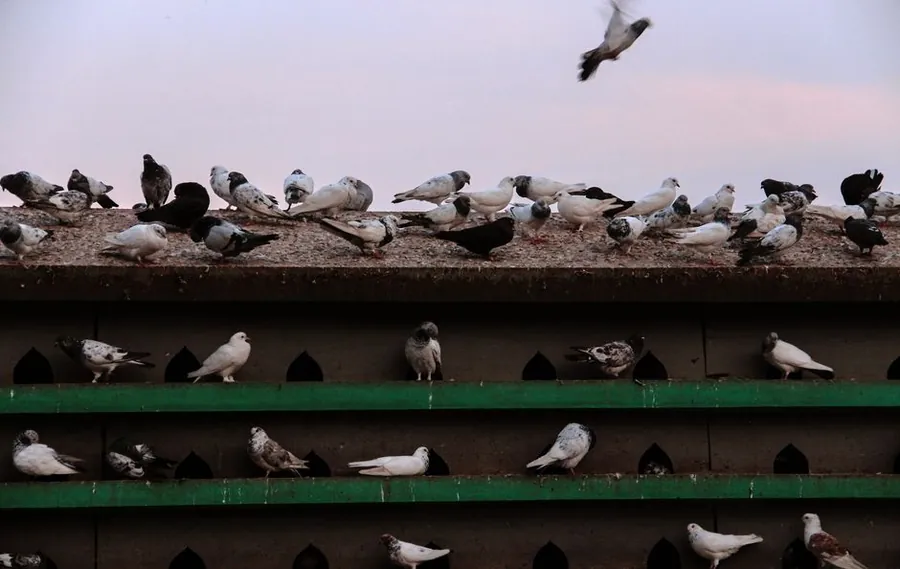
Feral pigeons are creatures of habit, and what they are looking for is remarkably specific: a flat or gently sloped ledge, ideally under an overhang that keeps rain and predators off, within easy reach of food and water. Harrogate’s town centre gives them plenty of that. The stone-fronted buildings around James Street and Cambridge Street have deep window cills and cornices that make near-perfect landing shelves, and the flocks that feed around the shops and outdoor cafes by day scatter to roost on the surrounding roofs by evening. It is the same pattern you see in most Yorkshire market towns, just concentrated wherever the architecture offers the most ledges.
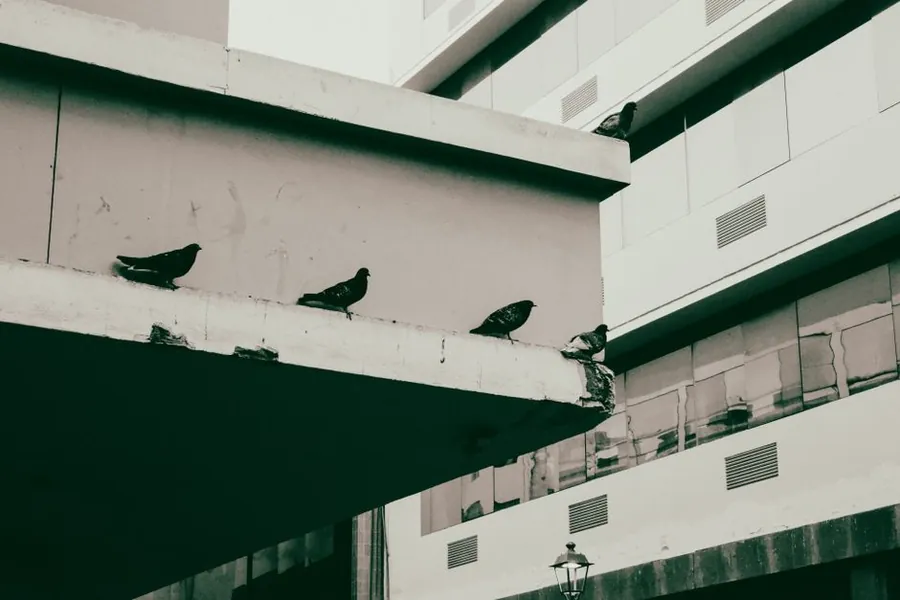
Away from the town centre it is chimney stacks that do the damage. A lot of Harrogate’s Victorian terraces and villas have redundant flues from fires and ranges that were capped off decades ago, and an open pot with no cowl is an open invitation - dry, sheltered, and rarely disturbed. Flat-roofed extensions and garages add a second favourite spot: a wide, open surface with nothing to interrupt it. Put those two things next to a mature garden with bird feeders, which plenty of Harrogate’s suburban streets have, and you have got a roof that a pigeon will keep coming back to.
What it actually costs you if the problem is left alone
Pigeon droppings are mildly acidic and, left to accumulate, they do real and cumulative damage - etching lead flashing and mortar joints, and building up in gutters and valleys until they hold water rather than shed it. A blocked valley on a heavy rain day does not just overflow decoratively; it backs up under the tiles either side of it, and that is how a “bird problem” turns into an internal ceiling stain that has nothing obviously to do with pigeons by the time anyone spots it.
There is a health angle too, and it is worth taking seriously rather than either panicking about or dismissing. Dried droppings can carry the bacteria that cause psittacosis, and the Health and Safety Executive’s guidance on bird droppings in construction work sets out sensible controls - avoiding dry sweeping or pressure-washing large accumulations, which throws contaminated dust into the air, and using proper protective equipment for any significant clean-up. For most homeowners the practical takeaway is simple: get a large build-up cleared by someone who knows to wet it down first, rather than tackling a loft full of old droppings with a broom on a Sunday afternoon. Based on the callouts our team gets across Harrogate each autumn for overflowing gutters, a fair few - not the majority, but enough to be worth checking first - turn out to be nesting material rather than leaves once someone actually gets up there.
Netting - the option that works almost everywhere
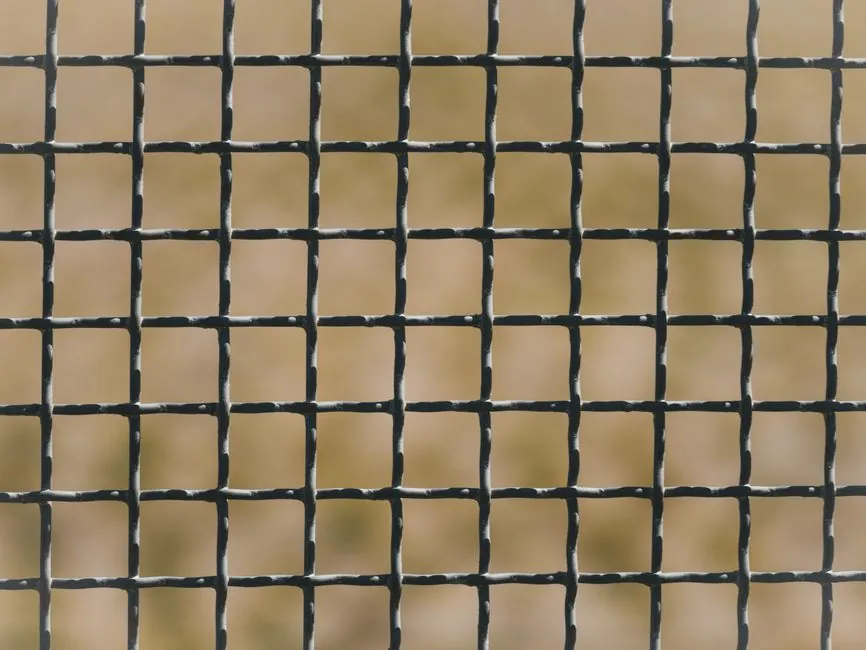
Netting is the closest thing to a universal fix, because it physically excludes birds from a space rather than just making one spot uncomfortable to land on. Stainless steel wire or heavy-duty polyethylene mesh, typically with a 50mm gap - large enough for rain and airflow, too small for a pigeon - gets stretched taut across valleys, under solar panel arrays, over flat roof sections or across the mouth of a chimney, and fixed to the surrounding brick or stone with stainless clips rather than anything that penetrates the waterproofing.
The trade body British Pest Control Association’s guide to bird netting is blunt about the main failure mode: tension. A net that sags gives birds somewhere to perch on top of it, and one with gaps at the fixing points defeats the entire point of installing it. It is not a weekend DIY job on anything beyond a small area - reaching a valley or a chimney safely needs the same access equipment a roofer would use for any other repair, which is usually why netting a whole roof costs more than people expect on the phone and less than they feared once they have the quote.
Spikes, wire and gel - proofing for smaller areas
For a single chimney stack, a window cill or a narrow parapet coping, full netting is overkill. Spike strips - rows of blunt stainless or polycarbonate prongs - do the job cheaply on any ledge narrow enough that a bird cannot land between the rows. They are the fastest and cheapest option per metre, and they are also the most commonly installed badly: spikes glued on with gaps between sections, or fitted only along the front edge of a cill while leaving the back accessible, just give the birds a slightly different perch.
Tensioned wire systems sit between spikes and netting - a taut line held a few centimetres above a ledge on small posts, low enough to be invisible from the ground but enough to stop a pigeon getting a landing angle. They suit long, narrow runs like a parapet or a bay window roof better than spikes do. Bird gel, a sticky non-toxic paste applied to a ledge, is the least durable option in the Yorkshire climate specifically - it loses effectiveness once it collects dust and grit, which happens faster here than in a sheltered city courtyard, so it tends to need reapplying every year or so rather than being a one-off fix.
The legal line: proofing is fine, disturbing a nest is not
None of this can happen while a nest is actively in use. Under the Wildlife and Countryside Act 1981, it is an offence to intentionally damage or destroy the nest of any wild bird while it is being built or in use, and that includes feral pigeons as well as the more obviously protected species. It does not stop you proofing a roof at all - it just means the sequence matters. An empty ledge, chimney or valley can be netted or spiked whenever you like. One with eggs or chicks in it has to wait until the young have fledged.
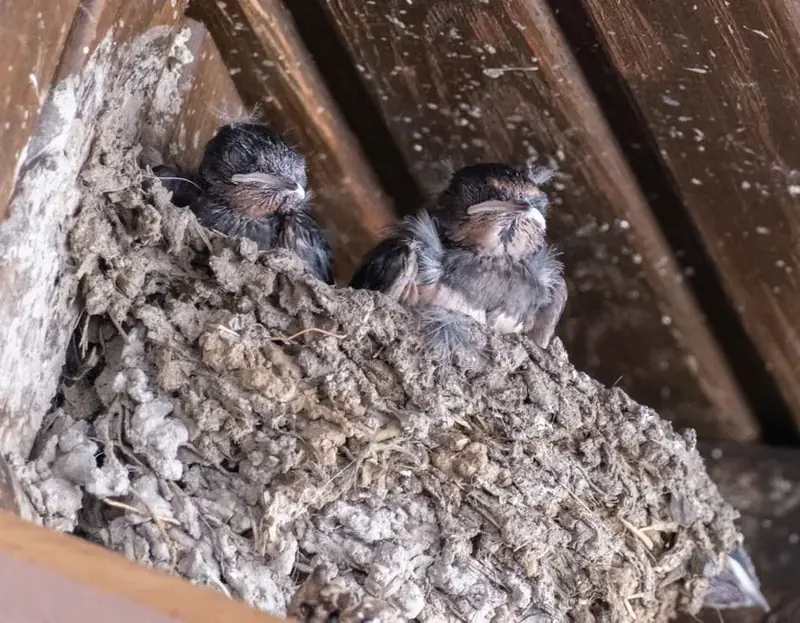
This is also where getting the identification right matters. A feral pigeon nest is one thing; house martins, swifts and swallows nesting under eaves are a different matter entirely, since several of those species get the enhanced protection reserved for birds under particular pressure, and disturbing them at the nest is a more serious offence than the general rule. If you are not sure what has moved in, that is a question for whoever is doing the proofing work before anything gets touched, not afterwards. Our guide to bats and nesting birds law before you re-roof covers the wider version of this same issue for anyone planning roofing work generally rather than proofing specifically.
Chimney pots, cowls and disused flues
Redundant chimneys deserve their own mention because they are such a reliable route in. An open, uncapped pot on a flue that has not carried smoke in years is dry, dark, sheltered from the wind and almost never disturbed - everything a pigeon wants in a nesting site, and a wire cage or a proper terracotta cowl over the top solves it completely without affecting how the chimney looks from the street.
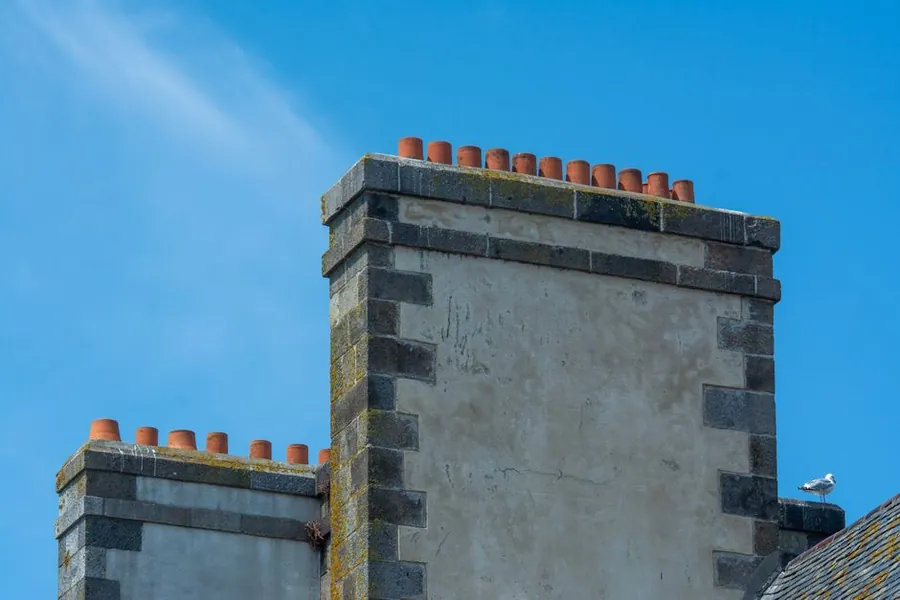
It is worth having this checked at the same time as any other chimney work, because a pot that is capped for birds but not for ventilation can trap damp in a flue that is still meant to be breathing - a genuinely disused stack usually wants a vented cap rather than a solid one for exactly that reason. If a chimney is coming down or being capped anyway rather than kept as a feature, our page on chimney repairs covers the fuller set of options.
Spotting a proofing job that has actually been done properly
Because so much of this work happens out of sight above a gutter line, it is easy to pay for a job that looks fine from the pavement and fails within a season. The checks are simple enough to do yourself once the work is finished, and worth doing before the scaffold or access equipment comes down.

Netting should be genuinely taut, not just draped, with no gap at any fixing point large enough to slide a finger under. Spikes should run the full length of a ledge, not stop short at a corner where a bird can slip round the end. Ask specifically what was done with any existing nesting material and droppings before the area was closed off, because sealing birds in rather than out is a real and unpleasant failure mode. A written note of exactly what was fitted, where, and with what warranty is a small thing to ask for and a useful thing to have if a spike strip works loose in a Yorkshire gale two winters later.
Pigeons are not going anywhere, and a Harrogate roof with the right ledges and the wrong chimney cap will keep attracting them however many times a nest gets cleared. Fixing the access point once - properly netted, spiked or capped, and legally timed - is the difference between a job that lasts and one you are paying for again next spring. Get your Harrogate roof checked for pigeon and bird damage