27 August 2026
Asbestos Garage and Outbuilding Roofs in Harrogate: How to Spot One and What It Costs to Replace
Somebody in Harrogate is thinking about jet-washing their garage roof this weekend. Sixty years of moss and lichen have turned the corrugated sheeting green, the pressure washer is already in the garage below, and it looks like an easy Saturday job. It is also, on a roof of that age, close to the worst thing you could do to it. A high pressure jet on weathered asbestos cement blasts the fibres straight out of the surface and spreads them across the garden, the drive and the neighbour’s borders. Asbestos in Harrogate homes is almost never in the house itself. It is out the back, on the garage, on the coal store, on the lean-to workshop that came with the property. Those roofs are now between forty and seventy years old, they are reaching the end of their useful life together, and a lot of homeowners have no idea what they are standing under.
Which Harrogate garages are most likely to have one
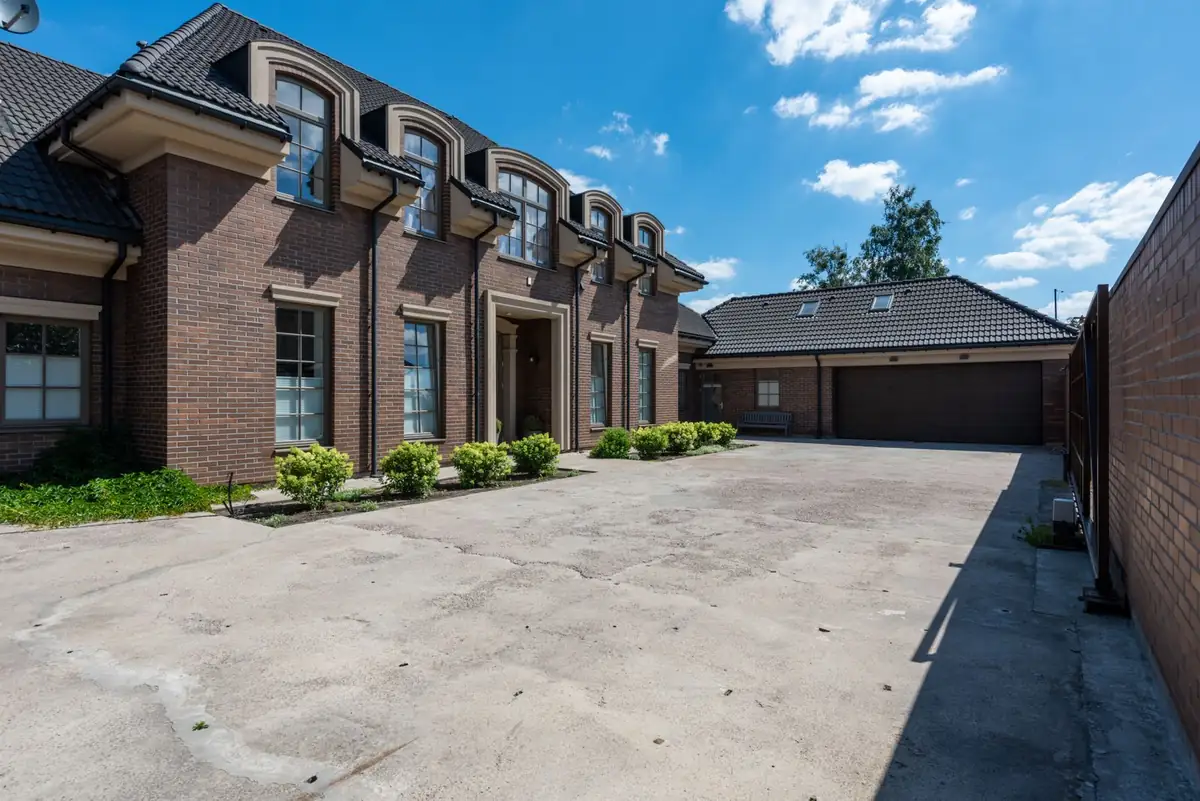
The pattern follows the building boom rather than the postcode. Harrogate’s Victorian and Edwardian stock, the villas around the Duchy estate and the stone terraces off Cold Bath Road, was built before private cars were a consideration, so the garages there were added later and vary enormously. The concentration sits in the estates that went up between the mid 1950s and the late 1970s, which is where Jennyfields, parts of Bilton, Woodfield, Starbeck and the newer edges of Killinghall and Knaresborough come in.
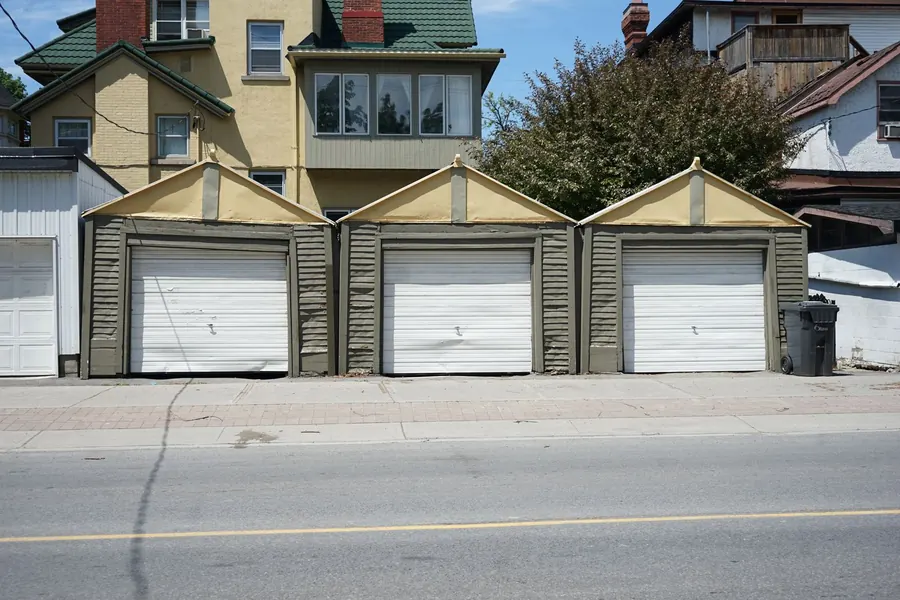
Two building types dominate. The first is the precast concrete sectional garage, delivered flat packed and bolted together on a slab in an afternoon, almost always finished with corrugated cement sheets fixed to steel or timber purlins. The second is the brick or block garage built alongside the house, given the same cheap sheeting because it was the standard low cost roof of its day. Add in the sheds, coal bunkers, greenhouses and lean-to stores that came with those properties and a single 1960s plot can carry three or four separate sheeted roofs.
None of that is a reason to panic, and it is worth being clear about that early. Asbestos cement is one of the least dangerous forms the material takes, because the fibres are locked into a cement matrix. The risk arrives when somebody breaks it up, drills it, sands it or cleans it aggressively. That distinction is the difference between a roof you can leave alone for another decade and a problem you have created yourself. It also shapes how any sensible roofing work on the property gets planned, because a contractor who knows what the garage roof is made of works around it differently.
Telling asbestos cement from the modern stuff
Manufacture of asbestos cement products was banned in the UK in 1999, with the blue and brown types outlawed back in 1985. That gives you a usable date line. Anything on a building put up after the turn of the millennium is almost certainly fibre cement made without asbestos. Anything before it, and still on its original covering, deserves the benefit of the doubt in the other direction.
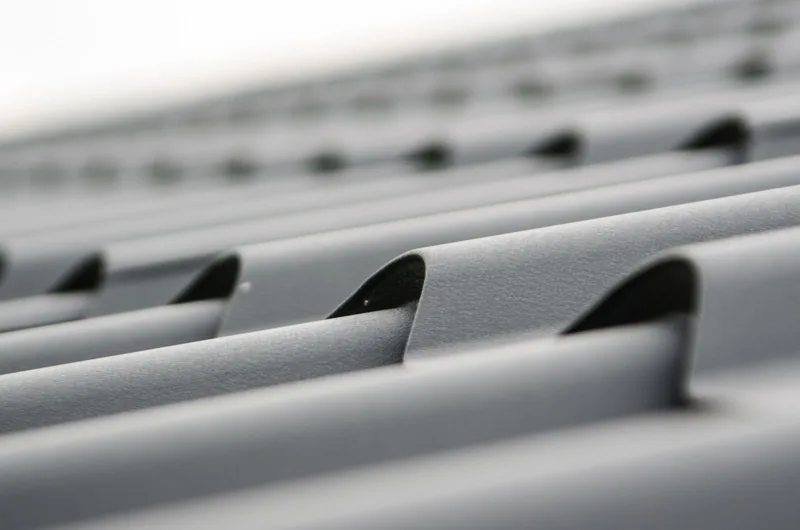
Visually there are a few tells. Asbestos cement sheeting is a flat, chalky grey rather than a modern factory colour, around 6mm thick, and it sits in a shallow corrugated profile with a fairly tight wave. After decades in the Harrogate climate the surface goes matt and slightly crazed, moss establishes in the troughs, and the exposed edges start to look fibrous where the cement has weathered back. Modern replacement sheets are frequently marked NT or carry an asbestos free stamp on the underside, and the fixings look newer than the building.
What you should not do is snap a corner off to have a proper look. The Health and Safety Executive’s guidance on locating asbestos materials covers the common building locations and the sensible response to each, and cement roof sheeting sits firmly in the leave it alone unless disturbed category. If you genuinely need to know, a contractor can take a controlled sample and send it to a UKAS accredited lab, which typically costs less than a tank of fuel and settles the question permanently.
Leave it or replace it? A condition question, not a fear question
The default advice on asbestos in good condition is to leave it where it is and keep an eye on it. That holds for garage roofs, and plenty of Harrogate sheeting from 1968 is still perfectly serviceable in 2026. Sound sheets, intact fixings, no cracks, no daylight through the joints, and no reason to touch it.
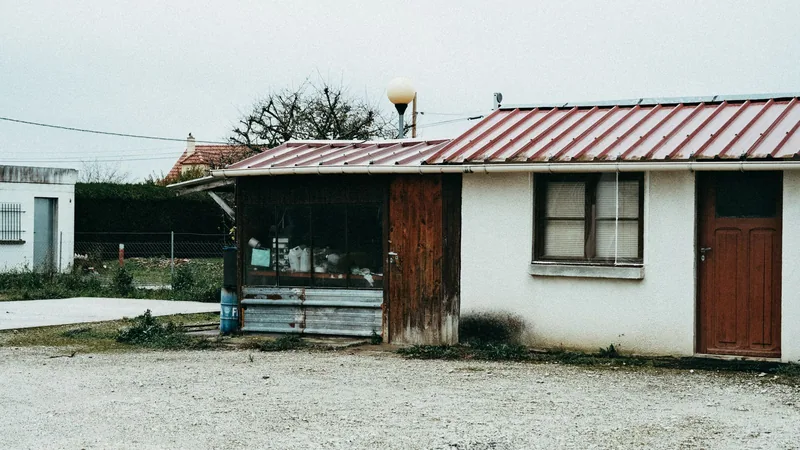
The calculation changes when the roof starts failing. Look for hairline cracks radiating from the fixing points, which is where the sheets take the strain of thermal movement and where the freeze and thaw cycle in a Harrogate winter does its damage. Look for sheets that have started to sag between purlins, delamination at the eaves, and rust bleeding from the bolts. Once a roof is leaking onto a car or a workshop, the argument for repair is thin. Patching asbestos cement means drilling and cutting it, which is precisely the activity the material does not tolerate.
There is a third trigger that catches people out, which is any project that means going near the sheeting. Fitting a new up and over door, running power to the garage, taking down a shared boundary, adding a lean-to or putting solar on the house roof next to it all involve work at or through the roof line. If you are having a builder on site anyway, that is the moment to deal with the sheeting rather than work around it for another ten years.
What the law actually asks of the contractor
This is where most homeowners expect a bureaucratic nightmare and find something more proportionate. Removing asbestos cement roof sheets is generally non-licensed work, which means it does not require a licensed asbestos contractor, provided the sheets come off whole and are not substantially broken up.
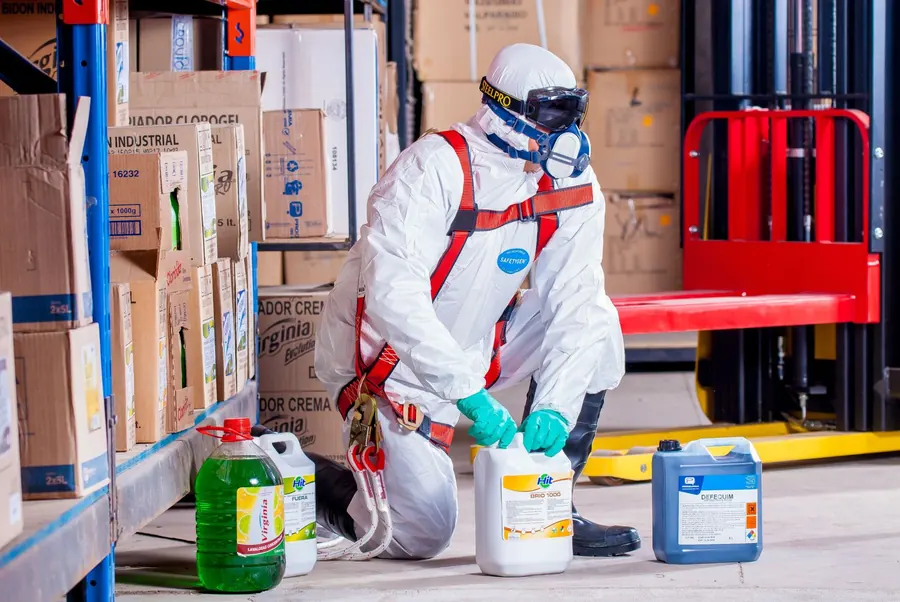
The HSE guidance on non-licensed asbestos work sets out the conditions. The person doing it needs proper information, instruction and training, there has to be a written risk assessment before anyone climbs a ladder, and the method has to keep fibre release low. In practice that means unbolting rather than levering, keeping the sheets damp, lowering them rather than dropping them, and wrapping each one as it comes down. Where a roof is so far gone that it will inevitably shatter on removal, the job tips into notifiable territory and the rules tighten considerably.
The practical test when you are getting quotes is simple. Ask the contractor two questions: who on the team holds asbestos awareness and non-licensed removal training, and can they show you the written method statement for your roof. A firm that does this regularly will answer both without hesitation. A firm that shrugs and says they will “just get it off” is telling you they intend to break it up, and you will be the one left with a garden full of fragments.
What it costs in and around Harrogate
Pricing splits into three parts, and separating them is how you make sense of two quotes that look wildly different.
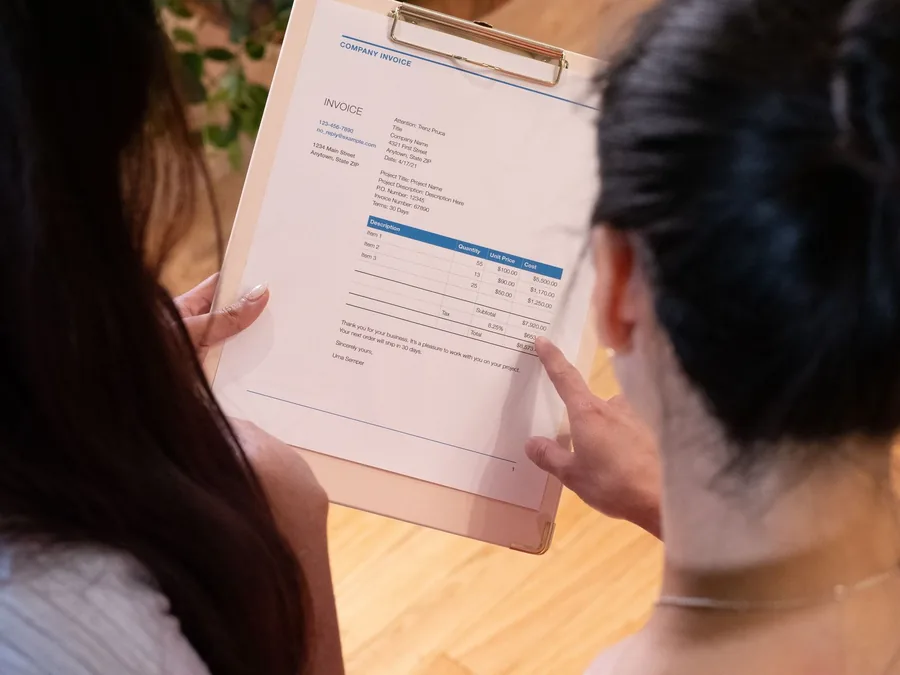
Stripping and disposal comes first. On a single sectional garage of about 5m by 2.7m, taking the sheets down carefully, wrapping them and getting them off site typically runs from £450 to £900 depending on access and condition. The new covering is second. Box profile steel sheeting is the standard replacement and the cheapest per square metre. Modern fibre cement suits people who want the original look. A flat or shallow deck can take an EPDM rubber membrane instead. Budget roughly £600 to £1,300 on a single garage. Third are the extras nobody mentions in a phone estimate: rotten timber purlins, corroded steel, new fixings, replacement gutters and downpipes that shatter the moment they are touched.
Put together, most single garages in the Harrogate area land between £1,100 and £2,200, with doubles and longer outbuilding runs at £2,500 to £4,000. Access is the wildcard locally. A garage at the end of a shared drive off a narrow terraced street in Starbeck costs more to clear than a detached garage with a van space beside it in Pannal, purely because everything has to be carried. Whatever the figure, treat the payment terms the same way you would on any larger job, and our guide to deposits and stage payments on Harrogate roofing work covers what a sensible schedule looks like.
Getting rid of it properly, locally
Disposal is the step where DIY jobs come unstuck. Know the local rules before you commit either way.
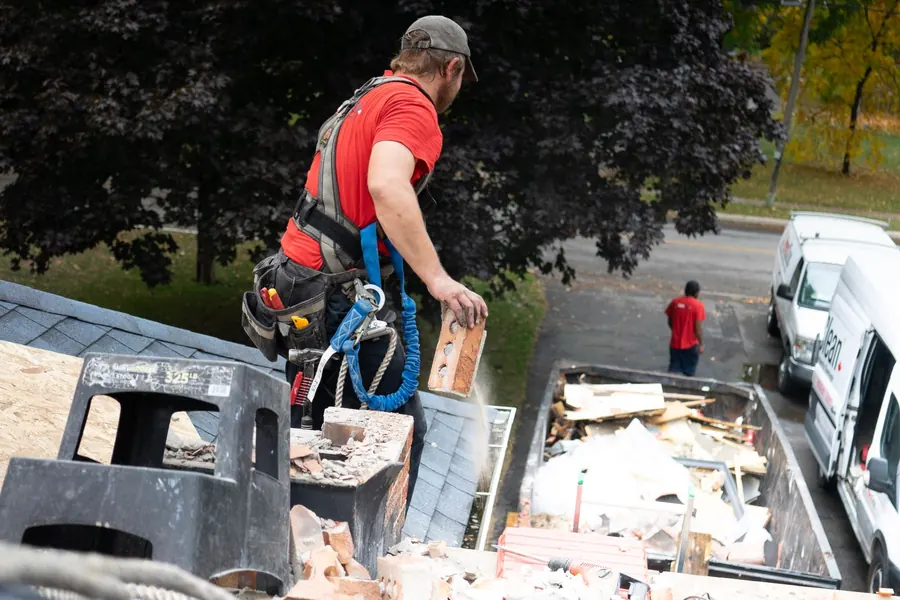
North Yorkshire Council takes small quantities of cement bonded asbestos free of charge at seven sites across the county, and West Harrogate on Penny Pot Lane is one of them. The conditions are strict and enforced at the gate. Material has to be double bagged or wrapped in two layers of thick plastic with every joint and opening sealed with strong tape, and anything that turns up loose on a trailer goes home again. Bring more than about ten sheets of the standard 1.8m by 1.2m size and you are asked to contact the council before your visit so they can confirm there is space in the container. Residents also need to be registered to use the recycling centres, which is a five minute job online but not something to discover on the day.
A contractor handling it for you takes a different route, moving the waste under consignment through a licensed carrier to a permitted landfill site, with paperwork you should keep. Ask for a copy of the waste transfer documentation when they invoice. It costs them nothing to give you and it is the only proof you will have that the sheets went somewhere legitimate rather than into a hedge on the road to Ripon.
Choosing what goes on instead
Once the old sheeting is gone you have a bare frame and a genuine choice, and the cheapest option is not automatically the right one.
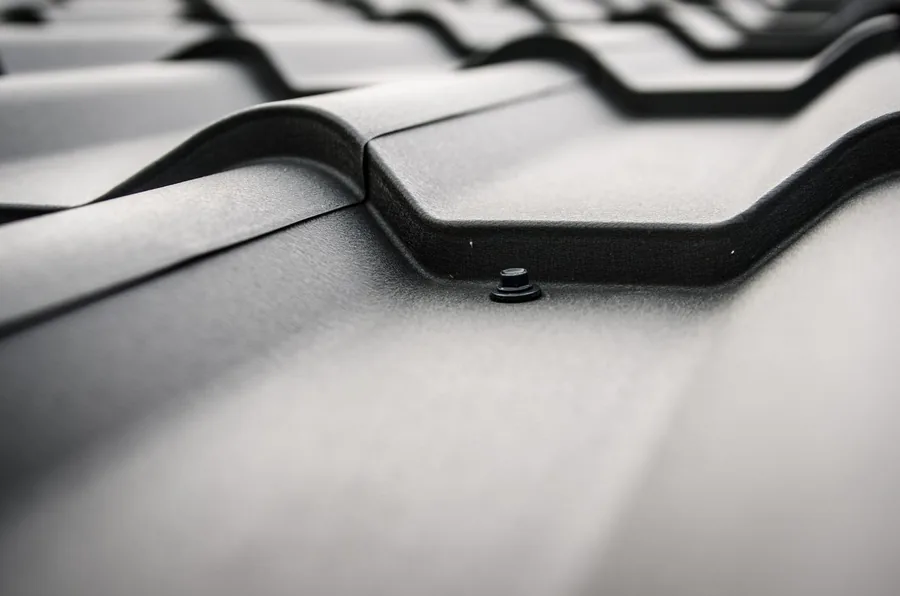
Plastisol coated box profile steel is the workhorse. It is light, quick to fit onto existing purlins, carries coating warranties commonly quoted at 25 to 40 years, and the deeper profile sheds Harrogate rain better than the old shallow corrugation ever did. The trade-off is noise in heavy rain and condensation on the underside unless you specify an anti-condensation lining, which on a garage that stores anything you care about is money well spent. Modern fibre cement is the like for like swap, heavier and dearer but visually closer to the original, which counts where a garage sits in a conservation area or in view of a listed building.
Where the roof is flat or nearly flat, an EPDM rubber membrane is usually the better answer, and the same principles that apply to flat roofs on Harrogate extensions and garages apply here. Whichever covering you choose, insist that the purlins are inspected and replaced where needed while the roof is open. Fixing new sheets to sixty year old timber that has been quietly rotting under a leaking joint is the one shortcut that guarantees you will be back up there inside five years.
If you have a garage or outbuilding in Harrogate you are unsure about, the safest first step is having someone look at it who is not going to touch it unnecessarily.
Frequently Asked Questions
How do I know if my Harrogate garage roof contains asbestos?
Age is the strongest clue. If the garage was built before 1999 and still has its original grey corrugated cement sheeting, assume it contains asbestos until a test says otherwise. Genuine asbestos cement is dull grey, roughly 6mm thick, brittle at the edges and often carries a fine crazed surface after decades of Yorkshire weather. Modern fibre cement looks similar but is usually stamped NT or asbestos free on the underside. The only way to be certain is a laboratory test on a small sample, which a competent contractor can arrange for a modest fee.
Is it legal to remove an asbestos garage roof myself in Harrogate?
There is no law stopping a homeowner working on asbestos cement in their own home, but that is not the same as it being sensible. The Health and Safety Executive is clear that untrained people should not attempt it, and the moment a sheet cracks you have converted a stable material into airborne fibres in your own garden. If you do go ahead, the sheets must come off whole, stay wet, and be double wrapped before they go anywhere. Most people are better paying a contractor who does this weekly.
Where can I dispose of asbestos in Harrogate?
North Yorkshire Council accepts small quantities of cement bonded asbestos free of charge at West Harrogate household waste recycling centre on Penny Pot Lane. It has to be double bagged or wrapped in two layers of thick plastic with every joint taped, or staff will turn it away at the gate. If you have more than about ten sheets you need to ring ahead so they can check there is container space. You also need to be registered to use the site, which residents can do online.
How much does it cost to replace an asbestos garage roof in Harrogate?
For a standard single sectional garage of roughly 5m by 2.7m, stripping the old sheets, wrapping and disposing of them and fitting a new covering usually lands somewhere between £1,100 and £2,200. A double garage or a long outbuilding run pushes that towards £2,500 to £4,000. The variables that move the number most are access for a vehicle, whether the purlins underneath have rotted, and how far the waste has to travel.
Does an asbestos garage roof affect selling a house in Harrogate?
It rarely stops a sale but it frequently appears on the survey. Most surveyors flag suspected asbestos cement as a matter of routine and recommend it is left undisturbed or professionally removed, which gives a buyer an obvious lever on price. Sellers who deal with it beforehand usually recover the cost, because a replaced garage roof reads as one less job on the buyer’s list rather than an unknown liability.