
24 August 2026
Paying for a New Roof in Harrogate: Deposits, Stage Payments and Protecting Your Money
You have read three quotes, asked the awkward questions, and picked your roofer. Then the conversation turns to money, and it turns out nobody has explained this bit. How much do they want now? When does the rest fall due? What happens if the slates arrive and the firm does not? Roofing is one of the few trades where a homeowner routinely hands over four or five figures to someone whose work they cannot see, standing thirty feet up behind a sheet of scaffold netting. The good news is that the protections exist and most of them are free. The bad news is that almost all of them have to be put in place before the first payment leaves your account, not after something goes wrong. This is the sequence a Harrogate roofing job should follow, from the deposit to the final invoice, and what to do at each stage to keep your money where you can still reach it.
What a sensible payment schedule actually looks like
Every well-run roofing contract splits the money into chunks that follow the work rather than the calendar. Something goes down at the start to cover materials, one or two payments land as the job passes visible milestones, and a final balance clears once you have seen the finished roof.

The shape matters more than the exact percentages. What you are aiming for is a schedule where, at any given moment, the amount you have paid is roughly equal to the value of what has been done. Get that balance right and neither side is badly exposed. Get it wrong in the roofer’s favour and you have quietly become their working capital.
Ask for the schedule in writing before you accept the quote, and ask for it as dates-triggered-by-events rather than dates in a diary. On a full roof replacement in Harrogate you should expect the payment points to read something like “on delivery of materials”, “on completion of stripping and felt and battens”, and “on completion and sign-off”. A schedule that reads “week one, week two, week three” is a schedule that keeps paying out whether or not anyone is on your roof, which is a genuine risk in a town that loses a fortnight of working days to weather most winters.
The deposit, and what it is genuinely paying for
A deposit on a roofing job is not a booking fee and it is not a show of good faith. It is there to fund the materials that the roofer has to buy before they can start, and that is the only question worth asking about it.

That question has real bite locally. A Harrogate re-roof in natural slate or in reclaimed Yorkshire stone slate carries a materials bill that can run to a large share of the total, and reclaimed stone in particular is bought when it becomes available rather than when you happen to want it. A roofer sourcing salvaged stone slate for a property on the Duchy estate may be committing their own money weeks before they set foot on site. A roofer laying a standard concrete interlocking tile on a 1970s semi in Jennyfields is not, and their deposit should reflect that.
So a fifth to a third of the price is a reasonable band, tilted towards the upper end where the covering is expensive or specially ordered and towards the lower end where it is a stock item. If a quote asks for half up front on ordinary materials, ask what is being bought. Vagueness is the answer you are testing for.
Paying by credit card buys you a second party
Of all the protections available on a roofing job, this one costs the least and does the most. A surprising number of homeowners skip it over a two per cent surcharge.

Section 75 of the Consumer Credit Act 1974 makes your card provider equally liable with the trader for a breach of contract or a misrepresentation, on purchases where the price of the item is over £100 and no more than £30,000. In plain terms: if the roofer takes your money and the work is defective, abandoned or never happens, you have a second organisation to pursue, and that organisation has money and a complaints process. The part people miss is that you do not need to put the whole job on the card. Pay the deposit by credit card and the protection attaches to the full contract value, so a £600 deposit on an £11,000 re-roof covers the whole £11,000. If a roofer will not take cards at all, that is worth knowing before you commit rather than after.
The fourteen days you probably did not know you had
Almost every domestic roofing contract in Harrogate is agreed at somebody’s kitchen table, on the drive, or over the phone. That detail changes your legal position considerably, and very few homeowners are told so.

Because the contract was not concluded at the trader’s own business premises, it counts as an off-premises sale, and the Consumer Contracts Regulations give you a fourteen day cancellation period running from the day you agreed it. You do not have to justify the decision. The Chartered Trading Standards Institute sets out how these rules work in its guidance on off-premises consumer contracts, including the notice a trader is supposed to give you about the right in the first place.
There is a sensible qualification. If you ask the roofer to begin inside those fourteen days, which most people do because the leak is not going to wait, they are entitled to charge for the work carried out and for materials bought specifically for you. That is fair, and it is why an early start request should be written down rather than assumed. A roofer who has never mentioned any of this is either unaware of the rules or hoping you are.
Tying stage payments to the scaffold, not the calendar
Roofing is unusual among domestic trades in that a great deal of money leaves your account before the visible work begins, because the scaffold has to be designed, delivered, erected and inspected before anyone can lift a slate.
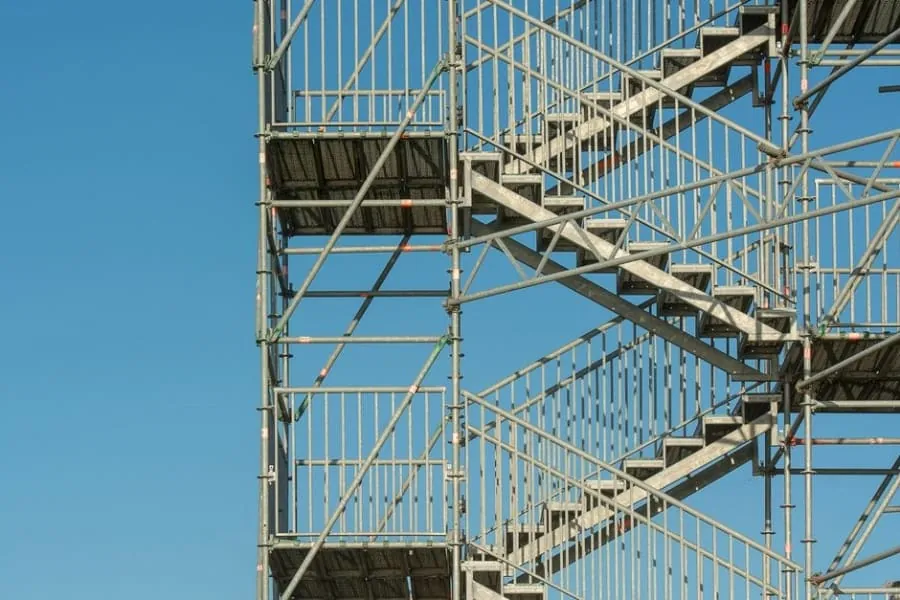
Treat the scaffold as its own line and its own milestone. It is a substantial cost, it is often subcontracted to a specialist firm, and on the tighter Victorian streets off Cold Bath Road or around Granby it may also need a licence from North Yorkshire Council where it stands on the public footpath. All of that is legitimate expenditure, and it is reasonable for a payment to be triggered by the scaffold going up rather than by the roof being finished.
It is also not optional. Safe access is a legal requirement, which the Health and Safety Executive spells out in its guidance on safe working on roofs, so a roofer offering to save you money by working off ladders is offering you a liability rather than a discount. We have written more about what proper access costs in our guide to scaffolding for roof work in Harrogate.
The stage after that is the one to watch. Once the old covering is off and the new felt and battens are down, the roof is at its most vulnerable and the roofer has done a lot of unglamorous work you will never see again. That is a fair payment point. What is not fair is a payment falling due simply because a fortnight has passed while the job sat under a tarpaulin waiting for the rain to stop.
Holding money back: retention and the snagging walk
The final payment is your only remaining leverage, and once it has gone, getting a roofer back for a small defect depends entirely on their goodwill.
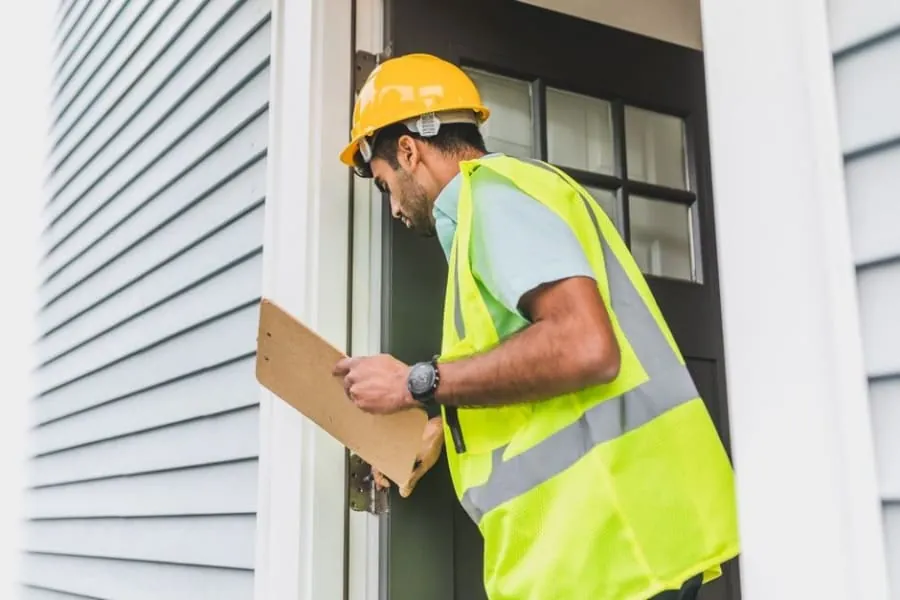
On a large re-roof, keeping back a small retention until snagging is closed out is normal commercial practice and most established firms will not object. Around five per cent held for a few weeks is enough to keep a diary appointment alive without punishing a business that has done nothing wrong. What matters far more than the figure is that you raise it while you are agreeing the quote. A retention announced on the last day, to a roofer who priced the job expecting payment in full, reads as a manoeuvre rather than a term.
Before you release anything, do the walk. Ask the roofer to stay while you go round the outside of the property and look at the verges, the ridge line, the flashings where the roof meets the chimney, the new gutter falls, and the ground for offcuts and nails.
If the scaffold is still standing, take the chance to see the work at the level it was done. That opportunity disappears the morning the scaffold comes down and it does not come back. Anything you find now is a snag. The same thing found in November is a dispute.
Cash, VAT and the discount that costs you your rights
Someone will eventually offer you a discount for cash, and the sum will be tempting enough to make the decision feel like a genuine choice.

Look at what you are actually trading. A cash job with no invoice means no record of the price, no record of what was included, no Section 75 cover, nothing to hand a solicitor and, in practice, no meaningful guarantee, because a guarantee needs a contract to hang on. If the ridge lifts in the first gale off the Pennines, you are a person with an anecdote. There is also the ordinary business reality: a firm large enough to re-roof a house properly, carry public liability cover, run a scaffold account and employ people is a firm with an accountant and an invoicing system. Pay by bank transfer or card, get a numbered invoice with the company details on it, and keep the quote alongside it. Both documents cost nothing and between them they are the whole of your evidence.
How a roofer asks for money tells you what kind of firm it is
By the time you are talking about payment you have already checked insurance, references and the written scope. The payment conversation is the last diagnostic, and it is a good one, because it happens after the sale has effectively been made and people relax.

The signals worth taking seriously are all about pressure and about paper. A price that expires today. A deposit that must be paid now, in cash, before the materials go to someone else. An unwillingness to put the schedule in writing. A request to pay a named individual rather than the company that gave you the quote. Any of those, on their own, is a reason to slow down and check the firm out properly, and our guide on choosing a roofing contractor in Harrogate covers what to look at.
The opposite behaviour is just as informative. A roofer who hands you a schedule tied to milestones, mentions the cancellation period unprompted, takes card payments without fuss and expects you to inspect before the final invoice is a roofer who has done this many times and has nothing they need to move quickly past. That is the firm you want on the scaffold.
Frequently Asked Questions
How much deposit should I pay a Harrogate roofer?
Between a fifth and a third of the contract value is the normal range for a job where slates, tiles or membrane have to be ordered in. Anything approaching half before a single scaffold pole arrives should make you pause, and full payment upfront is never justified on domestic roofing. The deposit exists to cover materials the roofer has to buy before starting, so ask what it is being spent on and expect a straight answer.
Should I pay for roofing work by credit card?
Putting at least part of the payment on a credit card is one of the cheapest protections available to you. Section 75 of the Consumer Credit Act makes the card provider jointly liable with the roofer where the total price sits between £100 and £30,000, and you keep that protection on the whole contract even if only the deposit went on the card. Some firms add a surcharge for card payments, but on a five-figure re-roof the fee is usually small next to what the cover is worth.
Can I cancel a roofing contract after I have signed it?
Usually yes. Where you agreed the work at home rather than at the roofer’s premises, the Consumer Contracts Regulations give you fourteen days to cancel without needing a reason. The catch is that if you asked the roofer to start inside that window, they can charge for what has already been done and for materials bought specifically for your job. Get any early start request in writing so both sides know where they stand.
Is it safe to pay a roofer in cash?
Cash itself is legal, but the way it usually gets offered is the problem. A discount that happens to match the VAT, paid with no invoice and no written contract, strips out your paper trail at the exact moment you might need one. If the work later fails, you have nothing showing what was agreed, what was paid, or who did it. Pay by bank transfer or card and insist on a numbered invoice every time.
Should I hold money back until the work is signed off?
On larger Harrogate re-roofs it is reasonable to keep a small slice of the final payment, commonly around five per cent, until you have walked the job with the roofer and any snags are closed out. Say so at the quoting stage rather than announcing it on the last day, because a retention sprung at the end feels like bad faith and sours an otherwise good relationship. On a straightforward repair, paying in full on satisfactory completion is normal.