
24 August 2026
Who Pays for the Roof? Leasehold Flats, Service Charges and Section 20 in Harrogate
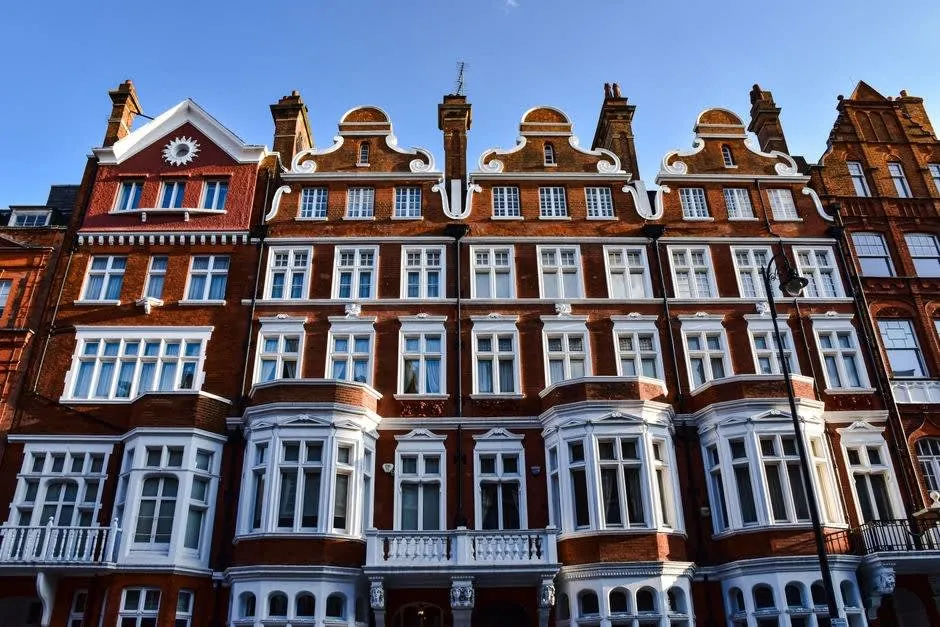
Harrogate spent the nineteenth century building for visitors, and it built big. Whole streets of substantial spa-era villas went up around the Stray, on Valley Drive, along Ripon Road and Kings Road, designed as single households with staff. Very few of them are single households now. They were subdivided into flats across the twentieth century, and the result is a town with an unusually high concentration of leasehold apartments sitting under large, complicated, ageing roofs. When one of those roofs starts letting water in, the technical problem is often the easy part. The hard part is that nobody in the building owns the roof individually, the money to fix it comes from everyone, and there is a statutory process that has to run before a single slate can be ordered. This guide sets out who is responsible, what the law requires, and how leaseholders and resident-run companies can move a roof job forward without getting it wrong.
The roof above your flat almost certainly is not yours
Buying a leasehold flat buys you the space inside it for a fixed number of years. The structure enclosing that space, in the overwhelming majority of cases, stays with the freeholder.
That arrangement suits everyone, in principle. A roof is a single continuous system and it makes no sense to divide it between the people living underneath it, so the freeholder takes on the duty to repair and maintain it and recovers what that costs through the service charge, apportioned between the flats according to whatever split the leases set out. The government’s overview of how leasehold property works covers the general division of responsibilities. Where this trips people up is the assumption that the arrangement is automatic. It is not. It is contractual, and the contract is your lease. Top-floor leases in some older Harrogate conversions do carry unusual obligations, occasionally including responsibility for a section of roof or a dormer serving only that flat. Rare, but not rare enough to skip checking.
What the lease decides, and the three clauses to find
If you are a leaseholder facing a large roof bill, or a director of a residents’ company about to commission one, the lease is the document that answers almost every question you have. Most people have never read theirs past the ground rent.

Three parts matter. The first is the definition of the demised premises, which tells you exactly where your flat stops. Look for whether it includes the roof void above a top-floor flat, and whether it stops at the plaster or takes in the structure. The second is the landlord’s repairing covenant, which is where the obligation to keep the roof in repair usually sits, and the wording is worth reading closely. A covenant to “repair” is narrower than one to “renew” or to “keep in good condition”, and the difference has been argued over a great many times.
The third is the service charge schedule, which gives the percentage each flat contributes. In a converted villa on Franklin Road with five unequal flats, those percentages are rarely equal, and the flat with the largest share is the one whose figure decides whether a consultation is legally required at all. That will matter in a moment.
Section 20: the consultation that has to happen first
This is the part that surprises people, and it is the reason a roof job on a block takes months longer than the same job on a house.
Section 20 of the Landlord and Tenant Act 1985, as amended by the Commonhold and Leasehold Reform Act 2002, requires a landlord to consult leaseholders before carrying out qualifying works that will cost any one of them more than a set amount. Roof repairs and roof replacements are qualifying works. There is no discretion about it.
The consultation runs in stages. First comes a notice of intention describing the works and why they are needed, giving leaseholders at least thirty days to make written observations and to nominate a contractor of their own. The landlord then obtains estimates, including one from any nominee where practicable and at least one from a party wholly unconnected to the landlord, and issues a statement setting those estimates out with a further period for observations. Once a contractor is chosen, leaseholders are told why.
None of it is difficult. All of it takes time, and the time has to be built into the plan. A residents’ company that discovers the requirement in October, having hoped to re-roof before Christmas, has effectively lost the winter.
Why £250 is the number that governs everything
The threshold that triggers the whole process is small enough that almost any real roofing job clears it, which is precisely the point.

Consultation is required where the works would result in any single leaseholder contributing more than £250 including VAT. Note the wording. It is not £250 of total spend, and it is not an average. It is the highest individual contribution, so in a building of unequal flats the largest apartment sets the trigger. On a six-flat conversion, works of around £1,500 can be enough to cross the line once the biggest share is calculated.
The consequence of getting it wrong is severe and worth stating plainly. Where the consultation has not been carried out properly, the amount recoverable from each leaseholder is capped at £250 for those works, whatever the job actually cost.
Run the arithmetic on a real block. A £48,000 re-roof shared across eight flats, consulted badly, recovers £2,000 in total. The remaining £46,000 sits with whoever placed the order, and on a resident-run building that is the company the residents themselves are directors of. Dispensation can be sought from the First-tier Tribunal and is regularly granted where genuine emergency work could not wait, but applying for forgiveness afterwards is a poor substitute for running the process.
Right to Manage blocks, where the directors become the client
A growing number of Harrogate blocks are run by the leaseholders themselves, either through a Right to Manage company or by having bought the freehold collectively. That changes who carries the risk in a way people underestimate.

When residents take over management, they take over the statutory duties that came with it. The consultation obligation, the duty to hold service charge money properly, the responsibility for specifying the work and the exposure if the process goes wrong all transfer to the company, and its directors are usually neighbours doing this unpaid in their evenings. Two things make it far easier. The first is getting a condition survey done before any decision is taken, so the scope is written from evidence rather than from the loudest opinion in the building. The second is being straight with the roofing contractor about the timescale the consultation imposes, so quotes stay valid long enough to survive it. A quote that expires in thirty days is no use to a company that legally cannot place an order for three months.
Converted villas and purpose-built blocks fail differently
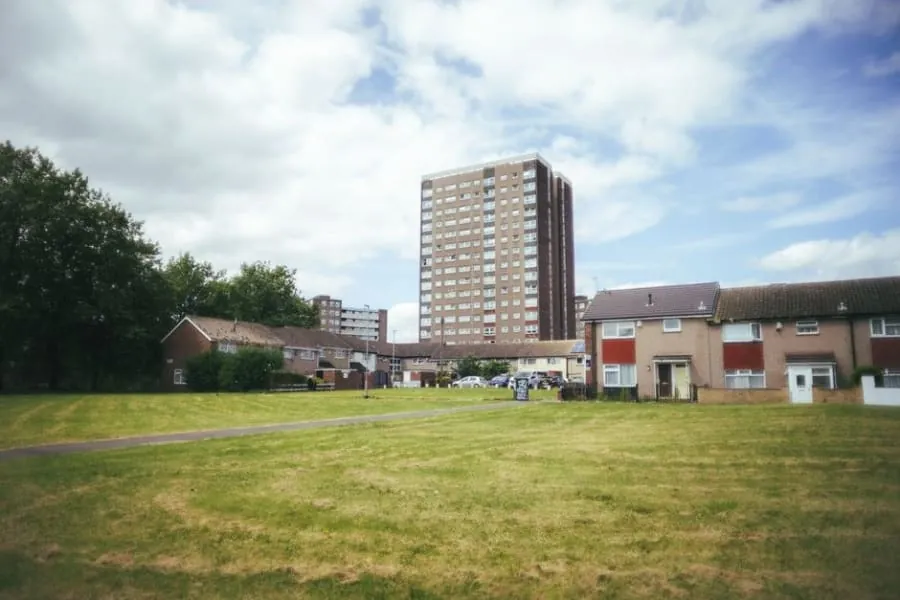
Harrogate’s leasehold stock splits neatly into two groups, and a roofing quote that suits one will not suit the other.
The converted villas are the harder proposition. Large slated roofs with multiple pitches, hidden valleys, parapet gutters behind stone copings, several chimney stacks and a great deal of lead that has usually outlived its design life.
Their weak points are the junctions rather than the open slopes, which is why a leak reported in a first-floor flat frequently starts in a valley three rooms away and why chasing it needs someone who will get up and look rather than guess from the ground. Many of these buildings also sit within conservation areas, limiting what the covering can be replaced with. Anyone quoting for one should be talking about lead codes, valley construction and access long before they talk about a price.
Purpose-built blocks from the postwar decades, of the kind found around Jennyfields, Woodlands and Harlow Hill, tend to have simpler roofs and simpler failures. Flat or shallow-pitched coverings, parapet upstands, and outlets that block. The problems are usually about drainage and about a covering reaching the end of its service life all at once, which at least makes the scope easier to define. Our guide to flat roof repairs in Harrogate covers what typically goes wrong on those.
When the roof is leaking and nothing is happening
The most common leasehold roofing problem in practice is not a dispute about money. It is silence.
Build the record from the first day. Report the leak in writing to the freeholder or managing agent, not by phone, and repeat it in writing after every call. Photograph the damage with the date visible, note when it appears and in what weather, and keep everything in one place. If the matter ever reaches a tribunal, a dated file of ignored correspondence is the strongest thing you can bring.
What not to do is instruct your own roofer and deduct the cost from the service charge. There are circumstances in which a leaseholder can carry out repairs and recover the cost, but they are narrow, they usually require formal notice first, and getting it wrong puts you in breach of your own lease while the original problem remains unfixed. Take advice before spending. Meanwhile, deal with the damage inside your flat through your own contents and interior insurance, which is what it is there for.
Getting a roofing quote that survives seven leaseholders reading it
A quote for a block is read by more people, more sceptically, than a quote for a house, and it has to stand up in a statutory process. That changes what a good one looks like.

It needs an itemised scope, so leaseholders can see what they are buying and so the estimates put in front of them are genuinely comparable. It needs the access and scaffold arrangements set out separately, because on a block those are a significant sum and a significant disruption. It needs provisional sums identified honestly, since nobody knows the state of the timbers under a hundred-year-old slate roof until it comes off. And it needs a validity period long enough to survive the consultation, or the whole exercise has to be repeated.
Contractor selection carries more weight here too, because the decision is being made on behalf of other people’s money. Membership of a trade body such as the National Federation of Roofing Contractors is one reasonable filter among several, alongside evidence of comparable work on period buildings and proper insurance. Much of the same thinking applies as for any large job, which we set out in our guide to roofing guarantees and what your warranty covers.
Frequently Asked Questions
Who is responsible for the roof of a leasehold flat in Harrogate?
In nearly every case the freeholder, or the management company acting for them, is responsible for repairing and maintaining the roof, and the cost is recovered from the leaseholders through the service charge. Your individual lease is what settles it, so read the landlord’s repairing obligations and the service charge schedule rather than relying on what a neighbour tells you. Top-floor flats occasionally carry a specific roof obligation, which is unusual but does appear in some older conversions.
What is a Section 20 notice and when does my freeholder have to serve one?
Section 20 of the Landlord and Tenant Act 1985 requires a formal consultation with leaseholders before qualifying works are carried out where any single leaseholder would be charged more than £250 including VAT. A roof replacement on a Harrogate block will almost always cross that line. The process runs in stages - a notice of intention, a period for leaseholders to comment and nominate a contractor, then a statement of the estimates obtained.
What happens if the freeholder does not consult before replacing the roof?
If the consultation is not carried out properly, the amount recoverable from each leaseholder is capped at £250 for the works, no matter what the job actually cost. On a block where a full re-roof runs into tens of thousands of pounds, that shortfall lands on whoever commissioned it. A freeholder or management company can apply to the First-tier Tribunal for dispensation, which is often granted for genuine emergencies, but it is not something to rely on by choice.
Can leaseholders suggest their own roofing contractor?
Yes, and it is one of the more useful parts of the process. During the first stage of the Section 20 consultation, leaseholders may nominate a contractor, and the freeholder is expected to try to obtain an estimate from a nominee. It is worth putting forward a local roofing firm with experience of period buildings, because a nomination made properly in writing within the notice period carries far more weight than a complaint made after the estimates are in.
The roof is leaking into my flat and nothing is being done. What can I do?
Report it in writing to the freeholder or managing agent, keep photographs with dates, and record every call. If there is still no action, the lease and the Landlord and Tenant Act give you routes to challenge both the failure to repair and the reasonableness of the service charge, and disputes of that kind are dealt with by the First-tier Tribunal. Do not arrange your own roofer and deduct the cost from your service charge without advice, because that usually puts you in breach of your lease.