
21 September 2026
Roof Drainage And Surface Water In Harrogate: Soakaways, Downpipes And Who Owns The Drain
Roofers in Harrogate get called to leaks that turn out to have nothing to do with the roof. Somewhere between the gutter outlet and whatever the pipe joins underground, the water stops behaving itself, and the damp that follows gets blamed on slates that are perfectly sound.
Harrogate collects somewhere around 850mm of rain in an average year. On a modest semi with a roof plan of 100 square metres, that works out at roughly 85,000 litres annually, since a millimetre of rain on a square metre is a litre of water. All of it is funnelled into two or three downpipes no wider than your wrist. Where it goes after that is a question most homeowners have never needed to answer, and the law on it changed under their feet on 1 October 2011 without much fanfare.
This is about the half of the rainwater system nobody can see.
Follow The Water Past The Gutter
A pitched roof is a collection surface. The gutter is a temporary holding trough. The downpipe is a delivery pipe. None of those three things dispose of anything, and yet almost every conversation about guttering and downpipes stops at the point where the water disappears into the ground.
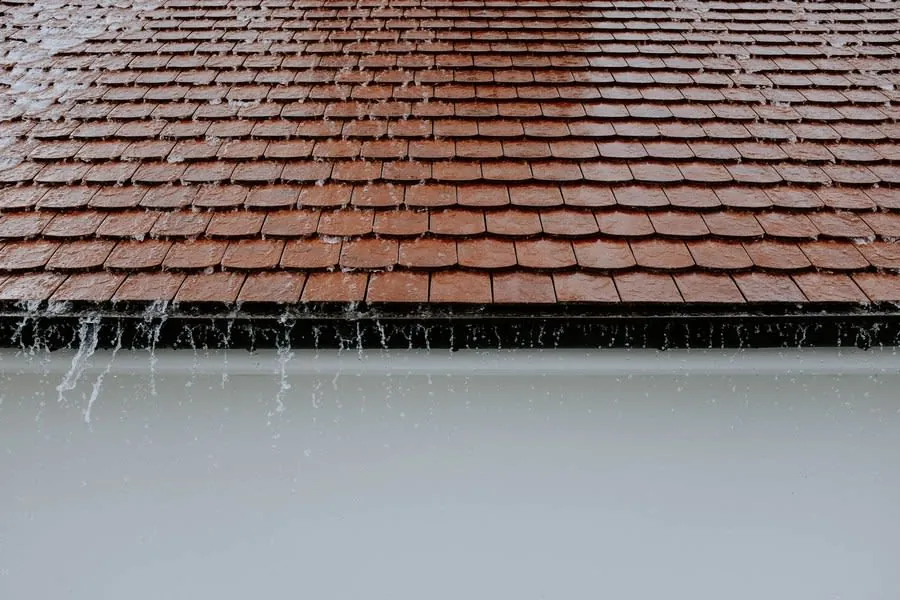
Below that point a Harrogate house will be doing one of four things. It discharges to a soakaway in its own grounds, which is common on postwar and modern estates. It discharges to a shared surface water sewer that eventually reaches a beck or river. It discharges to a combined sewer that also carries foul waste to a treatment works, which is typical of the Victorian and Edwardian stock around the town centre and the spa quarters. Or it discharges onto the ground, which is not a system at all but is surprisingly widespread.
Which of the four applies to your house dictates who fixes it when it fails, what it costs, and whether you should be paying Yorkshire Water a drainage charge at all.
Nobody tells you any of this when you buy the place. The answer is usually sitting in the drainage and water search your conveyancer ordered, filed and never looked at again.
Soakaways, And Why Harrogate Ground Does Not Always Co-Operate
A soakaway is a void in the ground - historically a rubble-filled pit, now more often a stack of plastic crates wrapped in geotextile - that takes rainwater from the downpipes and lets it percolate into the surrounding soil. Building regulations put it first in the queue. Approved Document H, which covers drainage and waste disposal, asks that rainwater goes to an infiltration system where that is reasonably practicable, then to a watercourse, and only then to a sewer.
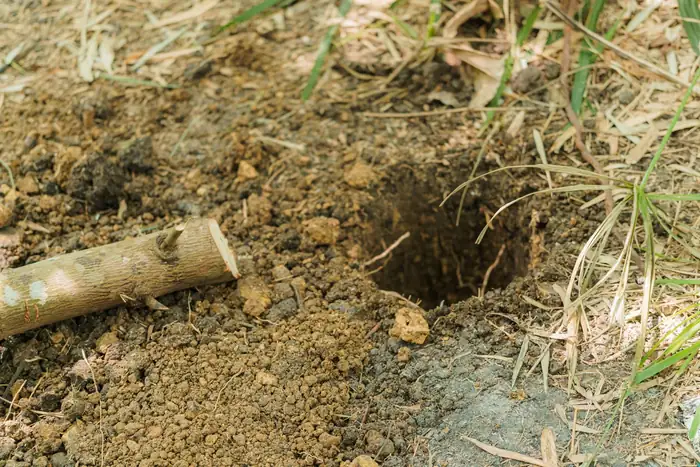
Reasonably practicable is doing a lot of work in that sentence. Sizing a soakaway properly means digging a test pit, filling it with water and timing how fast the level drops, which is where the design method in BRE Digest 365 starts. The finished thing has to sit at least five metres clear of any building and is expected to half-empty within 24 hours so it has capacity ready for the next storm. Around Harrogate the underlying geology is largely Millstone Grit sandstones and mudstones with glacial deposits over the top, and those deposits vary wildly across a few hundred metres. One garden drains like a colander, the next holds water like a bucket.
The failures follow from that. A soakaway sized by eye rather than by test. A soakaway dug three metres from the gable because the garden was small. One that silted up two decades ago because no filter or catchpit was ever fitted in front of it, and has been quietly overflowing under the lawn ever since. The tell is a patch of grass that stays spongy for days after everyone else’s has dried out.
Combined Sewers, Surface Water Sewers And The Charge On Your Bill
If your roof water does not soak away, it goes into a pipe belonging to somebody else. On the older streets that pipe is usually a combined sewer, built when engineers saw no reason to run two pipes where one would do. Your rainwater and your bathwater travel together, and in a heavy enough storm that combined flow is what puts pressure on the network downstream.

You pay for that privilege. Every sewerage bill includes a surface water drainage element covering the cost of taking rainwater off your property, and it is charged by default on the assumption that you are connected. Plenty of houses are not. Yorkshire Water’s page on the surface water drainage charge sets out the rebate: demonstrate that no surface water from the property enters a public sewer, and the charge is cancelled and backdated up to six financial years.
The evidence bar is not high - an application form and a plan showing where each downpipe ends up - but it is absolute. One rogue downpipe still plumbed into the sewer at the front of the house sinks the claim, even if the other three feed a soakaway at the back.
So check before you apply. An hour with a watering can, a torch and a lifted grate on a wet afternoon tells you more than any set of deeds.
Whose Pipe Is It Once It Leaves Your Garden
Before October 2011, householders were on the hook for lengths of drain running well beyond their own land, often under a neighbour’s garden or the road, and frequently shared with several other houses. The Private Sewers Transfer changed that overnight. Most of those lateral drains and shared private sewers became the property of the water company.
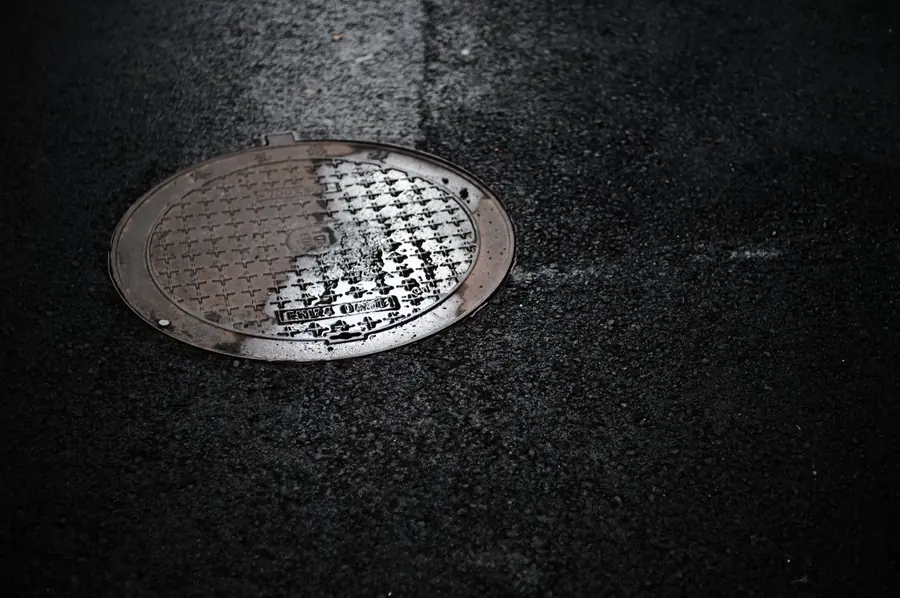
The working rule now is the boundary line. Pipework inside your boundary serving only your house stays yours. Pipework past the boundary, and pipework inside it that serves more than one property, is generally Yorkshire Water’s. The company’s guide to whose pipe is whose lays out the split, and reading it takes five minutes you will be glad of before you agree to let anyone dig up a garden. Road gullies and the drainage beneath the carriageway sit with North Yorkshire Council as highway authority, which is a separate report and a separate budget. None of it applies to soakaways, which are entirely private from the gutter outlet to the last stone: your land, your roof, your bill, with no adopted asset anywhere in the chain and nobody to ring. That is a large part of why failed soakaways get left failing.
The Gully Is Where Most Of It Goes Wrong
The gully is the grated pot at the foot of the downpipe, and it is the only part of the underground system you can inspect with nothing but a pair of gloves. It is also where a great many so-called roof leaks actually begin. Most gullies are trapped, holding a permanent body of water to stop drain gases coming back up.
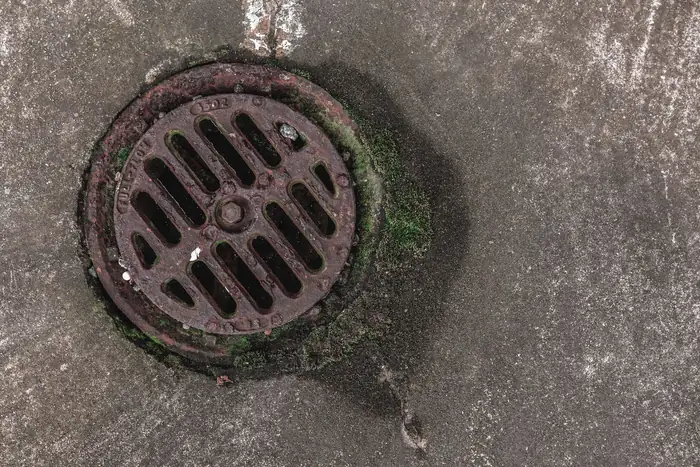
That standing water is also a settling tank. Grit worn off concrete tiles, moss fragments, roofing granules and leaf pulp all drop out of suspension and sink. Over ten or fifteen years the trap silts up, the outlet narrows, and one wet November the downpipe backs up and starts discharging across the path instead.
Rods and twenty minutes clear a good proportion of them. Lifting the grate twice a year and scooping the pot out with a trowel prevents most of the rest. It is the least glamorous maintenance job on a house and the one with the best return.
Two other failures catch people out. The shoe - the swan-neck fitting at the bottom of the downpipe - often sits a few inches above the grate rather than inside it, so wind-driven rain sprays sideways onto the brickwork all winter. And on houses where a hopper head collects water from more than one gutter run, the hopper can silt up in exactly the same way, except it does so at first floor level where nobody looks at it. Gutter and hopper condition is part of the same picture as fascia and soffit replacement, and it makes sense to sort both at once when access is already paid for.
Collapsed, Cracked And Quietly Disconnected
Older Harrogate properties still have salt-glazed clay drainage under the garden, laid in short lengths with mortar joints. Clay is durable but brittle, and the joints are the weak point. Roots find them, ground movement shears them, and a driveway laid over the top without thought for the depth of cover cracks them under the weight of a car.
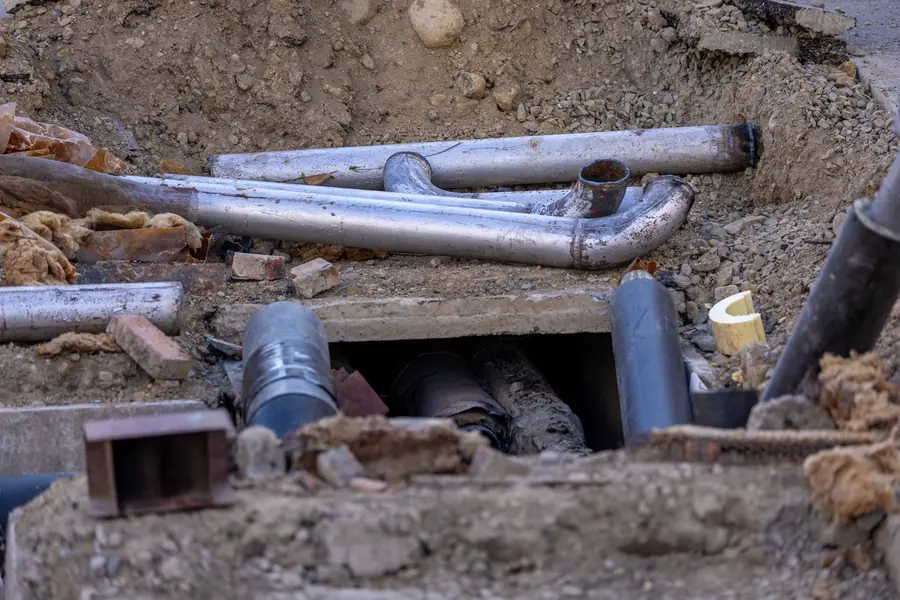
The symptom is not always a blockage. A cracked run can carry water perfectly well while leaking most of it into the surrounding soil, which means the drain appears to work while quietly saturating the ground around your foundations. Slow recovery after rain, a gully that empties and then backfills, a damp patch on a wall that maps onto the line of a buried pipe - those are the signs that the problem is a defect rather than a blockage.
Finding out means a camera survey, which for a domestic property typically runs somewhere in the low hundreds and produces a recording with distances marked. Repair costs then split sharply. A localised defect in an otherwise sound pipe can sometimes be patch-lined without digging, for a few hundred pounds. A collapsed section under a paved drive means excavation, reinstatement of the surface, and a bill several times larger. Establish who owns the pipe before commissioning either - if the defect lies beyond your boundary, the survey and the repair are not your bill to pay.
The Downpipe That Empties Onto The Drive
Plenty of Harrogate houses have a downpipe that ends a few inches above the block paving with nothing beneath it. Sometimes it was never connected. More often the connection was abandoned when the drive was laid, and everyone hoped the falls would take care of it.
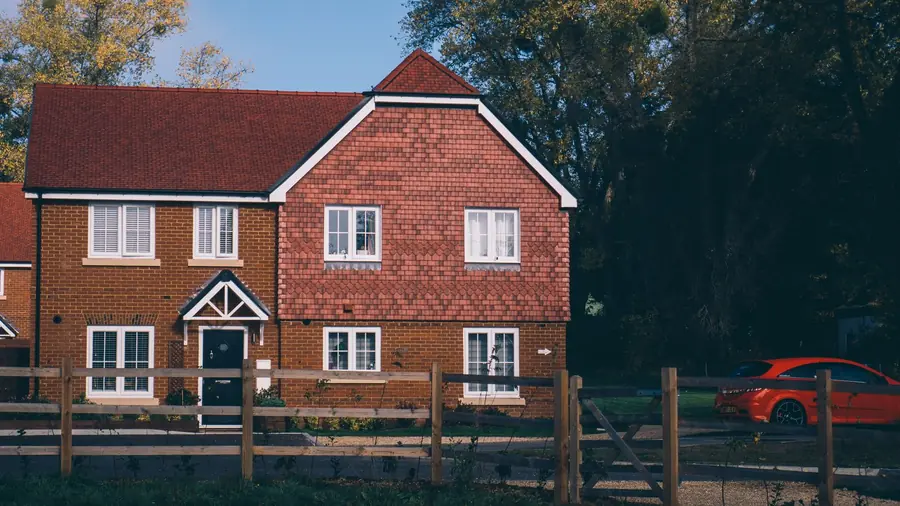
A 70 square metre roof slope in a moderate downpour of 30mm an hour sheds around 525 litres in a quarter of an hour. Put that onto a paved surface that falls even slightly back towards the house and you are pouring half a tonne of water against the footings in fifteen minutes, repeatedly, all winter. Block paving is not a soakaway. It moves water to wherever the ground takes it, and on a clay-rich sub-base that is often straight down the side of the foundation.
There is a planning dimension too. Since 2008, laying an impermeable surface over more than five square metres of front garden has not been permitted development in England unless the run-off is directed to a permeable area within the curtilage. The government guidance on permeable surfacing of front gardens covers what counts. Fixing a discharging downpipe is usually cheap - a new gully, a short run of pipe, a connection to whatever the rest of the house uses - and it is one of the highest-value hundred pounds you can spend on a house with unexplained damp.
Damp That Gets Blamed On The Roof
The reason this matters to a roofer is that drainage faults present as roof faults. A homeowner sees a damp patch on an upstairs wall, assumes water is coming in from above, and books a roof inspection. Sometimes that is right. Often the roof is sound and the water is arriving from a hopper, a split downpipe joint or a gully that floods during every heavy shower.
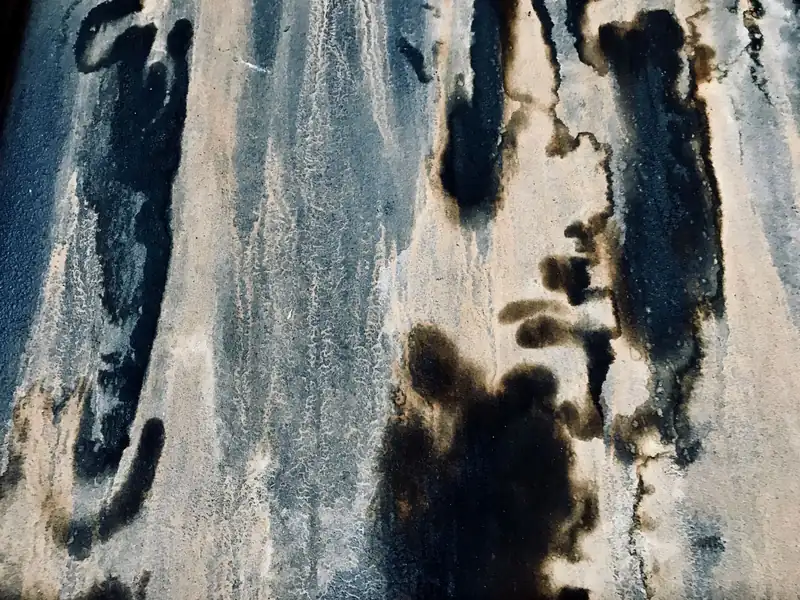
The patterns differ enough to tell apart. Water entering through the roof tends to appear near the ceiling, follow a rafter or a purlin, and show up hours after rain has stopped as it works through the structure. Damp caused by drainage is usually worst at low level or behind an external downpipe, appears during the rain rather than after it, sits on the same elevation as the rainwater goods, and returns to the same spot every time. Saturated ground against a wall can also bridge a damp-proof course entirely, in which case the moisture rises rather than falls.
A decent inspection checks both. That means looking at the roof covering, the flashings and the loft, and then walking the perimeter at ground level with the gully grates lifted. Anyone quoting for a re-roof on the strength of a stain in a back bedroom, without having looked at where the downpipes end up, has not finished the job. The fix is often a morning’s drainage work rather than a scaffold and a skip. Rule that out first. Our guide to roof repairs in Harrogate sets out what an inspection should actually cover.
Frequently Asked Questions
Who is responsible for the drain that takes rainwater away from my Harrogate house?
Split it at your boundary. Pipework inside your boundary that serves only your property is yours to maintain, including the gully at the foot of each downpipe and any soakaway in the garden. Most pipework beyond the boundary, and shared pipework serving more than one property, passed to Yorkshire Water on 1 October 2011 and is now its responsibility. Road gullies and the drainage under the carriageway belong to North Yorkshire Council as highway authority. If your rainwater goes to a soakaway, nobody but you owns any of it.
Can I stop paying the surface water drainage charge if my roof drains to a soakaway?
Yes, if you can show none of your surface water reaches a public sewer, directly or indirectly. Yorkshire Water asks for an application form and a sketch plan of the property marking where every downpipe discharges. If it accepts the claim, the charge is cancelled going forward and refunded for up to six previous financial years, or back to the date you became responsible for the bill if that is more recent. The most common reason for rejection is a single downpipe that still runs to the sewer while the rest feed a soakaway.
Why is my downpipe overflowing at ground level rather than at the gutter?
Almost always the gully at the bottom, or the pipe immediately below it. A trapped gully holds a body of water permanently, so silt, grit washed off the roof and leaf pulp settle in it and build up over the years. Once the outlet is choked, the downpipe backs up and water rises out of the gully pot and across the ground. A drain rod and a bucket clears many of them. When it fills again within weeks, the fault is further along the run and wants a camera on it.
My bedroom wall is damp but the roofer says the roof is fine. What now?
Look at what is happening at ground level in heavy rain. A gully that floods, a downpipe discharging onto a drive that falls back towards the house, or a soakaway sitting too close to the footings will all saturate the ground against the wall and drive moisture through. Damp from drainage usually starts low and works up, is worst during and just after rain, and is often on the same elevation as a downpipe. Roof leaks generally stain from the ceiling down and follow the timbers.